
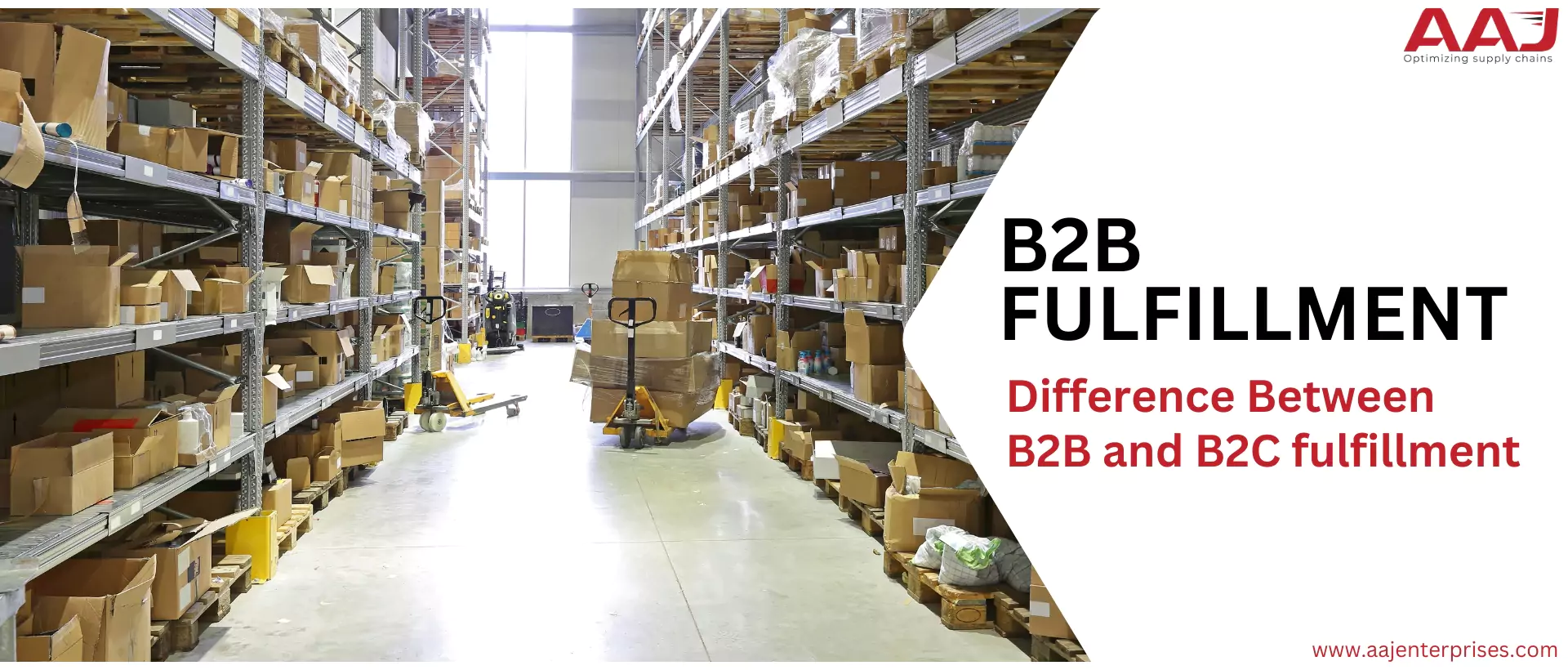

B2B fulfilment involves the movement of products from manufacturers and businesses to supplies and retail markets. It is the most important process in B2B business to deliver the goods in bulk. Basically, in B2B Fulfillment, products move from one business to another business in bulk. B2B fulfilment is growing rapidly in the market. The market size of B2B was 5.6 billion in 2021, but it is anticipated to reach $60 billion by 2025.
What Is B2B Fulfillment?
In B2B fulfillment, also known as business-to-business fulfillment, goods and products move from business to supplier or another business. Suppliers and retailers order products in bulk quantities to have enough inventory to sell. The bulk orders are shipped by road, rail, and freight.
In B2B fulfillment, suppliers and retailers usually purchase large portions of inventory once or twice a month. The B2B market is smaller compared to the B2C market, so manufacturers and businesses don’t need to fulfill orders regularly. When suppliers or retailers need products, manufacturers send products in bulk.
Let’s take an example to understand B2B Fulfillment: A wholesale supplier might place an order for 500 units of a product once a month. The manufacturer prepares and ships the entire order at once instead of sending smaller shipments frequently. This way, both parties save time and reduce logistics costs.
B2B Fulfillment Process: How it Works?
1. Supplier management
The first stage is to collaborate with identity and then collaborate with reliable suppliers to produce high-quality materials at an affordable cost.
2. Creating And Managing Purchase Order
A purchase order is a legal document a business sends to the supplier. The document highlights several items, prices, quantities, and much more.
3. Inbound Logistics
Here, the arrived goods are counted and inspected to check their quality. Goods usually arrive in pallets, and the staff organizes them in the B2B warehouse. The goods or products are stored based on size, shape, demanding environment, etc. Warehouse storage staff place them properly so they are easily accessed during order fulfilment.
4. Storage
Automated storage is quite important when a large volume of products is needed. Automation improves the handling speed, reduces manual errors and improves efficiency in the modern warehouse.
5. Order Fulfillment
Order fulfilment of B2B involves various steps, which are listed below.
- Order Processing – It involves receiving orders from EDI.
- Picking & Packing – The warehouse staff will pick up the ordered product and pack and label it thoroughly.
6. Shipping
The packaging product is handed over to the shipping company. The business uses advanced technology and software to find the best route for transporting products. Choosing the best path can reduce a company’s fuel costs.
7. Reverse Logistics
Sometimes, the business you deliver products to doesn’t like the quality of the products and wants to return them. The returned items are either discarded or restocked inside the B2B Fulfillment warehouse.
Significant Difference Between B2B and B2C Fulfillment
- B2B fulfillment is larger in quantities and is delivered to any business or retailer. However, B2C orders are placed in a few quantities and are delivered directly to the customer’s address.
- B2B orders are large and bulky. So, the shipping procedures are a bit more complex than those of B2C.
- B2B fulfillments are packed in freight and palletized. However, B2C products are usually packed in boxes.
- B2B orders are costly and valuable and sometimes require more labour. However, this is not the case with B2C orders.
Benefits Of Outsourcing B2B Fulfillment Company
1. Lessens Cost
Outsourcing can drastically reduce the cost of a B2B fulfilment Company. When a fulfillment company manages everything independently, like building a warehouse, staff management, buying forklifts and other equipment, and inventory management, it involves many warehousing costs.
However, when a B2B business outsources all these processes, it does not have to spend money on warehouse operations costs. The B2B business can utilize that money on other things like product development or exploring the products in new B2B marketplaces.
2. Delivery Speed
Delivery of products is even more important in B2B businesses. Outsourcing all the B2B operations to third-party logistics can improve the delivery speed and increase the popularity and trust of the brand name in the market.
3. Scalability
A B2B business can expand in the near future, and it may face space shortage problems in its warehouse for storing products. However, when it outsources all its operations to a third-party B2B fulfillment solutions providers, its warehouse has sufficient space to store the products when the business expands.
3 Key Components of B2B Fulfillment
1. Warehousing Tools
Implementing warehousing tools like a warehouse and inventory management system can speed up the pick-pack warehouse process. It displays necessary things like picking the location and the product details to make it easier for warehouse staff to select and package the product.
2. Inventory Management Tools
The inventory management tool increases the efficiency of every aspect of inventories. It tracks inventory in real-time and reduces overstocking and out-of-stock problems.
3. Accounting Software
This software can simplify various business work like payments, sending invoices, etc.
Emerging Trends and Technology in B2B Order Fulfillment
Automation and robotics can enhance the speed and accuracy of logistics operations. Again, utilising blockchain technology can increase transparency in the B2B processes. You can track each product’s lifecycle, components, manufacturing, etc. It is beneficial in the pharmaceutical industry. Simultaneously, the adoption of artificial intelligence can even enhance the efficiency of various operations in B2B fulfilment, such as the selection of cost-efficient transportation routes.
Common Challenges in B2B Fulfilment
1. Complex Inventory management
B2B orders involve a large order volume. The business has to store a large number of inventories in the warehouse. Managing such a large inventory can be complex, leading to order delays, out-of-stock or overselling.
2. Operational Costs
A B2B business has to store and ship thousands of products. It requires ample warehouse space for storing such large quantities of products, increasing the business’s storage costs.
Again, operations like material handling, picking, packaging, and labelling of all these products increase the labour costs of the business.
If the Company decides to automate all warehouse operations, it has to invest a large amount of money initially.
Key Consideration Before Outsourcing B2B Order Fulfillment Services
You have to keep a few things in mind while outsourcing B2B order fulfillment.
1. Check Its Experience
You need to check the experience of the 3PL Company to whom you will outsource all the B2B fulfilment services in India. Check the reviews, testimonials, or any company track records, then make decisions.
2. Scalability
Check its scalability, which means it can accommodate goods and products when your business expands in future.
3. Adoption Of Technology
Businesses should adopt modern technologies, such as advanced software and data analytics.
Conclusion
B2B orders can be a bit challenging during shipping or inventory management. However, with the right strategies and tools, a business can overcome and achieve long-term success in the market.