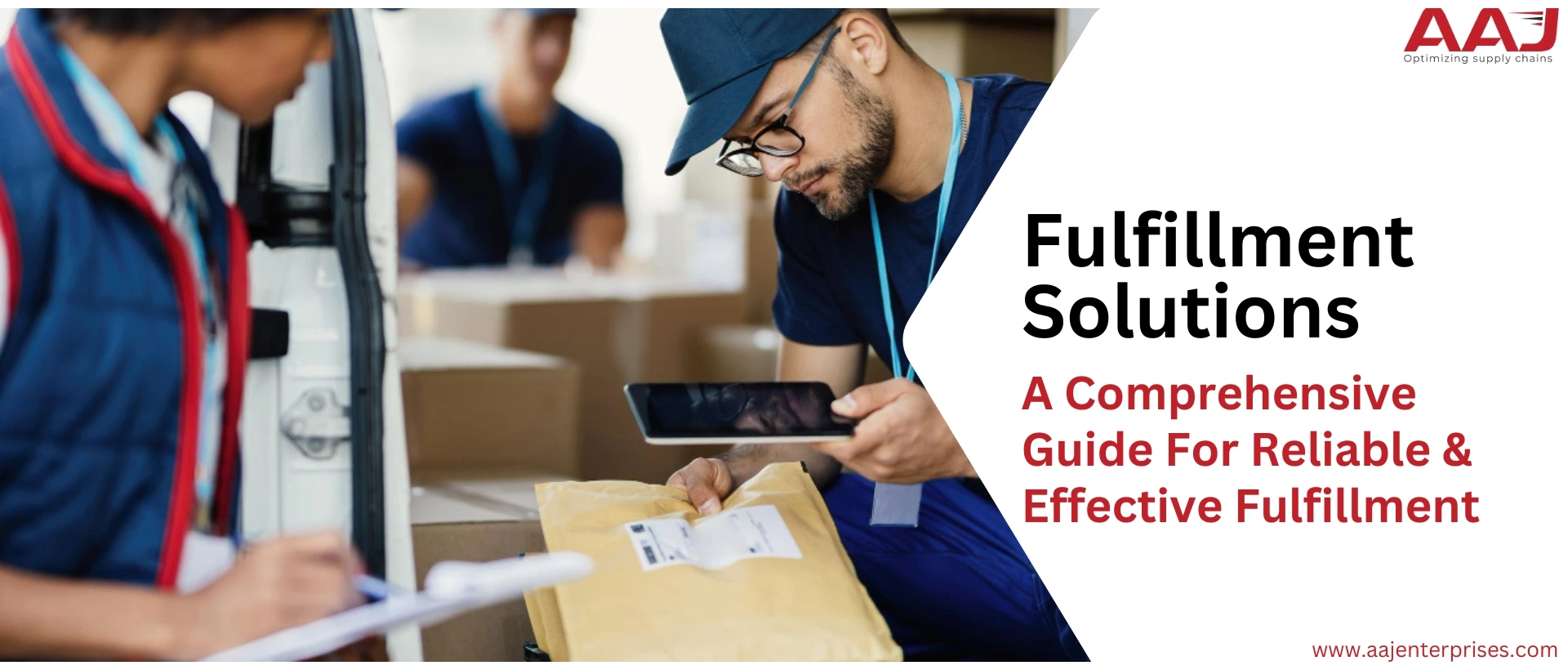

It is more difficult to manage orders efficiently as business expands. They must manage inventory, warehouse, order processing, packing, shipping, and returns — and ensure that there is no stock mismatch or late deliveries. These expectations apply to ecommerce businesses and not just to retail and B2B companies.
Fulfillment solutions bring these activities together into a structured process. A typical fulfillment operation can include receiving inventory, storing and tracking stock, picking products, packing and labelling orders, shipping them to customers, and processing returns.
These activities can be performed in-house by a business's own warehouse and fulfillment staff or by hiring a third-party logistics (3PL) company to handle part or all of the business. The choice of a fulfillment solution will vary based on the type of product, delivery network, inventory needs, the business model and volume of orders.
What Is Fulfillment?
Fulfillment is the process of receiving, storing, processing, packing, and shipping products to meet a customer or business buyer's order. Depending on the business model, fulfillment may also include inventory management, transportation coordination, and returns.
A business can manage fulfillment through its own warehouse and operations team or outsource some or all activities to a third-party logistics (3PL) provider. The scope of fulfillment can vary based on the type of business, order volume, products, sales channels, and delivery requirements.
When it comes to fulfillment, for instance, ecommerce orders can be individual customer orders, while B2B orders can be orders placed by retailers, distributors, or businesses. In both cases, having the right inventory and warehouse management are important to make sure orders are made and fulfilled correctly.
What Are the Different Types of Fulfillment Solutions?
Fulfillment solutions can be classified based on the type of business, the operating model, or the sales channels being served. Understanding these differences helps businesses identify the fulfillment setup that fits their operations.
A. Fulfillment by Business Model
1. Retail Fulfillment Solutions
Retail fulfillment is the process of bulk shipping to retail stores with a view to selling to customers. On-time and on-target fulfillment ensures product availability and prevents stock shortages which can impact sales.
2. B2B Fulfillment Solutions
B2B warehouse fulfillment is the process of shipping a product from one business to another. Orders may be placed for more of a product, and may be scheduled for delivery or for the customer's specific order.
The process typically involves receiving and storing inventory, receiving a buyer's order, picking the required quantity, packing the products, and dispatching them to the business buyer. Businesses may outsource some or all of these activities to a 3PL provider.
3. Ecommerce Fulfillment Solutions
Ecommerce fulfillment encompasses the fulfillment of orders placed via online stores and marketplaces. It may involve order verification and payment, inventory allocation, picking, packing, shipping, delivery and returns.
The process will vary based on the company's sales channels, warehouse configuration, product types, and return policy.
B. Fulfillment by Operating Model
4. 3PL Fulfillment Solutions
With 3PL fulfillment, a business outsources some or all of its fulfillment operations to a third-party logistics provider. Depending on the agreement, the 3PL may manage warehousing, inventory handling, picking, packing, dispatch, transportation coordination, and returns.
This model allows businesses to use external fulfillment infrastructure and operational expertise instead of managing every activity in-house.
C. Fulfillment by Sales Channel
5. Multichannel Fulfillment Solutions
Multichannel fulfillment supports orders from multiple sales channels, such as websites, marketplaces, mobile apps, and physical stores. Each channel may have its own order flow and fulfillment process, or the business may connect some of these processes through shared systems.
For example, a product sold through a website and a marketplace may follow different order-routing or fulfillment rules.
6. Omnichannel Fulfillment Solutions
Omnichannel fulfillment connects inventory, order, and fulfillment processes across multiple sales channels to create a more consistent customer experience.
For example, a customer may purchase a product online and return it to a physical store. A connected fulfillment setup can support this type of interaction by coordinating inventory and order information across channels.
Omnichannel fulfillment typically requires integrated systems and accurate inventory visibility across the channels involved.
How Fulfillment Works: Step-by-Step Process
The typical fulfillment process consists of a series of interconnected steps that range from a warehouse to the customer or business buyer. The process may differ depending on the fulfillment model, but the following steps are generally involved.
1. Receiving and Checking Inventory
The fulfillment process starts when products arrive from a supplier, manufacturer or other location. The warehouse staff inspects the shipment for the correct items and ensures that quantities and product quality are correct. The agreed inventory is then entered into the inventory system.
2. Storage and Inventory Management
Products are received and placed in appropriate storage areas in the fulfillment center. The inventory records are updated and the warehouse staff can find the available stock and where it is located when an order comes in.
3. Order Receipt and Processing
The customer or business buyer makes an order via the appropriate sales channel. The order is confirmed and material is allocated to fulfil. The OMS can handle ordering as part of the system, with the WMS handling fulfillment tasks in the warehouse, depending on the configuration.
4. Product Picking
The warehouse team receives the picking information and collects the required products from their storage locations. Barcode scanners or other warehouse tools may be used to verify the product and quantity during picking.
5. Packing and Labelling
Products are picked, inspected and packed in accordance with the products' and shipping's requirements. The package is then labeled with the details needed to dispatch, such as the address to which it is to be sent, barcode, order details and tracking information.
6. Shipping and Tracking
The completed shipment is handed to the transportation or courier network. It may pass through one or more logistics hubs before reaching the delivery destination. Tracking information allows the business and customer to monitor the shipment after dispatch.
7. Returns Processing
Fulfillment providers can accept and review a product returned by a customer or business buyer who has returned an eligible product. The product might be returned to the business for restocking, re-packaging, repairs or be added to a returned inventory if they have a return policy in place.
How to Improve Fulfillment Efficiency
1. Optimize Inventory Management
Both overstocking and stockouts result in rising storage expenses, lost orders and lost sales opportunities, and are an expense of working capital. For businesses, the key is to keep accurate inventories, and leverage demand data for planning replenishment.
If the inventory is synced with the various sales channels and warehouse systems, it can also lower the chances of selling products that are not in stock.
2. Use Fulfillment Technology
Technology can reduce manual work and improve order accuracy. Practical tools include Warehouse Management Systems (WMS), barcode scanning, inventory synchronization, automated order routing, and shipping integrations.
For example, barcode scanning can verify products during picking and packing, while automated order routing can send orders to a suitable fulfillment location based on defined business rules.
3. Simplify Returns
A clear returns process can reduce customer friction and help businesses recover inventory faster. Returned products should be received, inspected, and classified based on their condition and the business's return policy.
Eligible products can then be restocked or prepared for resale without unnecessary delays.
4. Partner With a Suitable 3PL Provider
Businesses that find it difficult to manage fulfillment in-house can outsource some or all operations to a 3PL company. A 3PL with strategically located facilities and suitable fulfillment capabilities can help businesses scale operations and improve delivery coverage.
Before choosing a provider, businesses should evaluate its warehouse locations, technology, inventory processes, order capacity, service scope, and ability to handle their specific product requirements.
Pros and Cons of Outsourcing Fulfillment Solutions Providers
Pros
1. Saves Cost
When a business manages all the order fulfillment processes alone, it has to spend a lot of money on buying land, building a fulfillment center, hiring staff, and buying equipment. This may not be possible for small and medium businesses.
In such cases, it's better to outsource the order fulfillment processes to a third-party logistic provider. It has warehouses to store your products. This eliminates the need to build fulfillment centers or warehouses to store products.
2. Scalability
The 3PL warehouses are easily scalable, which means it can scale their operations based on your demand. For example, it will accommodate products when your business grows in the future.
3. Advanced Technology
The warehouses of most of the 3PL companies are equipped with advanced technologies like warehouse and inventory management systems, and data analytics. This technology improves the business's order fulfillment processes.
4. Focus On Core Operations
Managing inventories, picking and packaging, labeling, and shipping requires a lot of time and effort. The business cannot focus on core operations. Outsourcing the order fulfillment process allows a business to focus on core activities like product development.
Cons
1. Less Control
The 3pl service provider will handle the entire order fulfillment process so that the business will have less control over warehouse operations. Any disruption in the order fulfillment process will adversely affect the business.
2. Data Security
Customer and business data is revealed to the third-party logistics providers. It can be a target for hackers. Again, many businesses integrate their platform with the fulfillment center. Poorly secured APIs will allow cybercriminals to see the data and misuse it.
Conclusion
The ideal fulfillment solution is based on order volume, business model, inventory requirements, delivery expectations and operational resources. Businesses can handle fulfillment in-house if they have the necessary infrastructure and expertise, or they can use a 3PL if they want to outsource warehousing and fulfillment services without having to construct a second facility.