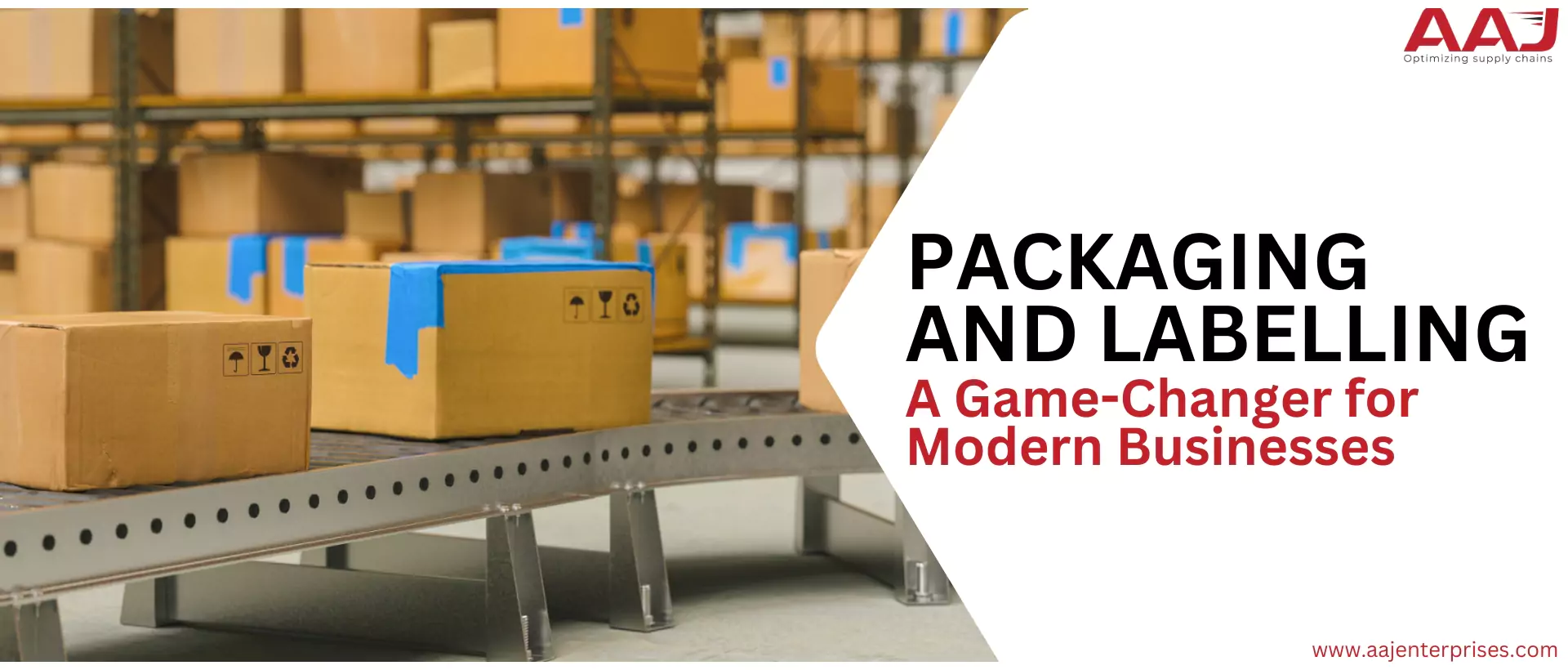

Packaging refers to the materials or design used to contain and protect a product during handling, storage, and transportation. Labelling provides important information about the product, brand, handling, and other requirements. Packaging and labelling work together to ensure product safety, aid shipping identification and provide a uniform customer experience.
Packaging and labelling is also a major part of ecommerce and warehouse operations. Prior to dispatching products, warehouse teams might require to pack them as per their size, handling needs and shipping technique.
A few 3PL warehouses also provide bespoke packaging and labelling solutions to meet business needs. By outsourcing these tasks, companies can keep their packaging processes without the need for extra equipment, space, or employees.
What is Packaging?
Packaging is the process of placing a product into a material or container to protect it whilst being warehoused and transported. Good packaging can prevent products from being damaged by physical and environmental influences like light, moisture, and temperature.
Fruits cannot be placed on a vehicle from a farm to a retailer without a proper packaging. Likewise, a white T-shirt can be stained or dirty if it is not transported in an appropriate manner. Packaging materials used to enclose and protect products include polybags, corrugated boxes, and roll bags.
Proper packaging supports safe storage, handling, and distribution. It also helps businesses present their products in a way that suits their brand and customer requirements.
Most businesses also use attractive packaging to improve the product's presentation. Proper packaging can make a product look more appealing while still providing the protection it needs.
Importance Of Packaging
- Proper packaging ensures a product's safety. For example, milk in a Tetra Pak preserves its quality for longer.
- Logistics operations involve certain risks, such as mishandling, product spoilage, or damage. Proper packaging can reduce the chances of such risks.
- Packaging is an important marketing element in promoting a product. It informs customers about the product and its features.
- Good packaging ensures proper product transportation from the manufacturing units to the end customer.
- Packaging helps a customer identify the product and differentiate it from other products available in the market.
Different Types of Packaging
There are three common levels of packaging: primary, secondary, and tertiary packaging. Each serves a different purpose in protecting, grouping, handling, and transporting products.
1. Primary Packaging
Primary packaging is the packaging that comes directly in contact with the product. Its main purpose is to contain and protect the product and maintain its condition until it is used.
It may also carry product information such as the product name, expiry date, ingredients, usage instructions, or other required details.
For example, a glass bottle containing cosmetic lotion is primary packaging. Other examples include glass bottles for beverages, plastic wrappers for chocolate bars, pharmaceutical blister packs, and laminated pouches.
2. Secondary Packaging
Secondary packaging groups one or more units of primary packaging together. It provides additional protection and makes products easier to handle, store, and transport.
For example, multiple products in their individual primary packages may be placed inside a corrugated cardboard box. Other examples include cartons, plastic crates, and trays used to group products for storage or movement.
Secondary packaging can also make warehouse handling more efficient by allowing multiple product units to be moved together.
3. Tertiary Packaging
Tertiary packaging is used to group larger quantities of products for warehouse handling, transportation, and distribution. It helps businesses move and store multiple secondary packages more efficiently.
Common examples include pallets, stretch wrap, and large shipping containers. Pallets allow multiple cartons to be moved together using forklifts or other material-handling equipment.
For example, consider a branded shoe. The shoe is placed inside a shoe box as primary packaging. Multiple shoe boxes are packed into a larger corrugated carton as secondary packaging. Several cartons can then be placed on a pallet and secured with stretch wrap as tertiary packaging.
This layered approach helps protect products while making them easier to handle throughout the supply chain.
What Is Labelling?
Labelling is the process of attaching a label to a product or its packaging. A label provides information that helps identify the product and communicate relevant details to customers, warehouse teams, retailers, and other supply chain participants.
Depending on the product and market, a label may include information such as:
- Product name
- Quantity
- Ingredients
- Usage instructions
- Batch or lot number
- Expiry or use-by information, where applicable
- Price, where applicable
- Handling or safety information
- Barcode or QR code
Imagine walking through a store and seeing several similar products without labels. It would be difficult to identify each product or understand its key details.
Labels make products easier to identify, track, handle, and sell. In warehouses, barcodes and other product labels can also support inventory tracking and order fulfillment.
Different Types of Labelling
There are different types of labels used to identify products and communicate information. The type of label depends on the product, industry, and purpose.
1. Brand Labels
Brand labels identify the brand or product and help customers recognize it. They may include the brand name, logo, or other brand elements. For example, the Nike logo on shoes or apparel helps customers identify the brand.
2. Descriptive Labels
Descriptive labels contain valuable information about a product. They may contain details like ingredients, quantity, usage instructions, or other product specifications, depending on the product. Descriptive labels are used in many pharmaceutical, food, cosmetic and personal care products.
3. Grade Labels
Grade labels are used to indicate the quality, class or classification of a product when there is a grading system. For instance, eggs can be graded according to the applicable quality criteria. The grade provides information to buyers on classification.
4. Operational Labels
Operational labels are used in the warehouse and delivery process for businesses to identify, track, store and process products. Examples are barcodes, QR codes, SKU labels, and shipping labels. These labels can aid in identifying inventory, scanning products at receiving and picking, and order processing.
Benefits of Product Labelling
There are various advantages of product labelling for companies and consumers. It gives information about the product, aids in inventory control and assists the customer in identifying and using the product appropriately.
1. Provides Consumer Information
A product label gives vital information like ingredients, instructions for use, nutritional facts, and additional product information. This assists customers in becoming familiar with the product and making decisions accordingly.
2. Helps Differentiate Products
Labels are clear and easy to understand, making it easier for customers to identify products, variants, sizes, or categories. This helps to ensure that the correct product is being used and helps maintain a consistent brand.
3. Assists in identifying and categorising products
A business could sell multiple products within a product line, size or variant. Good labelling enables the customer and business to easily identify products and to manage them.
4. Improves Inventory Tracking
Product labels with barcodes, QR codes and RFID tags aid in inventory identification and tracking. They can increase the speed of stock management and minimize receiving, stock, picking and dispatching errors.
5. Improves Product Safety
Labels may contain helpful safety and handling information. Labels containing warnings about flammability, toxicity, allergens, and/or children may prevent accidents and facilitate safe product use.
Difference Between Packaging and Labelling
Packaging and labelling work together, but they serve different purposes. Packaging protects and contains the product, while labelling provides information that helps identify and understand it.
| Packaging | Labelling |
|---|---|
Contains and protects the product | Communicates important product information |
Uses materials such as boxes, bottles, cans, and pouches | Uses labels, tags, stickers, and printed information |
Helps protect products during storage, handling, and transportation | Helps identify products and provide information to customers and handlers |
Can have primary, secondary, and tertiary levels | Can include brand, descriptive, safety, and operational information |
Focuses on protection, handling, storage, and presentation | Focuses on information, identification, safety, and compliance |
Importance of Product Packaging and Labelling in Modern E-commerce Business
Packaging and labelling play an important role in ecommerce. Products pass through multiple handling points before they reach the customer. The right packaging protects the product, while clear labelling supports identification, handling, and a better customer experience.
1. Helps Products Stand Out in a Competitive Market
Packaging can be a key differentiator for a brand in a crowded marketplace. Labels can also be used to display critical product information, including key features, ingredients, nutrient content and expiration dates. This can assist customers to make meaning about the product and how it compares to comparable products.
2. Creates a Strong First Impression and Supports Branding
Packaging is often the first physical interaction a customer has with an ecommerce brand. Well-designed packaging can create a positive impression and strengthen brand identity. Clear labels with the brand name, logo, and product information also make the package easier to recognize.
3. Protects Products From Weather Conditions
Ecommerce deliveries can travel across various areas and climates. Some products may be susceptible to effects of heat, moisture, rain, and humidity if they are not sufficiently protected by packaging. The packaging that is used should be appropriate to the product and the anticipated shipping conditions.
4. Protects Products During Transportation and Handling
Products may vibrate, impact and be handled repeatedly during transport. Packaging should be chosen based on fragility of the product, distance of shipment and handling conditions. Good packaging can help minimize the potential for damage and ensure that products arrive to customers in good condition.
5. Packaging for E-commerce Needs to Account for Multiple Factors
Ecommerce packaging must support the complete journey from the warehouse to the customer's doorstep. Businesses should consider:
- Multiple handling points: Packages may move through warehouses, sorting centres, and delivery networks.
- Product fragility: Fragile products may need cushioning or additional protection.
- Shipping distance: Longer shipping routes may require stronger packaging.
- Returns: Packaging should make it easier to handle product returns when required.
- Package size and dimensional weight: Oversized packaging can increase shipping costs.
- Customer unboxing experience: Clean, secure, and well-presented packaging can improve the overall customer experience.
Challenges In Branded Packaging And Labelling
- High-quality packaging and labelling can be expensive for a small business owner.
- Packaging and labelling often have minimal space to showcase all the necessary information about the product.
- Customer tastes change with time, making it difficult for a business to always keep the packaging and label appealing.
- Today, most customers demand eco-friendly packaging and sustainable materials. However, these are a bit costly and require special handling.
- Different SKUs, variants, marketplaces and packaging requirements can increase the complexity of packing and labelling operations.
Packaging and Labelling Services in 3PL Fulfillment
Many ecommerce fulfillment service providers handle packaging and labelling as part of the order fulfillment process. This helps businesses manage product preparation without setting up separate packaging operations.
Depending on the product and business requirements, a 3PL may provide services such as:
- Kitting: Combining multiple products into one ready-to-ship kit or bundle.
- Repacking: Repacking products when the original packaging needs to be replaced or changed.
- Custom packaging: Using packaging designed for a specific product, brand, or shipping requirement.
- Product labelling: Adding product labels with information such as product names, variants, or other required details.
- Barcode labelling: Applying barcodes to support inventory identification and warehouse tracking.
- Shipping labels: Adding courier and order labels required for dispatch.
- Promotional inserts: Adding thank-you cards, product information, offers, or other inserts to customer orders.
- Quality checks: Checking the product, packaging, and labels before the order is dispatched.
These services help businesses maintain consistent packaging, improve order accuracy, and prepare products for faster dispatch.
Conclusion
Packaging and labelling have various but interrelated functions. Packaging protects and presents the product, and labelling communicates information and helps in product identification. They are both significant throughout the storage, fulfillment, transportation and customer journey process.
The optimal packaging and labelling for ecommerce businesses can minimize product harm, make inventory management easier, and provide a uniform user experience. A professional 3PL company can also assist businesses in order preparation, packaging and labelling, thereby optimizing the processes.