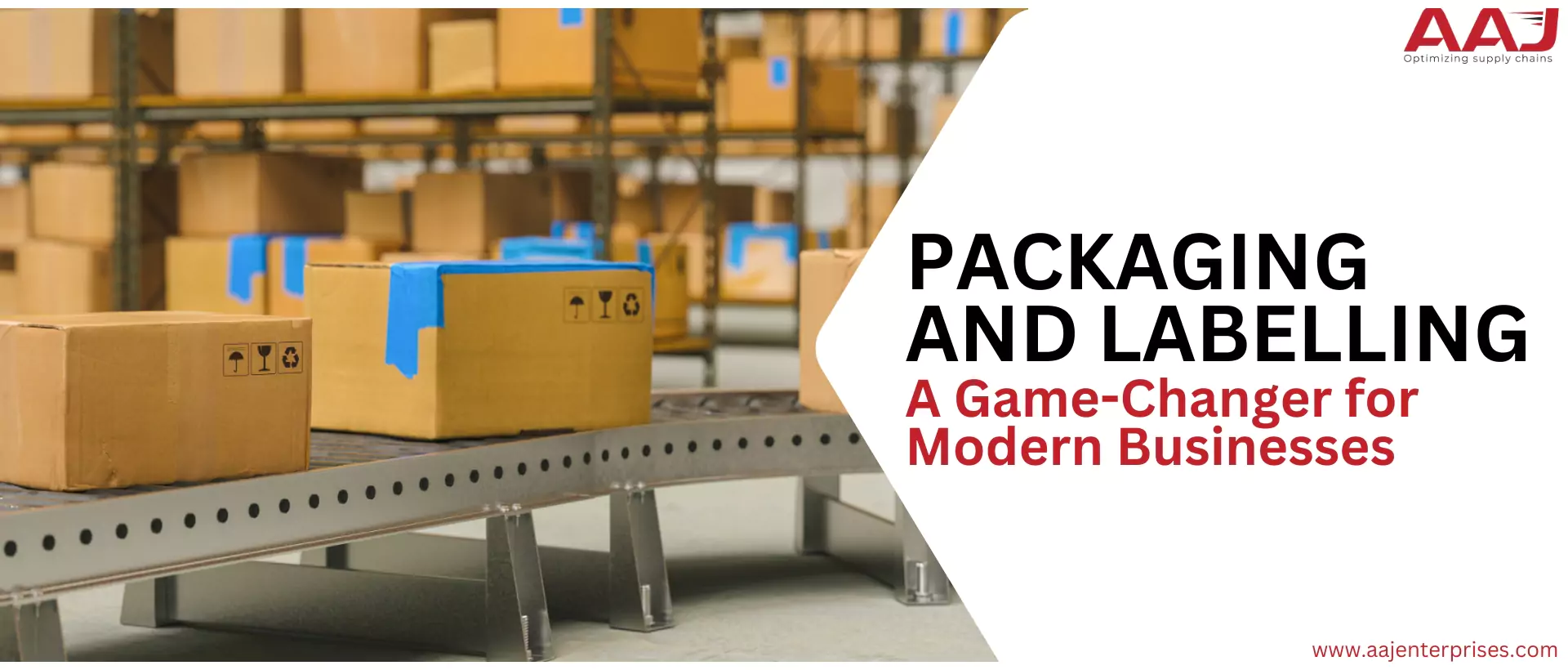


Packaging plays an important role in modern logistics. It safeguards products during handling and transportation, affects shipping efficiency, helps to achieve sustainability objectives and plays a role in the customer experience.
As supply chains become more complex and ecommerce continues to grow, packaging needs to do more than simply contain a product. Businesses increasingly need packaging that is protective, cost-efficient, appropriately sized, sustainable and suited to the way products move through the supply chain.
The right packaging strategy can help lessen product damage, ensure optimal transport and storage and ensure that businesses deliver products safely and efficiently.
The Role of Packaging in Logistics
A product can pass through multiple handling points before reaching its destination. On this trip, it can be impacted, vibrated, wet, exposed to temperature extremes, compressed and handled over and over again.
These hazards can be mitigated with appropriate packaging and provide a protective barrier that will help ensure product integrity during transit and storage. This is especially important for fragile, valuable, perishable and temperature sensitive goods.
Packaging has also an impact on logistics efficiency. The dimensions, weight and shape of a package can affect space effectiveness in the warehouse, vehicle capacity, shipping rates and packaging material usage.
In the ecommerce world, packaging can take a new form: one of the first touchpoints a customer has with the brand. Good packaging will then need to combine protection, efficiency, sustainability and customer experience.
Key Packaging Challenges in Modern Deliveries
There are several issues that businesses must take into account when designing the packaging for a modern supply chain.
Product Damage
If poorly protected and fragile products are damaged during handling and transportation, it can cause loss of product, return and customer satisfaction.
Last mile delivery and Delivery Challenges
Items could end up going through a number of handling points and transportation conditions before it arrives at the customer. The complexity of operations will further be affected by urban delivery conditions and different destinations.
Shipping Costs
Shipping dimensions and weight are directly related to shipping needs and often, shipping costs. Businesses must thus strike a balance between sufficient protection and efficient design of the package.
Sustainability
There is an excess of packaging waste which can lead to excessive material use. There is a growing trend towards finding methods to minimize packages and still provide the necessary protection.
Product Integrity
Perishables, pharmaceuticals and other sensitive products might need special conditions while being packaged and transported to ensure that a particular range of humidity or temperature is maintained during the trip.
Packaging Trends That Are Impacting the Modern Supply Chain
1. Sustainable Packaging
Packaging decisions take sustainability into consideration. Companies are researching reusables, recyclables, biodegradables and responsibly sourced materials as well as eliminating unnecessary packaging.
Designing packaging systems to reduce resource consumption, waste generation and to be effective throughout the product lifecycle is becoming the focus rather than just changing one material for another.
When efficiency and environmental sustainability are counted, however, sustainable packaging can help accomplish both goals, as long as it is used in conjunction with product protection and transportation.
2. Right Sized and Minimal Packaging
Excessive packaging can lead to waste and inefficient transport and storage. Right sizing is the process of choosing or designing packaging containers that fit the product in the container and yet provide sufficient protection.
This can decrease volume of empty space, packaging material and unnecessary volume sent in shipments. Also, it can enhance the utilization of vehicle or warehouse space.
In ecommerce, where many businesses have significant amounts of packages being handled, any reduction or gain in package size can make a positive difference to their operation.
3. Smart and Connected Packaging
Technology is increasingly being used as part of packaging and shipment monitoring. Sensors can be used in suitable applications to monitor conditions such as:
- Temperature
- Humidity
- Shock or impact
- Location
This can be particularly useful for sensitive products where maintaining the required conditions throughout transportation is important.
QR codes and other digital identifiers can further feature physical packages to link the packages to the product or order or track them, thereby enhancing visibility in the supply chain.
4. Ecommerce-Focused Packaging
Ecommerce packaging needs to withstand a different distribution environment from many traditional bulk shipments. The packages could traverse many handling stations, sorting centers, trucks and last mile operations before landing in the hands of the customer.
Consequently, companies are increasingly going for longer-lasting materials, tamper-evident sealing, secure closures and packaging that's specifically created for parcels.
Meanwhile, packaging is also a component of the ecommerce brand experience. Good packaging design that facilitates easy opening can help improve the unboxing experience, while still keeping the product safe.
5. Data-Driven Packaging Optimization
Operational data can also be used to inform packaging decisions. Packaging data can be used to gain insights into product size, damage levels, return drivers, volume of products shipped, transportation expenses and packaging usage to determine areas that can be improved.
Demand forecasting can also aid businesses in planning for packaging-material needs and prevent shortages or overstock of packaging supplies. The original article emphasizes the connection between demand planning and packaging operations, specifically through predictive analytics.
The overall goal is to shift from packaging decisions based on assumptions to packaging decisions based on data.
6. Packaging for Returns and Reverse Logistics
As the growth of ecommerce has accelerated, so has the need to consider return journey packaging. Packaging which is easily re-closed, re-used or efficiently returned can make returns easier and reduce waste.
Tackling both the forward journey and the reverse journey together can enable businesses to develop a more efficient packaging system, instead of seeing reverse journey as a singular process.
How to Choose the Right Packaging Approach
No single packaging solution is suitable for all products and supply chains.
- Businesses should consider:
- Product fragility and protection requirements
- Product size and weight
- Transportation and handling conditions
- Storage requirements
- Shipping distance and mode
- Ecommerce or B2B distribution model
- Sustainability objectives
- Packaging and transportation costs
- Return requirements
The goal is to strike the perfect balance among protection, costs, efficiency, sustainability and the customer experience.
Conclusion
Packaging plays a crucial role in the logistics and fulfilment chain, impacting a lot of facets of the procedure including product safety, delivery efficiency, sustainability and consumer experiences.
Sustainable materials, appropriately sized packaging, digitally connected technologies, ecommerce-driven designs, data-driven optimization and return-ready packaging are all changing the way companies think about packaging and shipping products.
The most effective packaging strategy is not necessarily the most advanced one. It is the one that provides the right level of protection while using resources efficiently and supporting the needs of the wider supply chain.