
Warehouse storage plays a critical role in keeping inventory organized, accessible and protected throughout the supply chain. Whether a business manages a small product range or thousands of SKUs, the right warehouse storage solution can improve space utilization, inventory accuracy, order fulfillment and overall operational efficiency.
As businesses handle growing inventory volumes and increasingly faster fulfillment expectations, warehouse storage is no longer limited to simply keeping products inside a facility. Businesses need structured storage systems, efficient warehouse layouts, appropriate racks and shelving and technology-enabled inventory management to make the best use of available space.
Choosing the right warehouse storage solution depends on several factors, including product type, inventory volume, throughput, available space, budget and operational requirements.
What is Warehouse Storage?
In the warehouse, the systematic storage, arrangement and management of goods until they are needed for further processing, distribution or delivery is called warehouse storage. It plays a crucial role in the supply chain management process since the manner in which the products are stored has a direct impact on how quickly and accurately they can be retrieved.
Modern warehouse storage is a blend of processes, technology and physical storage. Warehouses typically rely on racks, shelving, pallet systems, mezzanine floors and other types of storage structures, as well as warehouse management systems (WMS), in order to keep track of inventory and make the best use of space.
The ideal warehouse storage system should allow inventory to be easily found and stored safely while also being easily accessible when needed. A correctly designed storage system will also allow more effective use of the vertical space and minimise unnecessary movement in the warehouse.
What is the process for storing warehouses?
Once goods are received to the warehouse, the act of storing them to the warehouse is called the warehouse storage. Inward process, products are examined and allocated to certain storage areas according to the specific characteristics and requirements.
After the order is made data regarding the inventory is used to determine which products should be ordered and where. The products are then picked by the Warehouse staff who take them to the Packing area where they prepare and dispatch the products. The shipment is then passed on to be moved and dispatched.
All of these activities can be supported by a warehouse storage system that is organized in a way that allows products to be stored and retrieved efficiently.
Various kinds of Warehouse Storage Solutions
No one size fits all when it comes to storage. Businesses need to select a solution based on the size, weight, volume, movement and characteristics of their products. The warehouse storage solutions are:
1. Pallet Racking Systems
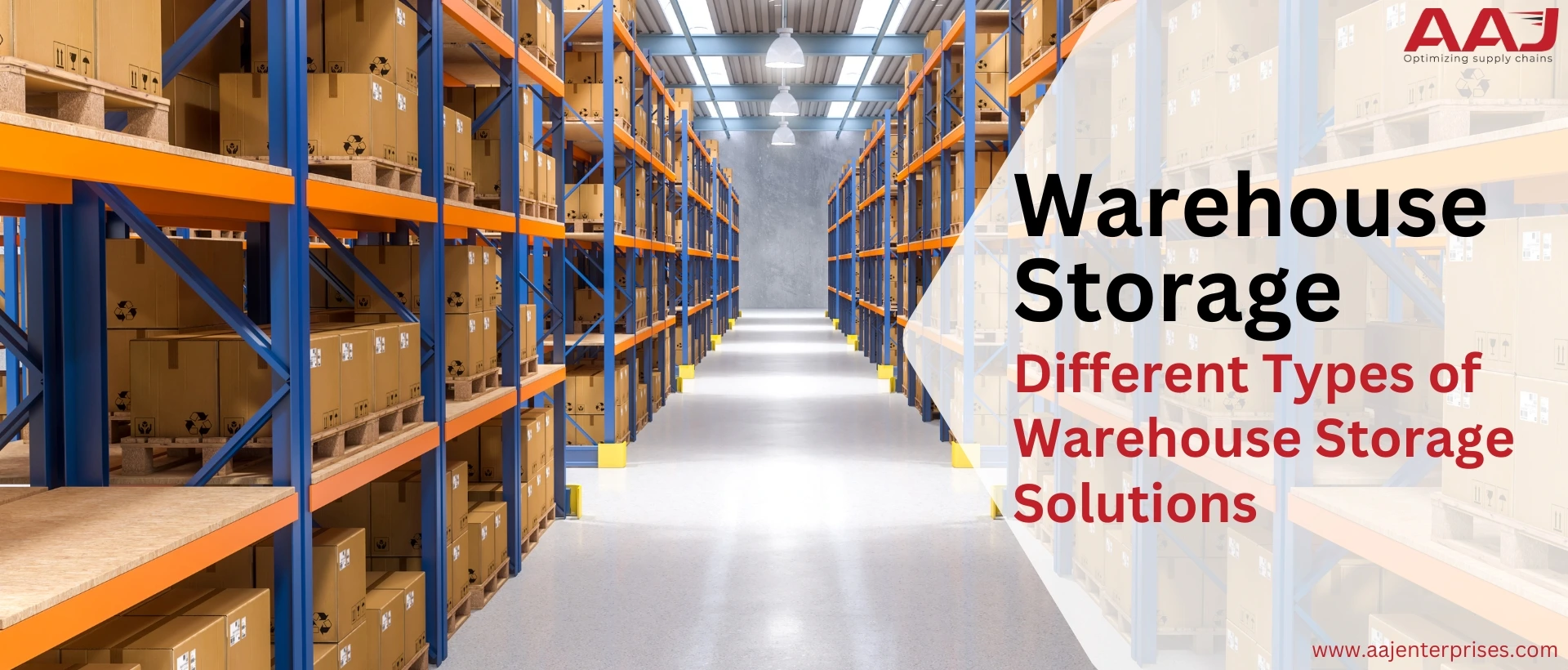
Pallet racking is a popular method of product storage, especially in warehouses with high stock levels of heavy or large products that are stored in pallets. These systems can be used efficiently to maximize vertical warehouse space and to access the inventory with forklifts or other material handling equipment.
The various pallet racking configurations include drive-in, drive through, double deep, narrow aisle, push-back, pallet flow and shuttle pallet racking, depending on the storage requirement.
2. Static Shelving
Static Shelving is the type of shelving that is available with fixed shelves which are used primarily for light products that are picked and put by hand. It is appropriate for those products where frequent access is required and where forklift access is not required.
Static shelving can be installed in a warehouse for those companies that deal with products like books, apparel, FMCG products and other relatively lightweight products.
3. Multi-Tier Racking
Multi-tier racking system to utilize vertical space in multiple layers. They work well especially for warehouses with a high volume of smaller products that must be picked by hand.
Multi-tier racking is used to maximize storage space in the warehouse without having to expand the building's footprint. The structure of each level should, however, take into account access, load, rack height and safe conditions of operation.
4. Mezzanine Flooring
Mezzanine flooring will provide additional space above an existing warehouse floor and can greatly expand usable space. It should be considered if the warehouse space is designed with sufficient height to grow upwards and the layout allows it.
Other features like lighting, lifts and conveyors can also be added to a mezzanine system depending on operations.
5. Mobile Shelving and Racking:
Mobile shelving and racking systems are tailored to maximize floor space and to offer flexibility. Fixed aisles can be reduced and extra storage space can be created by moving or adjusting the storage units.
These systems can be particularly useful for manually picked inventory where access and space utilization are both important considerations.
6. Wire Partitions
Wire partitions can be used to create enclosed storage areas or cages within a warehouse. They provide flexibility, as they can be built, changed, or taken apart as needs evolve.
They are also helpful if some stock requires extra security or restricted access.
Best Strategies for Efficient Warehouse Storage
Choosing the proper storage equipment is just one aspect of warehouse storage planning. The business should also have a good inventory and warehouse management.
Optimize Warehouse Layout
Warehouse layout is designed to minimize unnecessary movements and to facilitate picking and packing operations. Space should be utilized effectively on the floor and in the vertical space, yet still clearing the way to the stock and working spaces.
Having high velocity inventory positioned closer to picking and packing areas can also help to decrease travel time and make the warehouse more productive.
Apply ABC Inventory Classification techniques
ABC analysis can be used to sort out inventory based on the movement or importance of the items. Fast-moving Class A products may be stacked closer to picking areas and progressively less frequent access locations for Class B and Class C products. This can enhance accessibility and optimise warehouse space utilisation.
Implement a Warehouse Management System
A warehouse management system can offer improved inventory visibility and storage location. It can assist companies monitor stock, manage warehouse operations and minimize stock out or overstocking dangers.
If used in conjunction with an appropriate physical warehouse storage solution, WMS technology can help to enhance inventory control and operational efficiency.
Match Storage to Product Characteristics
There are various storage methods for different products. The key factors to take into account when choosing racking or shelving are product size, weight, breakability and perishability, along with frequency of use of products.
For instance, if the item is heavy, bulky and must be picked by hand, a pallet racking might be needed, but if the item is lightweight and can be picked by hand, a static rack or multi-tier racking may be a better option.
Consider Just-in-Time Inventory (JIT)
Just in time (JIT) inventory is another business tool that can be employed to keep inventory closer to what is needed. When properly executed, this can help free up warehouse space as well as lower inventory holding costs by eliminating unnecessary inventory.
There are several advantages to having good warehouse storage solutions.Good warehouse storage solutions offer several benefits.
An effective warehouse storage system can offer advantages in warehouse operations, as well as throughout the supply chain.
Benefits of Effective Warehouse Storage Solutions
A well-designed warehouse storage solution can provide benefits across warehouse operations and the wider supply chain.
Better Space Utilization
Efficient storage systems help businesses make the most of the space they already have. Using vertical space well, laying out racks thoughtfully and organizing storage locations properly can boost capacity often without needing to expand the facility at all.
Improved Inventory Management
When storage is organized systematically, products are easier to find and track. This kind of visibility helps prevent overstocking and stockouts and generally leads to more accurate inventory management overall.
Faster Picking and Order Fulfillment
Place inventory logically and keep the products people need most within easy reach and staff end up spending far less time walking around and searching. That translates directly into quicker picking, packing and dispatch.
Lower Operational Costs
Optimized storage cuts down on wasted space, unnecessary movement and product damage. Combined with better inventory visibility, this usually means tighter stock management and fewer costs that could otherwise be avoided.
Improved Safety and Security
A well-organized storage setup naturally makes for a safer working environment, since poorly placed inventory is one of the more common causes of warehouse accidents. Add surveillance, access controls and the right storage infrastructure and goods stay better protected from theft and damage too.
Scalability
A flexible storage system can flex with the business as inventory volumes shift, product ranges expand or requirements change. That kind of scalability makes it easier to manage seasonal spikes and long-term growth without hitting operational bottlenecks.
How to Choose the Right Warehouse Storage Solution?
Choosing a warehouse storage solution should start with the business's actual operational needs, not just whatever equipment happens to be available. Start with the products themselves. Their type, size, weight, fragility and how often they move. From there, look at the space available, both floor area and how much vertical height can realistically be used.
Location matters too. A facility positioned closer to target markets generally means faster deliveries and can help keep transportation costs in check. Technology shouldn't be an afterthought either. A provider running a proper WMS, along with other tech capabilities, gives businesses far better visibility into inventory and more control over operations.
Finally, it's worth evaluating security, safety, scalability and whether the provider can genuinely support the business's broader warehousing and fulfillment needs, not just the storage piece.
Warehouse Storage Solutions in India
As supply chains in India grow larger and more complex, efficient warehouse storage matters more than ever. Businesses across retail, e-commerce, manufacturing and B2B distribution all need storage systems that can keep pace with rising inventory volumes without compromising on accessibility, safety or efficiency.
For businesses that would rather not sink heavy capital into building and running their own warehouse, outsourcing to a third-party logistics provider is often a practical alternative. A good 3PL partner brings warehouse infrastructure, storage systems, manpower and technology to the table, so the business doesn't have to manage the entire facility on its own.
Final Words
Effective warehouse storage is about far more than just stacking products on shelves. Getting it right means bringing together the right infrastructure, an efficient layout, proper inventory organization, the right technology and well-defined processes.
There's no shortage of options either: pallet racking, static shelving, multi-tier systems, mezzanine flooring, mobile storage. The right choice really comes down to what the inventory and operations demand.
Get the strategy right and keep refining how inventory is stored and accessed and the payoff shows up everywhere: better space utilization, tighter inventory management, faster fulfillment, improved safety and the flexibility to scale.