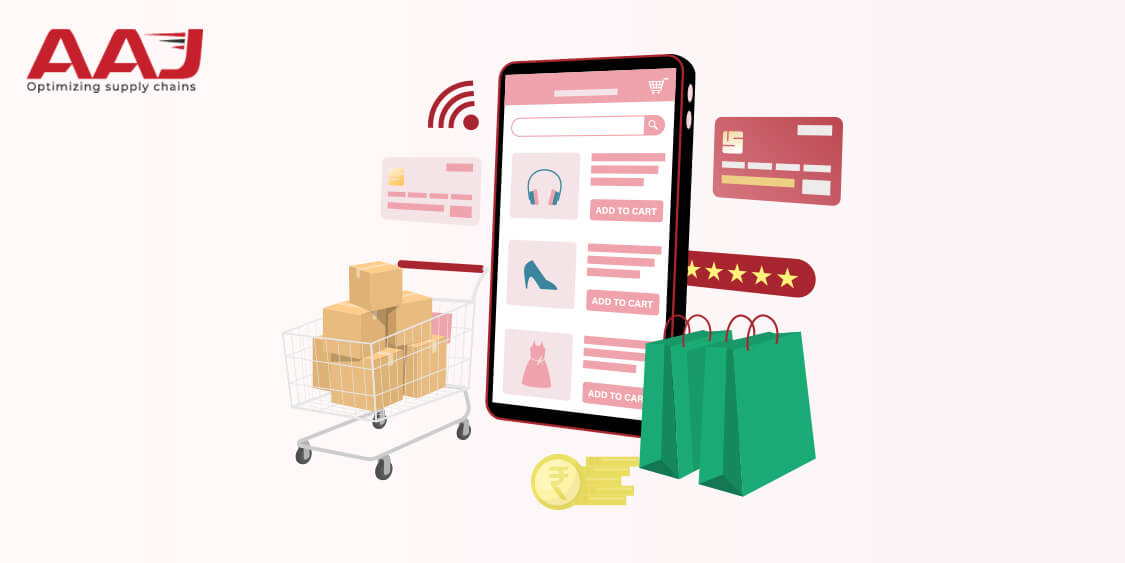

The ecommerce revolution has changed the way businesses sell products and how consumers want them delivered. A customer can find a product online, make a purchase in a matter of seconds and watch its journey in real time and receive it in a short time. All this is possible thanks to a complex ecommerce supply chain that links inventory from warehouses, technology, transport, fulfillment and returns.
The ecommerce supply chain has grown a long way from the conventional bulk-distribution chain. Modern businesses are required to deal with smaller and more frequent orders, greater product range, quicker delivery timeframes, multiple sales channels and more complicated returns.
Meanwhile, the choices being made on the supply chain are no longer limited to speed and cost. Businesses are turning toward the concept of being resilient, visible, automated, waste reducing and sustainable. This has transformed ecommerce supply chain management from just logistics to strategic.
What Is an Ecommerce Supply Chain?
An ecommerce supply chain is the series of actions, actors, technology, facilities and logistics partners that form the path a product takes from source to end customer.
Usually involves procurement, inventory management, warehousing, order fulfillment, packaging, transportation, last mile delivery and returns management.
An ecommerce supply chain may manage a significantly greater quantity of smaller orders from individual customers, in contrast to the retail supply chain. It must also have increased visibility as customers want to be able to see if an order has been received, processed, shipped and delivered.
Hence, a good ecommerce supply chain should strike a balance between inventory levels, fulfillment time, cost of operations, delivery quality and customer experience.
What has changed in the Ecommerce Supply Chain?
In the past, businesses used bulk distribution systems to a great extent. Wholesalers or distributors would deliver in bulk to the retailer and the retailer would have to take care of the storage and sales through their shops.
This changed when eCommerce grew. Businesses are no longer just about shipping goods in bulk, but are also about delivering goods to the consumers as per their designated order. This presented fresh challenges for warehouses, order processing, inventory visibility, parcel transportation and last-mile delivery.
The rise of the large fulfillment centers and regional distribution centers enabled businesses to place their inventory nearer the customer. Third-party logistics (3PL) providers also helped ecommerce companies to outsource their warehousing, shipping and fulfillment requirements without having to construct their own infrastructure.
Since then, it has progressed more with automation, artificial intelligence, real-time tracking, omnichannel fulfillment and accelerated delivery times.
Managing an ecommerce supply chain is a process that needs to be coordinated among several operational functions.
1. Inventory Management
Inventories must be correct in both terms – the right amount, in the right place. Bad inventory management can lead to inventory shortages, overstocking, delays in delivery or increased holding costs.
The real-time tracking of what's in the store and what customers are ordering has become a cornerstone to enhancing replenishment and inventory allocation in modern ecommerce operations.
2. Warehousing and Fulfillment
Today, warehouses are more than just storage areas. To fulfill ecommerce orders in a timely and efficient manner, ecommerce fulfillment centers must receive inventory, store it, process orders, pick and pack items and hand over a shipment.
Warehouse Management Systems (WMS), barcode scanning, automation and structured inventory processes can enhance the level of accuracy and the time needed to process orders.
3. Last-mile delivery and transportation.
After order put outside of fulfillment center, transportation and last mile delivery govern how speedily the order continues to reach the customer.
An ecommerce company can have more than one logistics and courier partner for various areas of the country, services and products. Improved delivery performance can be achieved through route optimization, shipment tracking and automated carrier allocation.
4. Returns Management
Returns are crucial component in ecommerce supply chain management, especially for fashion or consumer goods products.
Waste is not the same as a product that has been returned. It can be reused, repackaged, refurbished, repaired, recycled or returned to the right supply chain, depending on the condition of the item.
This creates a link between ecommerce operations and circular supply chain management, making returns management crucial.
The digital era and how the retail sector is changing with ecommerce supply chains.
One of the most powerful technologies which is changing ecommerce supply chains is technology. There's a greater emphasis on collaborative systems where businesses can make quicker decisions based on the data.
AI and Predictive Analytics.
AI is now being used in various other applications like demand forecasting, inventory planning, route optimization, customer insights and operational decision making. AI is also becoming increasingly prevalent in the ecommerce industry, as shown by recent industry research.
But AI is not enough to build a resilient supply chain. Indeed, recent research and industry analysis highlight that organizations also require connected data, integrated processes, accountability and quick action when things change.
Real-Time Visibility
Customers and businesses have growing demands for real-time information on shipments and inventory.
Different parts of the supply chain can be seen by Connected WMS, Transportation Management Systems (TMS), order management systems, marketplace integrations, GPS tracking and digital proof of delivery.
With improved visibility, companies can detect delays earlier, deal with exceptions and give customers more up-to-date delivery details.
Automation in Warehouses
The need for ecommerce order volume and fulfillment expectations continue to rise and warehouse automation is becoming more relevant. This will cut down on repetitive manual tasks and increase throughput by using automated sorting, storage and retrieval systems, conveyors, scanning technologies and robotics.
The goal isn't just to automate everything. There are processes in which business can get some measurable operational or financial advantage from automation and those processes need to be identified.
Quick Commerce and Distributed Fulfillment
A key advancement in the ecommerce fulfillment landscape is the emergence of speedier fulfillment choices, such as quick commerce.
Instead of having large centralized fulfilment centers, companies can opt to place inventory nearer the demand, with regional fulfilment centers, micro-fulfillment centres or dark-stores.
This decentralized model can help decrease the time between products and customers and make it easier to get products out. Fast-commerce infrastructure, value added services, automation and tech-driven fulfillment networks are also helping to transform the ecommerce logistics market in India.
But speedy delivery can also generate fresh issues in the supply chain. Distributed fulfillment is only economically viable if businesses are able to accurately predict demand, strategically position inventory at these locations, replenish efficiently and have strong last-mile delivery capabilities.
The Growing Role of 3PL in Ecommerce
The third-party logistics (3PL) wave has made ecommerce supply chain infrastructure more available to companies of all sizes.
An ecommerce business could choose to outsource its technology, transportation system, inventory management, order fulfillment, shipping and returns to a 3PL provider rather than investing in their own fulfillment teams, warehouses, warehouses and transportation systems.
This model could be useful as businesses grow into new markets without having to invest in physical infrastructure. It also provides the opportunity for them to build on existing logistics networks and experience.
But with the complexity of ecommerce, a 3PL is shifting beyond simply storage and shipping into more integrated fulfillment and supply chain management.
Creating a Sustainable Ecommerce Supply Chain
Sustainable Packaging
Minimizing excess packaging, choosing recyclable or responsibly sourced packaging materials and implementing reusable packaging practices can help to decrease material waste.
A 2025 study also examined the potential of combining return predictions with reusable packaging to make the ecommerce packaging more environmentally and economically viable.
Smarter Transportation
Route optimization, shipment consolidation, improved load utilization and optimized delivery network design can help to make transportation more efficient.
In addition, companies can consider alternative methods of transport with reduced emissions and more efficient delivery systems where operationally viable.
Circular Supply Chains
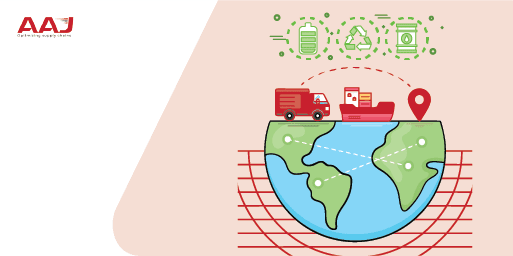
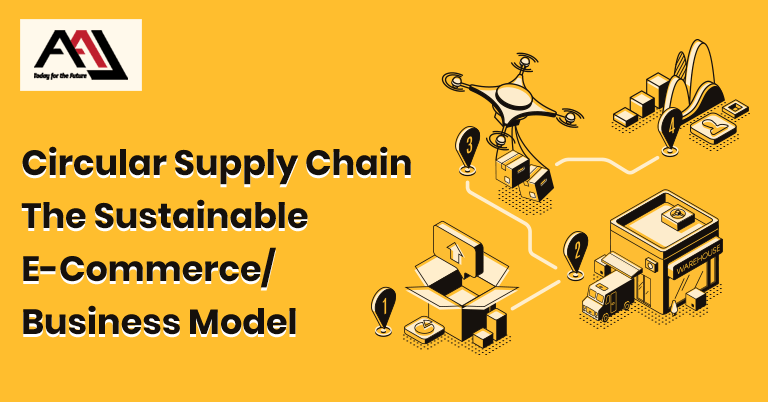
The goal of a circular supply chain is to keep products in use as long as possible and to not dispose of returned, damaged or used products as waste.
Businesses can create a process for inspection, refurbishment, repackaging, resale, recycling and/or responsible disposal of returned inventory, rather than just tossing it in the trash.
Sustainability is becoming more a part of ecommerce supply chain strategy and not just another initiative. In addition, 85% of the ecommerce businesses surveyed by DHL believe that sustainability is important and consumers are increasingly interested in sustainable delivery, recycling, resale and circular models.
In the business world, this translates to sustainability being integrated along the entire product lifecycle, from sourcing and warehousing, through packaging, transporting, delivery and returns.
So What Will the Future of ecommerce supply chain management be?
The future of ecommerce supply chain will be marked by increased connectivity, quick decision making, adaptable fulfillment routes and more seamless interactions between brick-and-mortar and digital operations.
Businesses can use AI to anticipate customer needs and spot trends. The warehouse can be more productive with automation. Distributed fulfillment can help move inventory closer to customers. Integrated logistics platforms can provide better visibility of shipments. Circular supply chains can generate new recovery and resale value streams for products that are considered waste.
Technology shouldn't be a standalone solution, it's about a wider supply chain approach. However, recent analysis has shown that businesses can be very efficient in their functions, but when the data, planning and decisions are not integrated, this can leave them open to being very inefficient overall.
The best ecommerce supply chain will thus be a combination of speed, transparency, flexibility, resilience and sustainability.
Conclusion
The ecommerce supply chain is no longer about the product's path from the manufacturer to the store. In today's business landscape, companies are required to work with inventory, fulfillment centers, technology, transportation, last mile delivery and returns to provide a quick and reliable customer experience.
The ecommerce supply chain is also increasingly data-driven and technology-backed, with AI and automation, in-the-moment tracking, 3PL networks and distributed fulfillment all reshaping business operations.
Meanwhile sustainability is also becoming part of the supply chain strategy. There are significant potential for businesses to make ecommerce supply chains more efficient, more sustainable, from reducing packaging waste to optimising transportation, developing returned products and building circular models.
The fastest ecommerce supply chain will no longer own the future of ecommerce. It will give businesses the ability to create fast, visible, resilient, scalable and responsible supply chains.