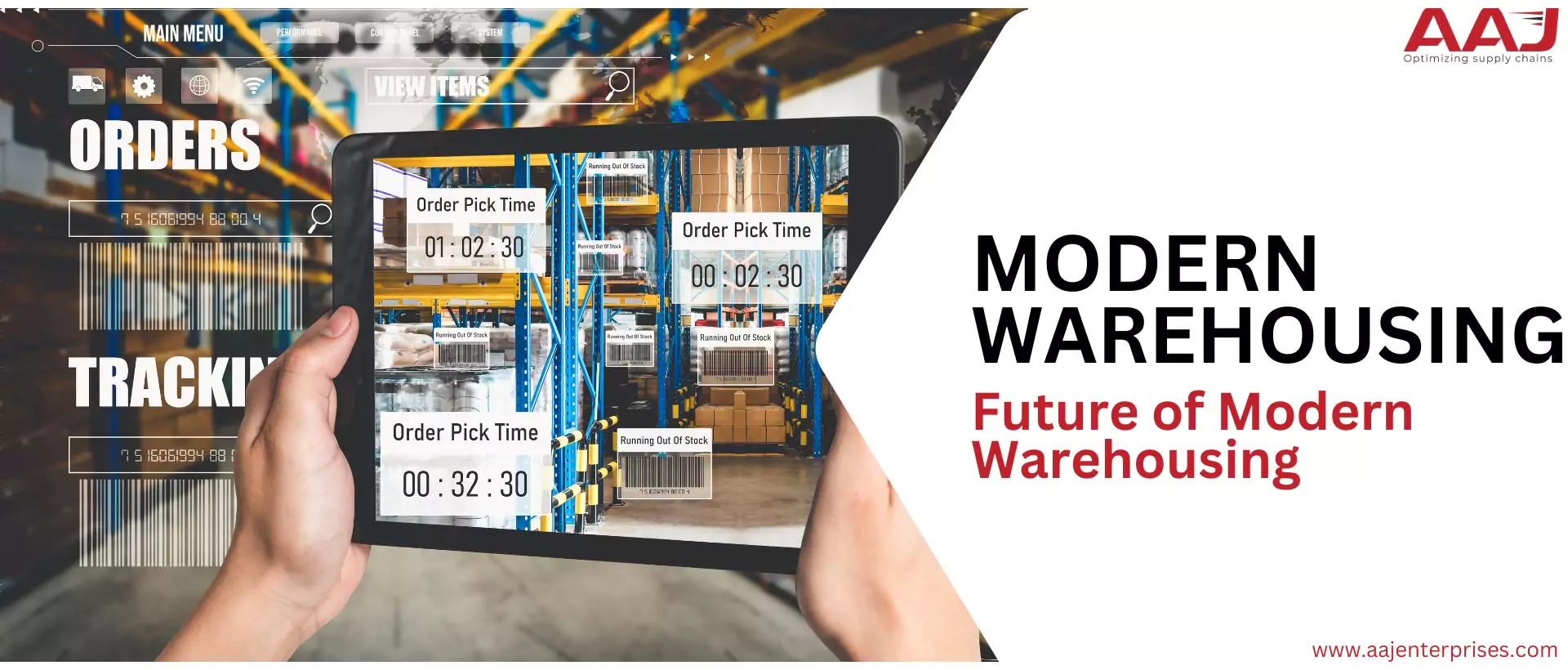
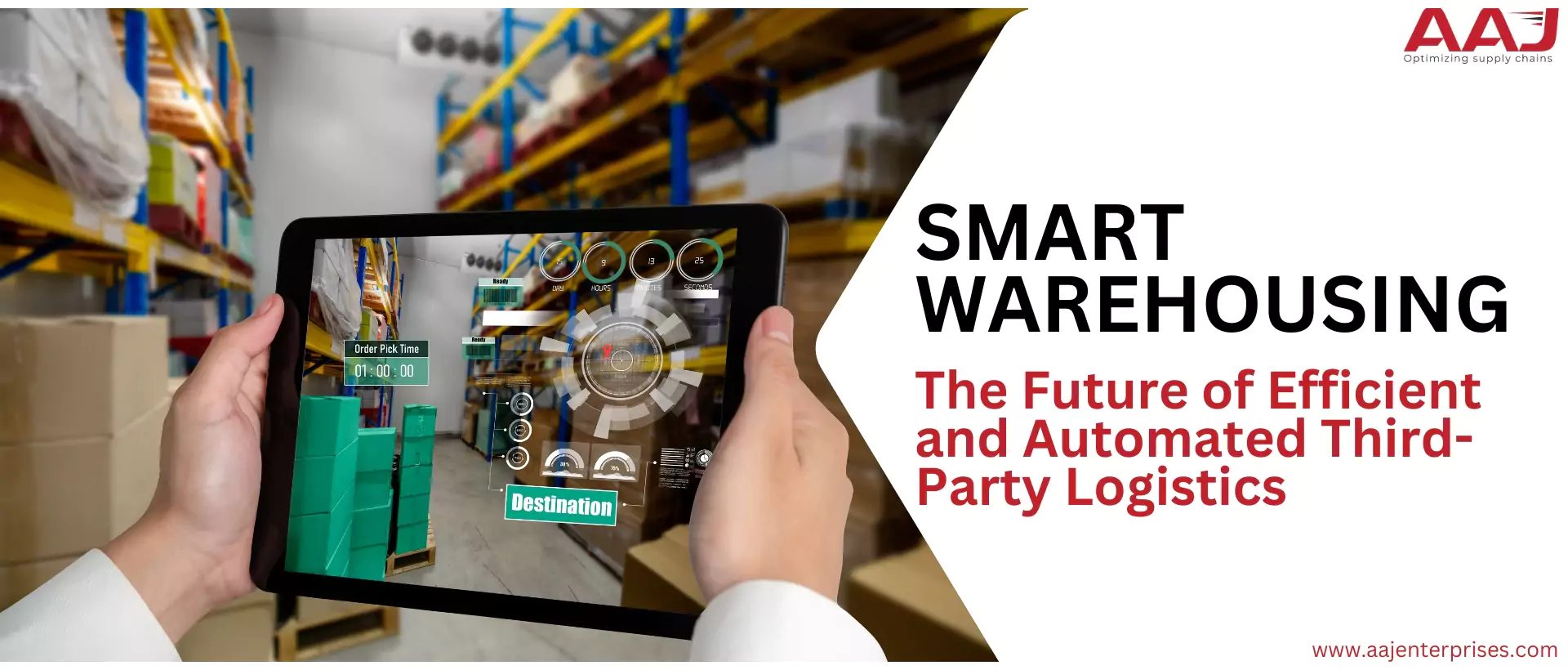

Today, warehousing is much more than just a place to store products. Many warehouses are leveraging advanced technologies like warehouse management systems (WMS), barcode systems, automation, and real-time inventory monitoring to enhance accuracy, visibility, and efficiency.
This transformation has placed smart warehousing as a key component of today's third-party logistics (3PL) service. Smart facilities are not just conventional warehouses but bring together people, processes, equipment and technology to enhance warehouse operations and inventory management.
The need is even greater for 3PL providers, as one facility could be responsible for storing inventory for multiple businesses, with varying SKUs, order volumes and service needs. Technology can help to standardize these operations and provide clients with a greater view of their inventory and order flow.
What Is a Smart Warehouse?
Smart warehouse is a technological solution in which the warehouse is equipped with automation and digital solutions to facilitate inventory management, storage and distribution. It integrates various technologies like Warehouse Management Systems (WMS), barcode scanners, real-time inventory visibility, and automation to enhance accuracy and visibility.
A smart warehouse doesn't mean a warehouse without humans. The human involvement in receiving and storing goods, in picking and packing, and in goods dispatch remains important. Technology helps these teams to minimize human error, offer more information and make quicker decisions.
A smart warehouse is a combination of people, processes, technology and data, which results in a more accurate and efficient warehouse.
How Smart Warehousing Works?
1. Inbound Receiving
It is the process of receiving the goods in warehouses, storing, and managing them. First of all, sensors do the tracking of incoming inventory, logging them into a Warehouse and Inventory Management System (WMS). This first step removes manual entry errors and ensures instant visibility for stakeholders.
2. Quality Check & Putaway
After receiving, warehouse teams check the quantity, condition, and product details. Scanned data helps them verify the goods against the expected inventory.
Once approved, the WMS assigns the right storage location based on product details, available space, and warehouse rules. This helps teams put products away faster and reduces misplaced inventory.
3. Inventory Tracking
The WMS tracks inventory as it moves through the warehouse. Barcode scans update the stock position whenever products are received, moved, picked, or dispatched.
This gives warehouse teams and clients a clear view of stock levels and product movement without relying on manual records.
4. Storage & Slotting
Smart warehouses use inventory data to decide where products should be stored. Frequently ordered products can be placed closer to picking areas, while other products can use suitable storage locations based on their size, demand, and handling needs.
This improves space utilisation and can reduce the time teams spend moving through the warehouse.
5. Order Processing
When an order comes in, the WMS checks inventory availability and creates the required warehouse tasks. It helps teams identify the right products and follow the correct process for each order.
For 3PL operations, this also helps manage orders for different clients and their specific fulfilment requirements.
6. Picking & Packing
Warehouse teams use scanners and WMS instructions to pick the right products for each order. Scanning at the picking stage helps verify the product and quantity before it moves to packing.
At the packing stage, teams can follow predefined packing rules based on the order. This reduces picking errors and helps maintain consistent fulfilment quality.
7. Dispatch
Before dispatch, the system verifies the order and updates its status as it leaves the warehouse. Shipment details can also move between the WMS and transportation systems to support the next stage of delivery.
This creates a clear record of what was dispatched, when it left, and where it is headed.
8. Real-Time Monitoring & Reporting
A smart warehouse brings data from different processes into one view. Managers can track inventory levels, order status, receiving, picking, dispatch, and other key warehouse activities through the WMS.
This data helps teams identify delays, track performance, and make faster operational decisions. For 3PL clients, it also provides better visibility into their inventory and order fulfilment.
Core Technologies Behind Smart Warehousing
Now, let’s talk about the core technologies that Smart Warehousing is equipped with. Here are the top ones:
1. Robotics and Automation
Human error is decreased when picking, packing, and palletizing are handled by robots. These robots work around the clock, guaranteeing constant productivity. Automated Guided Vehicles (AGVs) can change warehouse layouts and efficiently shift inventory without the need for human intervention.
2. Internet of Things (IoT)
IoT sensors have the great capability to trace goods in real-time which makes sure of the precise stock levels. State-of-the-art IoT-enabled devices can also alert managers to possible equipment failures or postpones in supply chain procedures. To ensure that vital products like food and medicine comply, smart devices monitor environmental factors like temperature.
3. Artificial Intelligence (AI) & Machine Learning
Analytics powered by AI forecast demand and allocate resources optimally. Businesses can better prepare for seasonal or unpredictable demand spikes with the help of predictive analytics.
While machine learning enhances functional processes by analyzing the patterns, for example, ML can propose ideal routes for AGVs or pinpoint incompetencies to fulfillment.
5. Warehouse Management Systems (WMS)
WMS focuses on data for goods, workers, and space management. The cutting-edge WMS solutions incorporate enterprise resource planning (ERP) systems for end-to-end view.
Besides, it presents great features such as active slotting, labor forecasting, and demand planning to power up resource usage.
6. Barcode / Scanning
Barcode scanners help warehouses track inventory accurately at each stage of the operation. From receiving and putaway to picking, packing, and dispatch, scanning records inventory movements in the WMS and reduces the need for manual data entry. This improves inventory visibility, helps reduce picking errors, and makes it easier to track the movement of goods in real time.
Benefits of Smart Warehouses
- Higher Inventory Accuracy: Barcode scanning and WMS updates reduce manual errors and keep stock records accurate.
- Faster Order Processing: Digital workflows help teams process, pick, pack, and dispatch orders faster.
- Better Space Utilization: Inventory data helps place products in suitable locations and make better use of available warehouse space.
- Improved Inventory Visibility: Real-time updates show stock levels, product movement, and order status across warehouse operations.
- Reduced Manual Work: Technology automates repetitive tasks and reduces the need for manual data entry and record keeping.
- Better Scalability: Smart warehouse processes can handle changes in inventory, order volumes, and business requirements without major process changes.
- Improved Traceability: Digital records create a clear history of inventory movements from receiving to dispatch.
- Better Customer Service: Accurate inventory and faster order processing help businesses provide reliable fulfilment and delivery.
- Data-Driven Decision-Making: Warehouse data helps teams identify operational issues, track performance, and make informed decisions.
The Role of Automation in Smart Warehousing
Our CEO recently had the opportunity to visit a few large-automated warehouse service providers which were successfully churning out 2 times the volume vs non automated warehouses of the same size. She has been actively evaluating the smart warehouse management systems in the last 1 year and worked with a few suppliers making notes and drawing excel sheets for ROI comparison. However, seeing live automation systems at site, spending time with the leadership and taking feedback from the users made a big difference to her understanding of automation projects. It brought life to the numbers by giving them context.
Here is what she learnt.
It is Not Only About Savings in People
Our natural response to any automation opportunity in India is ‘ oh labor is so cheap here and that is why it won't make sense’. Well labor is cheap here – that’s true minimum wages in the UK are 17 times higher than that in India!! However, automation is not only about savings in labor, it's also about saving in space. She learnt that an appropriate automation system can save 50% of storage space by unlocking storage density.
Product Value Plays a Role
If a machine is doing the job the effort and time required to manage inventory drastically reduces. You have less mis picks and shortages. Chances for pilferage swoop down to zero. So, for a high value product where the cost of product is exponentially higher than the supply chain costs, automation brings sizable inventory savings.
Scalability and Our Future
Worker’s efficiency and efficacy is turbo charged with automation where the job is standardized to a level where learning it is fast and doing it is easier. This reduces the replacement cost of manpower and hence, the training cost. Irrespective of how good our processes in the warehouse are, training people is one of the biggest imperatives to scale. Automation reduces training needs allowing to scale up faster for the warehouse providers.
Everything however is not encouraging as there are hardly any reliable and large-scale automation solution companies from India offering customized solutions developed indigenously. Import duties and an unfavorable exchange rate drastically add up to the cost. As we solve this, automation will empower our future.
Difference Between Smart and Traditional Warehousing
Below stated table defines the ideal difference between smart warehousing and traditional warehousing. Take a look:
| Characteristics | Traditional Warehouse | Smart Warehouse |
|---|---|---|
Labor Dependency | High | Low |
Efficiency | Limited | High with automation |
Error Rate | Relatively High | Minimal |
Real-Time Tracking | Absent | Enabled through IoT and WMS |
Cost | Higher operational costs | Cost-effective in the long run |
Smart warehouses surpass traditional ones in almost every parameter. To understand this better, perceive this example simply that real-time tracking in smart setups turns on greater decision-making, while conventional systems still depend upon outdated manual updates.
Key Challenges in Adopting Smart Warehousing in India
Everything and every technology has two aspects. As benefits power up the game of businesses and their operations through smart warehousing. It also has downsides in the form of a few challenges. Here are the top ones:
1. High Initial Investment
State-of-the-art technologies such as robotics and blockchain need substantial capital, often ranging between ₹5 to ₹15 crore for medium-scale facilities. Small businesses get this investment restrictive.
2. Skill Gap
Nominal availability of skilled professionals to handle and sustain mechanisms. Training programs and certifications for smart warehouse technologies are still in their babyhood in India.
3. Infrastructure Issues
The confined availability of high-speed internet in rural areas hinders IoT and cloud-based functions, which need non-intervened connectivity.
4. Regulatory Obstacles
Compliance with developing laws increases complexity. For example, abiding by data localization laws influences cloud-based mechanisms that rely upon international data centres.
Future of Smart Warehousing in India
The warehouse companies in India are anticipated to rise exponentially as lead industries such as e-commerce, manufacturing, and pharmaceuticals are on constant evolution. With government initiatives such as the National Logistics Policy (2022), more enterprises are embracing smart storage warehouses.Logistics Industry experts anticipate that 70% of 3PL companies will transfer to smart warehousing by 2030 to fulfill customer expectations. Automation will be a core driver, mitigating costs by up to 20%.
From Our CEO: Anamika Jain Discusses the Power of Smart Warehouses in India
What does smart mean for a warehouse? A question as intricate as easy it sounds. I had the privilege to discuss about this with an august panel of fellow supply chain enthusiasts at Indian Chamber of Commerce this month and I learnt this:
- Smart doesn’t necessarily mean more tech, it means innovative. The head of supply chain at a major F&B company shared that in his experience lean and small warehouse service providers tend to be more innovative – not surprising considering the freedom and speed with which they can experiment and execute.
- Baseline standards - The warehousing development and regulatory authority of India (WDRA) has set up a warehouse registration and certification process. Certified warehouses meet baseline warehousing standards. It is foundational work by GOI for organizing the warehousing industry and in future this may become mandatory.
- The Indian warehousing industry is pacing up well in terms of quality of warehousing infrastructure compared with developed nations. Even though the per capita warehousing footprint of the USA is 200 times that of India outlining the huge potential for growth, the quality of warehousing services and infrastructure are competitive.
- Data and visibility remain fundamental to building smart warehouses and targeted initiatives with clear end goals and integrated visibility can help improve efficiency of the warehouses in turn making them smarter.