
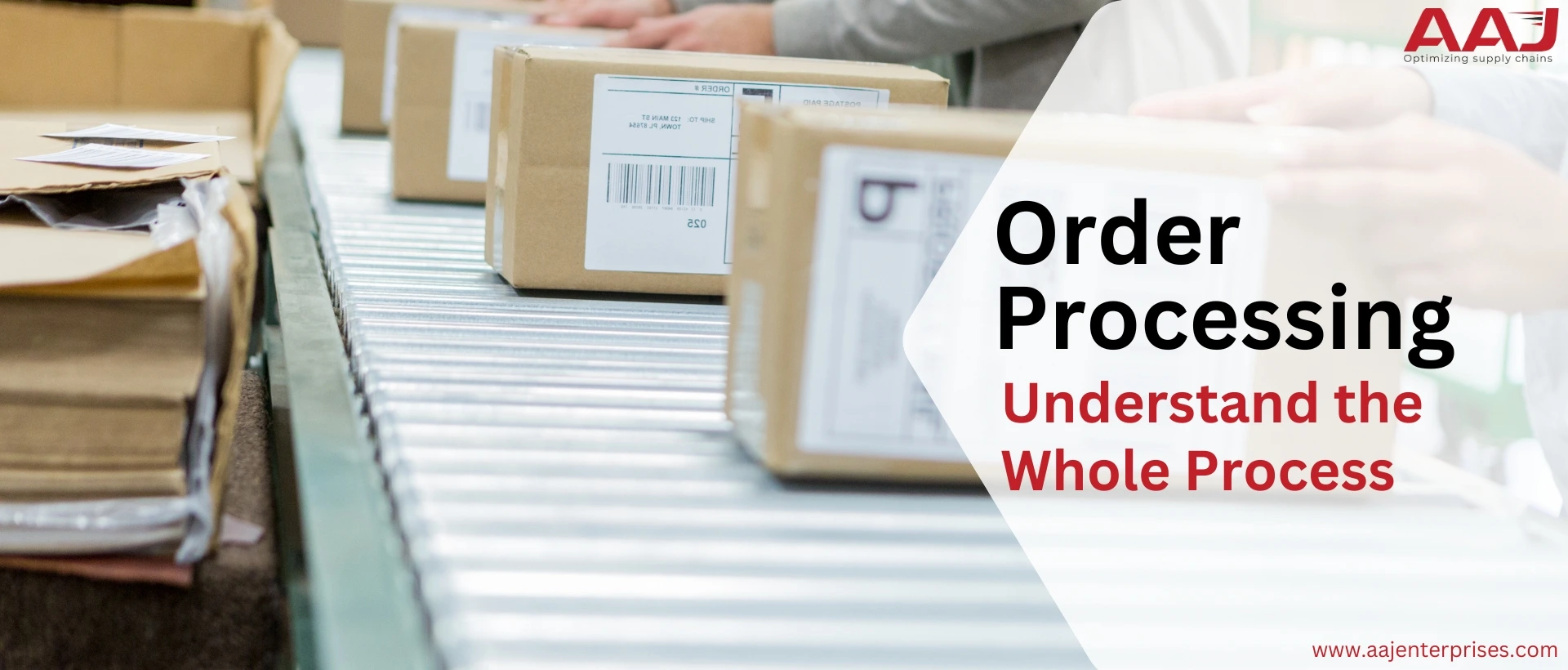

The number of consumers ordering products and services online has grown significantly. But have you ever thought about what happens once you place an order on an ecommerce site?
Order processing begins when a customer places an order. The order details are captured and routed to the appropriate fulfillment location based on factors such as inventory availability, customer location, delivery requirements, and warehouse capacity. The warehouse then verifies the order, picks the required products, packs them, and prepares them for shipping.
Although this may look like a simple process from the customer's side, each step needs to work accurately and on time to ensure the right product reaches the right customer.
What Is Order Processing?
Order processing involves the steps required to fulfill a customer order, from receiving and validating the order to picking, packing, and shipping the products. It starts when an order is received and, for the scope of this process, ends when the order is dispatched for delivery.
An efficient order processing operation involves coordination between teams such as sales, warehouse, inventory, and transportation. Businesses may also use systems such as an Order Management System (OMS) to manage and route orders and a Warehouse Management System (WMS) to support inventory, picking, packing, and dispatch activities.
Types of Order Processing Systems
Orders can be taken by hand, or technology can be used to automate some aspects of the order. The method chosen will depend on the volume of orders, complexity of the products, available infrastructure and operational needs.
1. Manual Order Processing
Manual order processing depends on humans to input, update, verify and coordinate order information. Orders and inventory could be managed using paperwork, desktop software, or other simple systems like spreadsheets such as Excel.
For businesses with small order volumes, manual processing can be the solution. But when orders start rolling in, the double data entry and stock-in-stock updates can become time-consuming and error-prone. These errors can impact picking, packing, inventory and deliveries.
2. Automated Order Processing
Automated order processing uses software and technology to reduce manual work across selected order fulfillment activities. Different systems perform different functions:
- Order Management System (OMS): Manages and coordinates orders across sales channels, including order status, routing, and fulfillment decisions.
- Warehouse Management System (WMS): Manages warehouse inventory and supports activities such as receiving, storage, picking, packing, and dispatch.
- Automation: Uses technologies such as conveyors, scanners, robotics, or automated workflows to reduce manual work in specific warehouse tasks.
When these technologies are properly integrated, businesses can improve inventory visibility, reduce repetitive data entry, and process higher order volumes with greater consistency.
Why Is an Effective Order Processing System Important?
An effective order processing system helps businesses move orders through fulfillment accurately and efficiently. It becomes especially important as order volumes, product ranges, and customer expectations increase.
1. Enables Faster and More Accurate Fulfillment
Accurate order processing helps ensure that the right product, quantity, and delivery details reach the warehouse and fulfillment team. This can reduce picking and packing errors, prevent incorrect shipments, and support timely dispatch.
Fewer fulfillment errors can also reduce avoidable returns and improve the customer experience.
2. Improves Operational Efficiency
A streamlined order process reduces repetitive manual work and improves coordination between order management, inventory, warehouse, and transportation teams. Businesses can use systems such as an OMS and WMS, along with barcode scanning or other automation, to make selected tasks faster and more consistent.
3. Improves Inventory Accuracy
Accurate inventory information helps businesses know what stock is available, where it is stored, and when replenishment may be required. Barcode scanning, RFID, and integrated inventory systems can help update and verify stock movements.
Better inventory accuracy can reduce both unnecessary overstocking and situations where customers place orders for unavailable products.
4. Supports Business Scalability
Order volumes can increase during peak seasons, promotions, or business expansion. A well-designed order processing system can help businesses handle higher volumes without relying on the same level of manual effort.
The ability to scale depends on the combination of technology, warehouse capacity, staffing, processes, and fulfillment infrastructure.
An efficient order processing system can also help businesses deliver a more consistent customer experience. When orders are processed accurately and on time, businesses are better positioned to meet customer expectations and compete effectively.
Steps Involved in Order Processing
Order Processing consists of multiple stages that take an order from the point of capture to dispatch. While the process may differ depending on the business, sales channel and fulfillment configuration, the process may typically go through the following stages:
1. Order Placement and Capture
Order placement is the first step in the order processing process. A customer can order via a website, a marketplace, an e-mail, a phone call or any other sales channel.
The order information will generally contain the products ordered, quantities, customer information and delivery address. This information is stored in the business's order management system or other order processing system.
For businesses operating multiple warehouses, an OMS or order-routing system may select the fulfillment location based on inventory availability, delivery destination, warehouse capacity, and other business rules.
2. Order Validation and Inventory Check
Before an order moves to picking, the business needs to verify that it can be fulfilled correctly. This may include checking the order status, product and quantity, delivery information, payment status, and inventory availability.
The business may also allocate the required inventory to the order. Where applicable, additional fraud or risk checks may be performed before the order is released for fulfillment.
3. Picking
Picking involves locating and collecting the products listed in an order from warehouse storage. Accurate picking is important because errors at this stage can result in incorrect shipments and returns.
Depending on the warehouse setup and order volume, picking may be performed manually or supported by technologies such as barcode scanners, mobile devices, conveyors, or robotics.
4. Sorting, Packing and Labelling
Items can be consolidated or sorted by order and destination prior to packing after picking. The products are then packed based on size, fragility and shipping needs to minimize the risk of damage during shipping.
The package can be weighed and be marked with necessary information for sending, including shipping address, order details, barcode or carrier information. Once the package is ready, it is ready to be sent out.
5. Shipping, Dispatch and Tracking
Once an order is ready, it is handed over to the transportation or courier network for delivery. Orders may be consolidated with other shipments where appropriate to improve transportation efficiency.
Tracking information can be shared with the business and customer, allowing the shipment to be monitored after dispatch. The order processing stage generally ends when the order is successfully handed over to the shipping network.
Factors That Affect Order Processing
Order processing does not depend on how many orders a business gets. Product mix, inventory accuracy, warehouse design, system integration, and peak demand will affect how quickly an order moves from capture to dispatch.
1. Order Volume and Complexity
Two companies might be able to take the same amount of orders but require vastly different processing times. Single SKU orders are typically easier to process than orders with multiple SKUs, fragile items, or items in different warehouse locations.
When businesses measure processing capacity, they must also take into account their orders per day, the number of SKUs ordered per day, the size of the products, the requirements for handling them, and the cut-off time for order processing.
2. Seasonality and Demand Peaks
Sudden surges in orders may cause delays in certain order fulfillment points. Picking may become backed up, picking stations may have orders waiting for a long time, and dispatch teams may not be able to clear the shipments in time before the carrier cut-off times.
There is a need for businesses to forecast staffing, packing capacity, stock, and dispatch plans prior to known sales spikes, like festive campaigns or product launches.
3. Technology Integration
Order processing becomes harder when order, inventory, and warehouse data remain disconnected. An integrated OMS and WMS can pass order and inventory information between systems and reduce repeated data entry.
Barcode scanning can also verify products during picking and packing. This helps catch SKU or quantity errors before dispatch rather than after delivery.
4. Warehouse Layout and Inventory Placement
The picking time is directly influenced by the location of the product. Pickers have to travel longer distances when frequently ordered SKUs are located further away, as well as when one order has products located in different, distant areas.
This can be enhanced by ensuring high-demand SKUs are stored in easy-to-reach areas and storage areas are kept clear. They should also study the product placement changes in order patterns.
5. Workforce Capability and Capacity
The issue is not simply whether warehouse staff are skilled. The operation also needs enough people at the right stages of the process.
For example, adding pickers will not solve a bottleneck if orders are already waiting at packing stations. Businesses should monitor workload across receiving, picking, packing, and dispatch and adjust staffing based on actual order patterns.
6. Coordination Between Systems and Partners
Even if the warehouse finishes the outbound process on time, an order can be delayed. Issues may arise if sales channel inventories are inaccurate, information about orders isn't complete when it reaches the warehouse, or if the transportation partner fails to make a dispatch cut-off.
Data flow from the sales channel to the OMS to the WMS to the warehouse team and to the transportation partner keeps order status, inventory, and shipping information in line. This is particularly relevant when there are several warehouses or delivery partners involved in fulfilling orders.
Tips to Improve Order Processing
Businesses can enhance their order processing speed and accuracy in several ways. It depends on the size of order, products, warehouse structure and system.
1. Use Automation Where It Adds Value
The automation can help cut down repetitive tasks in order processing and order fulfillment. The shipping software, for instance, could take into consideration factors like weight of the package, destination, level of service and supply and availability of the supplier when choosing an appropriate shipping option.
Warehouse automation can also reduce manual work in tasks such as scanning, picking, sorting, and movement of goods. Businesses should automate processes where it improves speed, accuracy, or consistency rather than automating every task by default.
2. Improve Demand Forecasting
Historical sales, seasonal trends, order trends and product demand data can help businesses predict future stock needs. Machine-learning algorithms can also be used in advanced forecasting tools to recognize demand trends.
Faster predictions enable companies to plan their inventory and storage space ahead of the surge in demand. This can help minimise stock-outs and the storage of unnecessary stocks.
3. Improve Inventory Visibility
Ensure the right information is available by channel and warehouse. Timely or close to real-time stock updates can help avoid ordering products that are out of stock and minimize allocation mistakes.
The provision of barcode scanning and on-board OMS-WMS information can assist to maintain stock records in sync with the physical stock.
4. Optimize the Warehouse Layout
Analyze product placement by frequency of order and picking. Highly demanded SKUs should be readily available in the warehouse if possible.
Shortening picking time can help orders get into the packing phase quicker, and reducing unnecessary picker travel helps to shorten picking time.
5. Monitor Order Processing Metrics
Businesses should track key metrics to identify where orders slow down or errors occur. Useful measures include:
- Order accuracy: Percentage of orders fulfilled without errors.
- Order processing time: Time taken from order capture to dispatch.
- On-time dispatch rate: Percentage of orders dispatched within the promised or required timeframe.
- Cancellation rate: Orders cancelled because of stock, processing, or other fulfillment issues.
- Return rate: Orders returned because of incorrect, damaged, or unsuitable products.
Regularly reviewing these metrics helps businesses identify bottlenecks and improve the specific stage causing delays.
Final Words
Efficient order processing integrates order capture, inventory availability, picking, packing and dispatch all in one. To enhance speed and accuracy, use the right technology, maintain the inventory in order and optimize the warehouse. When order volume increases, a well-designed process will help ensure the desired performance of the order fulfillment while avoiding unnecessary operational complexity.