

Managing inventory effectively is a constant balancing act. Businesses need enough stock to meet customer demand, but holding more inventory than necessary can tie up working capital and increase storage costs. On the other hand, insufficient inventory can lead to stockouts, delayed fulfilment and lost sales.
The key to achieving this balance lies in inventory optimization - identifying the right amount of stock to hold, the right stocking location and the right time for it to be replenished.
Inventory optimization is more than just day-to-day inventory movement and control; it is about using more intelligent processes to make smarter decisions about inventory levels, demand, replenishment and cost.
What is Inventory Optimization?
Inventory optimization is the process of maintaining the appropriate amount of inventory to meet expected demand while minimizing unnecessary carrying costs, stockouts and wastage.
It is a balancing act of demand data, inventory, supplier lead times, product characteristics and operational requirements to decide on the optimal level of inventory to maintain a business.
The goal is not just to have lower levels of inventory. Rather, it's to keep the proper stockpile in the proper location at the proper time.
Why Is Inventory Optimization Important?
Optimizing inventory can have a positive impact on both financial and operational results.
1. Reduces Carrying Costs
Too much inventory is a burden to the warehouse and a tie-up of capital. Optimizing stock levels can help reduce unnecessary storage and holding costs.
2. Reduces Stockout Risk
Ensuring an appropriate level of safety stock and appropriate levels of replenishment can help businesses meet the demands of its customers without having to keep regularly stocking out on key products.
3. Improves Order Fulfilment
With the right products at the right locations, teams at the warehouse can fulfill orders more efficiently and minimize order delays.
4. Supports Production Continuity
For manufacturers, this allows them to ensure that necessary raw materials and components are on hand when they need them, without having to keep on too much stock.
5. Improves Working Capital Management
Smart inventory management can minimise the cash locked up in slow-moving or surplus inventory, allowing businesses to make the most of their resources.
Key Components of Inventory Optimization
1. Demand Forecasting
Demand forecasting is a process that attempts to predict what products will be needed in the future based on historical sales, seasonality, market trends, etc.
Improved forecasting allows businesses to plan and effectively manage their inventory levels and make sure that they have the right inventory at the right time. Where there is enough quality data, advanced analytics and machine learning can be well leveraged by businesses.
2. Safety Stock Management
Safety stock is used to buffer against unexpected increase in demand or delays in supply.
The level required will be determined by the extent of variability in demand, the lead time of the supplier and the significance of the product. Having a high level of safety stock defeats the purpose of optimizing, so the goal is to decide what is an appropriate level of safety stock so that there is an adequate balance between availability and cost.
3. Inventory Classification
All products are not equal when it comes to monitoring.
ABC analysis can be used to classify inventory by value or importance:
- Class A: Items with high value or high priority.
- Class B: Medium value items
- Class C: Lower value items
Other methods that can be used to determine fast, slow and non moving inventory are movement based analysis like FSN analysis.
4. Replenishment Planning
Replenishment planning is the process of deciding when and how much an inventory should be replenished. Based on the demand and supplier lead time, a business can set up reorder points, minimum and maximum stock levels as well as safety-stock requirements.
5. Storage Optimization
Inventory optimization isn't confined to determining the stock level. The location of the inventory also plays a role.
Optimising warehouse layouts and slotting decisions can help stock the most commonly picked items nearer to the fulfilment and dispatch centres, which decreases the needless movement of staff and boosts picking efficiency.
How Does Inventory Optimization Work?
The process of inventory optimization can be divided into a number of consecutive steps.
Step 1: Collect and Analyze Data
Accurate information regarding sales, stock levels, supplier lead times and product flow is required.
These data can show the demand patterns as well as standing inventory and locations where inventory is sitting that is not needed.
Step 2: Forecast Demand
Estimate future demand by using historical and relevant market data.
Forecasts should be updated regularly as demand will vary with seasonality, promotions and market conditions.
Step 3: Set Target Inventory Levels
Calculate safety stocks, reorder points and minimum and maximum stocks. These targets should take into account the allowable variation in demand and the lead time from suppliers and be based on a rule that isn't set for each SKU.
Step 4: Plan Replenishment
Decide which and how much, to order and when. An order quantity can be calculated by using the methods like Economic Order Quantity (EOQ) which takes into account factors like demand ordering cost, holding cost etc.
Step 5: Monitor and Adjust
Optimization of stock is an an ongoing process. The level of inventory should be tracked through metrics like inventory turnover, carrying cost and fill rate and then the policy changed as a result of changes in actual demand and/or supply.
Inventory Optimization Techniques
Different businesses may use different approaches depending on their product portfolio and supply chain structure.
Statistical Forecasting: Historic patterns can be used to help estimate future demand by methods like moving averages or exponential smoothing.
Just-in-Time Inventory: Just in Time (JIT) is a strategy designed to maintain a relatively low level of stock by restocking near the time of demand.
It can help to decrease the overstock, but it needs reliable suppliers, precise planning and a reactive supply chain.
Multi-Echelon Inventory Optimization: Optimizing inventory throughout the network instead of at each of the factories, warehouses or distribution locations.
This method takes into account the connection between the inventories at various points within the supply chain.
AI and Machine Learning: AI and machine learning can analyze vast amounts of data and aid in demand forecasting, safety-stock planning and reordering.
These techniques are best used in conjunction with adequate and appropriate business information.
Inventory Optimization in the Warehouse
Warehouse operations have a direct impact on inventory efficiency.
Smart Slotting
Fast-moving products can be positioned closer to picking and dispatch areas, while slower-moving products can be placed in less accessible locations.
Inventory Accuracy
Physical inventory should be as close to the system inventory as possible. Frequent inventory checks can prevent discrepancies which may impact planning and fulfilment.
Efficient Space Utilization
Improved rack, shelving and storage area utilization can improve the space efficiency of a warehouse, but not necessarily the size.
Technology-Enabled Operations
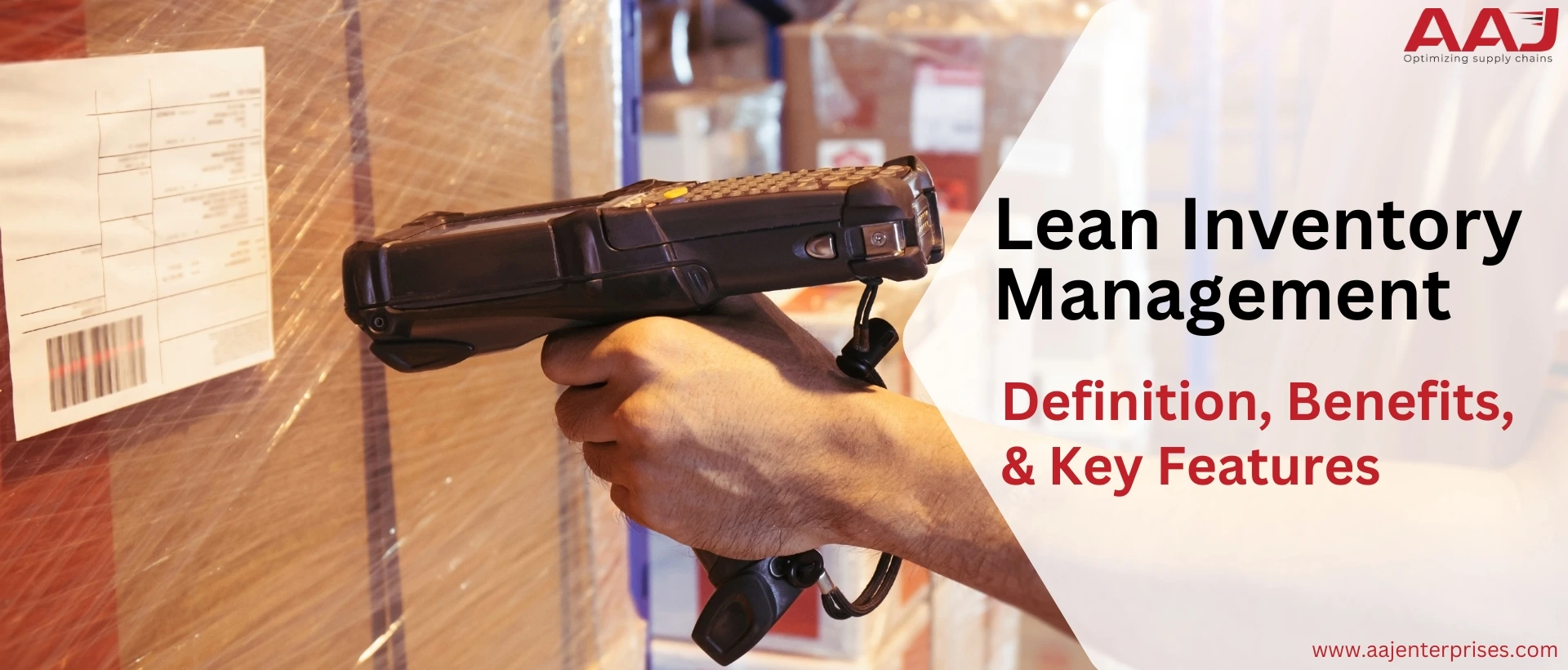
A WMS can enable real-time inventory visibility, inventory in the warehouse location and tracking of inventory movement. The technologies such as Barcode, RFID and IoT can further aid in the identification and traceability of inventory.
Common Inventory Optimization Mistakes to Avoid
Relying Entirely on Manual Tracking
As the numbers of transactions grow, manual records can become cumbersome and prone to inconsistencies and delays in keeping inventory information up to date.
Holding Excess Inventory
Businesses may have an excessive inventory because they are trying to prevent stock out. This can lead to higher inventory carrying costs and cause slow moving inventory.
Ignoring Seasonality
Demand may fluctuate drastically during periods of peak season, promotion or other market activity. These variations should be taken into consideration in inventory policies.
Using Inefficient Warehouse Layouts
Poor slotting practice and storage organization can lead to higher handling effort, less space and slower fulfilment.
How AAJ SCM Can Support Inventory Optimization
AAJ Supply Chain Management merges technology-driven inventory management with warehouse operations.
It has inventory optimization features such as:
- WMS-enabled inventory tracking and warehouse visibility
- Demand and lead-time analysis to support inventory planning
- Warehouse layout and slotting to improve storage utilization
- Scalable warehousing solutions that can adapt as inventory requirements grow
Businesses can achieve enhanced inventory visibility and establish more organized replenishment and storage systems by combining inventory planning and warehouse execution.
Conclusion
Optimising inventory is more about finding an optimum level of inventory that balances customer demand, inventory availability and working capital and storage costs. A good approach is to have right data, forecasting the demand, planning for safety stocks, classification of inventory, replenishment strategies and efficient warehouse operations.
WMS, AI, machine learning, barcode and RFID can enhance these processes to provide greater visibility and enable data-driven decision making.
When inventory planning and warehouse execution work together, businesses can reduce unnecessary stock, improve fulfilment and build a more responsive and cost-efficient supply chain.