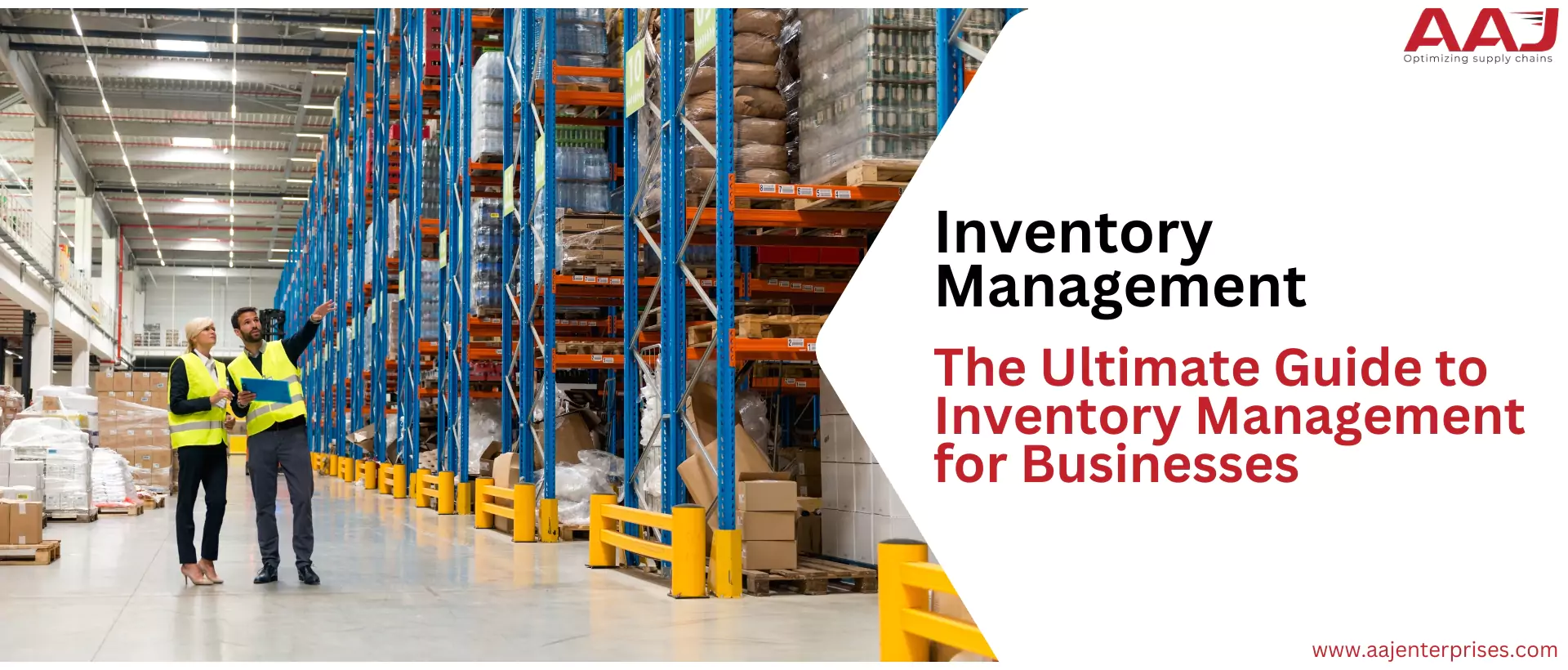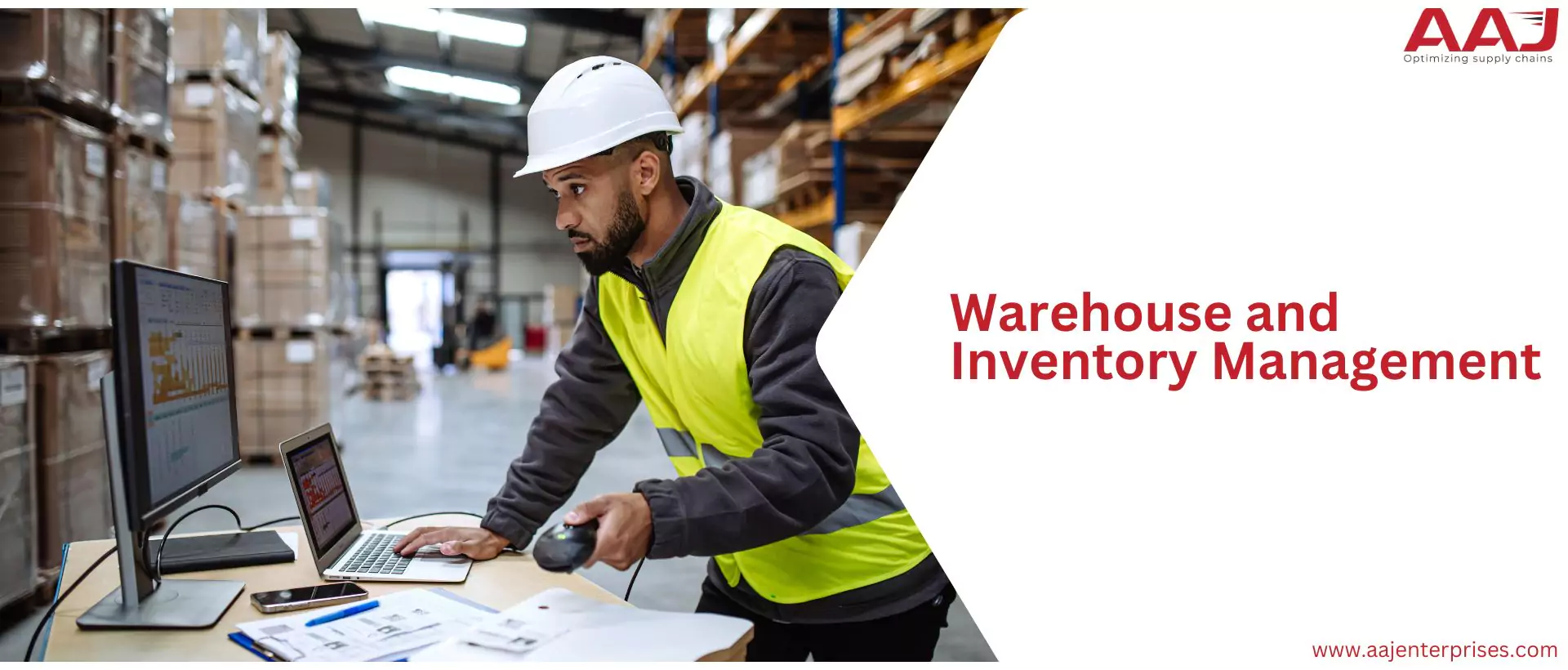
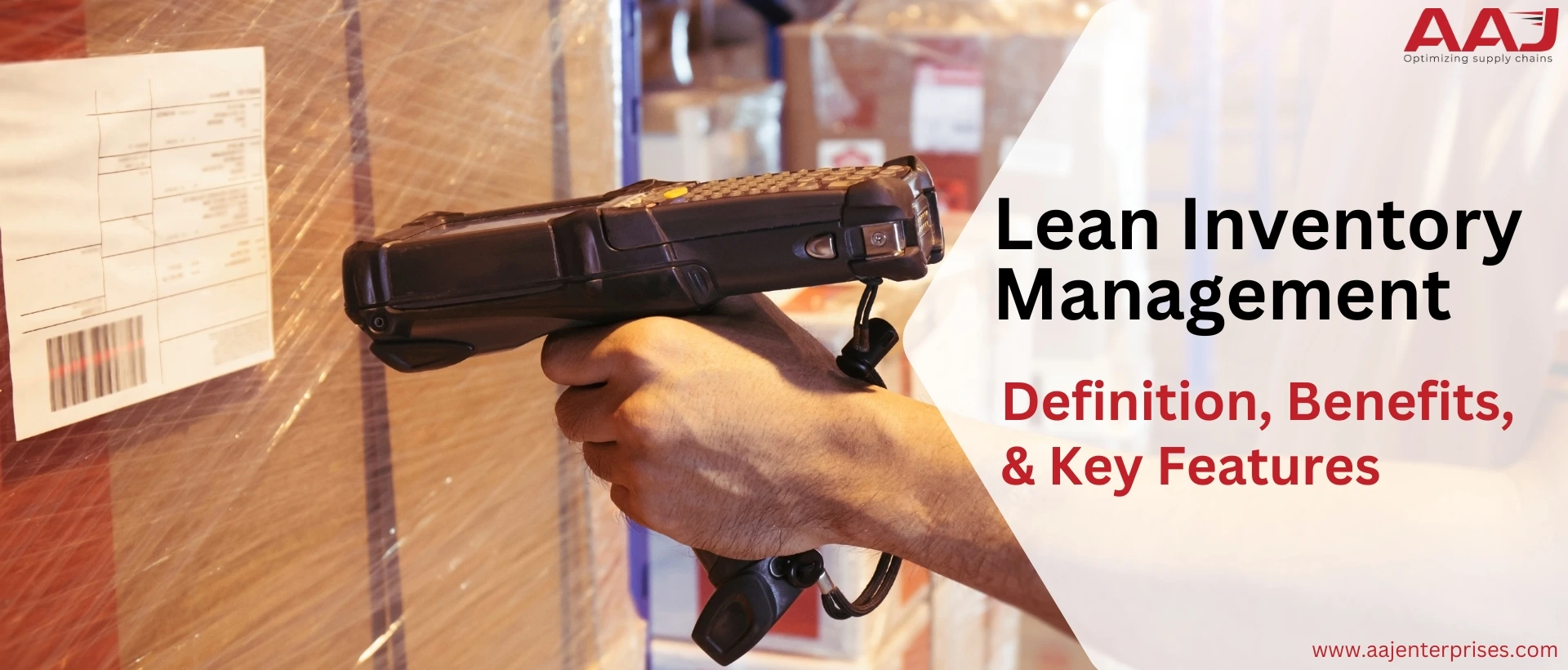

Inventory creates value when it supports customer demand and keeps operations moving, but excess stock, waiting, unnecessary movement and poor replenishment create waste. Lean inventory management applies Lean principles to inventory and material flow to reduce unnecessary stock and other forms of operational waste while maintaining the availability the business needs.
Rather than treating minimum inventory as the goal, Lean focuses on understanding what inventory is needed, where it is needed and when it should be replenished so materials move through the operation with less waste.
What Is Lean Inventory Management?
Lean inventory management applies Lean principles to inventory planning, storage and material flow to reduce waste while maintaining enough inventory to meet customer demand and required service levels.
The approach focuses on identifying and reducing excess inventory and waste in the flow of materials. This includes inventory that moves unnecessarily, remains in storage longer than needed, or accumulates because replenishment and demand are not well aligned.
Reducing inventory can lower storage requirements, carrying costs and the risk of obsolescence, but the objective is not to minimize stock at any cost. Lean does not mean zero inventory. A business still needs appropriate safety stock and other inventory buffers when they are necessary to handle demand variability, lead times or service requirements.
The goal is to maintain the right inventory at the right place and at the right time, while removing unnecessary stock and activities that do not contribute to customer value.
What Makes Inventory Management “Lean”?
Lean inventory management is based on the broader Lean approach of creating customer value while systematically removing activities, inventory and waiting that do not contribute to that value. The five core principles provide a useful way to apply this thinking to inventory.
Value
Start with what the customer actually needs from the product and service. Inventory should support those requirements rather than accumulating simply because more stock appears safer.
Value Stream
Look at how materials and information move through the operation, from sourcing and receiving to storage, replenishment and fulfillment. This helps identify where inventory, waiting time or unnecessary handling is being created without adding value.
Flow
Aim to keep materials moving through the operation with as little unnecessary waiting, batching or accumulation as practical. Poor flow can create queues and excess work-in-process inventory even when overall stock levels appear reasonable.
Pull
Replenishment should be driven by downstream demand or consumption signals wherever the operating conditions support it. Instead of continually pushing inventory forward, the system responds to an actual need.
Continuous Improvement
Lean treats current performance as something that can be improved rather than a fixed state. Teams continually identify sources of excess inventory, delays, errors and unnecessary movement and improve the underlying process.
These principles show why inventory reduction alone is not a sufficient measure of Lean performance. The real improvement comes from removing waste while preserving the stock and service levels the operation requires.
Lean Inventory Techniques and Tools
Lean principles are applied through specific practices and tools. Some of the most relevant to inventory management are JIT, Kanban and Kaizen.
1. Just-in-Time (JIT)
Just-in-Time aims to receive or produce the required quantity when it is needed, rather than holding unnecessary inventory in advance.
For inventory management, JIT can reduce excess stock, storage requirements and the risk of obsolescence. However, it depends on reliable processes, suppliers, lead times and demand signals. A disruption in supply or a significant change in demand can expose a system with very limited inventory buffers.
JIT is therefore best understood as an approach for coordinating supply with actual requirements, rather than simply keeping inventory low.
2. Kanban
Kanban is a pull-based signaling mechanism used to indicate when an upstream process should replenish inventory.
A simple inventory example is:
Bin reaches its replenishment point → Kanban signal is generated → replenishment is triggered → required quantity is supplied.
This creates a visual or digital signal based on consumption rather than asking an upstream process to continually push more inventory forward.
Kanban is a tool for implementing pull; it is not synonymous with Lean inventory management. It can be implemented using physical cards, bins or digital signals depending on the operation.
3. Kaizen
Kaizen means continuous, incremental improvement. In Lean inventory management, it involves repeatedly identifying and reducing sources of waste rather than treating process improvement as a one-time project.
A team might use Kaizen to address:
- unnecessary inventory
- replenishment delays
- picking or movement waste
- inventory inaccuracies
- excessive waiting
- unnecessary handling
- process variation
For example, suppose a warehouse repeatedly replenishes a fast-moving SKU later than required. Instead of simply increasing its safety stock, the team examines the replenishment process, identifies the delay and changes the underlying workflow. That is a Lean and Kaizen response because it addresses the cause of the problem rather than simply adding inventory.
How Does Value Stream Mapping Improve Lean Inventory Management?
Value Stream Mapping (VSM) is a visual method for mapping the flow of materials and information through a process. It helps a business see where time, inventory and effort are being consumed and where activities do not create value.
For inventory management, a value stream might look like:
Supplier → Receiving → Storage → Replenishment → Picking → Dispatch
The map can then be used to identify issues such as:
- Waiting: Inventory or information sits idle between processes.
- Excess work-in-process inventory: More stock accumulates between stages than the process requires.
- Unnecessary movement: Products travel farther or are handled more often than necessary.
- Duplicated handling: The same inventory is moved or checked multiple times without adding value.
- Information delays: Replenishment or order information reaches the next process too late.
- Excess inventory: Stock is held between activities because of inefficient flow or unreliable processes.
A practical VSM exercise typically follows this sequence:
Current State → Identify Waste → Design Future State → Implement Improvements → Measure Results
For example, a warehouse may discover through mapping that replenishment information takes too long to reach the storage team, causing repeated stockouts and later urgent replenishment. Rather than simply increasing inventory, the team can redesign the information and replenishment flow to address the underlying delay.
This makes VSM particularly useful in Lean inventory management because it looks at why inventory accumulates or becomes unavailable, not just how much inventory the business is holding.
Inventory Optimization Practices
Lean principles and tools need to be supported by practical inventory policies. The objective is not to apply the same inventory rules to every SKU, but to match stock levels and replenishment decisions with actual demand, variability and service requirements.
1. Use Demand Forecasting
Use historical sales, current demand signals, seasonality and other relevant information to estimate future requirements. Better demand estimates help reduce unnecessary inventory while maintaining sufficient stock for expected demand.
2. Segment Inventory
Not every SKU requires the same inventory policy. Businesses can use ABC analysis, demand velocity or inventory criticality to identify which products require tighter controls, higher service levels or more frequent review.
3. Set Appropriate Safety Stock
Safety stock provides a buffer against demand variability and supply uncertainty. The appropriate level should reflect factors such as demand variation, supplier lead time and the service level the business needs to maintain.
Safety stock should therefore be treated as a calculated buffer, not simply as “extra inventory.”
4. Set Reorder Points
A reorder point determines when replenishment should be initiated. It can be based on expected demand during lead time plus an appropriate safety-stock buffer, with the calculation adjusted for the product and operating conditions.
5. Account for Supplier Reliability
Inventory policies should reflect actual supplier performance. Consistent lead-time variation or late deliveries may require a different safety-stock or reorder policy than a supplier with stable and predictable lead times.
6. Improve Warehouse Flow
Lean inventory is also affected by how products move through the warehouse. Logical storage locations, appropriate slotting, efficient replenishment and reduced unnecessary handling help prevent congestion and inventory accumulation between processes.
These practices work best when reviewed together. Better demand information can change reorder points, supplier performance can influence safety stock, and improved warehouse flow can reduce the need for inventory buffers created to compensate for process delays.
Toyota and Lean Inventory Management, How the Toyota Production System Works
Toyota's approach to lean production developed in a context where the company had limited resources, relatively low production volumes and a strong need to improve productivity without creating unnecessary production or inventory. The foundations of the Toyota Production System (TPS) developed through experimentation during the late 1940s and 1950s.
Just-in-Time
A central idea of TPS is Just-in-Time (JIT): producing and moving what is needed, when it is needed, in the quantity needed. Toyota identifies JIT and jidoka as the two core concepts of its production system.
For inventory management, this changes the question from “How much stock can we keep?” to “What does the next process actually need, and when?”
The Supermarket Method
Toyota developed a “supermarket method” based on observing how a supermarket replenishes products. The downstream process acts like the customer, taking only the parts it needs from the preceding process. The preceding process then replenishes what was consumed rather than continuously pushing additional parts forward.
This created a practical pull system for controlling material flow and inventory between processes.
Kanban as the Signal
Kanban provided the signaling mechanism that made this pull approach workable:
Downstream consumption → Kanban signal → Upstream replenishment
The signal indicates what parts are required, where they are needed and when replenishment should occur. Toyota's production history describes Kanban as an important mechanism for making JIT production possible.
Kaizen and Continuous Improvement
Toyota did not treat JIT and Kanban as a one-time inventory project. TPS also emphasizes Kaizen, or continuous improvement. Employees are encouraged to identify problems, improve standardized work and refine processes rather than simply accepting existing performance.
For example, if a process repeatedly requires extra inventory because replenishment is unreliable, a Lean response is to investigate the cause and improve the process instead of automatically increasing the buffer.
What Can Businesses Learn From Toyota?
Toyota's lesson goes beyond inventory reduction. The broader lesson is to build a pull-based system that controls material flow, makes problems visible and continuously improves the processes that create or consume inventory.
Which KPIs Should You Track in Lean Inventory Management?
Lean inventory management should be measured with a balanced set of metrics. Reducing inventory alone does not indicate improvement if stockouts increase, service levels decline or material flow becomes less reliable.
1. Inventory Turnover
Inventory turnover measures how frequently inventory is sold or consumed and replaced over a given period. It helps show whether inventory is moving through the operation efficiently rather than remaining idle for extended periods.
2. Days of Inventory
Days of inventory indicates approximately how long the current inventory level would cover expected usage or sales. A lower figure can indicate faster inventory movement, but it should be evaluated against demand variability and required service levels.
3. Stockout Rate
Stockout rate measures how often required inventory is unavailable when needed. This is particularly important in Lean because reducing excess stock should not come at the expense of product availability.
4. Service Level / Fill Rate
Service level or fill rate measures how consistently customer or downstream demand can be fulfilled from available inventory. Tracking this alongside inventory levels helps prevent cost reduction from becoming the only objective.
5. Inventory Accuracy
Inventory accuracy compares system records with the actual physical inventory. Reliable inventory records are essential for replenishment, pull systems, allocation and other Lean decisions.
6. Lead Time
Lead time measures how long material takes to move through a process or from one required stage to another. Tracking it helps identify waiting, delays and other flow problems that may create the need for additional inventory buffers.
7. Inventory Carrying Cost
Carrying cost captures the cost of holding inventory, including storage, handling, insurance, obsolescence and the capital tied up in stock. Tracking it helps determine whether inventory improvements are actually reducing the financial burden of excess stock.
Build a Balanced Lean Scorecard
Lean KPIs should be considered together rather than optimized individually. A business that reduces inventory by cutting safety stock too aggressively may improve turnover while simultaneously increasing stockouts and reducing service levels.
A stronger Lean scorecard aims for:
Inventory ↓ + Lead Time ↓ + Waste ↓ + Service Level maintained or improved
The better measure is not the smallest possible inventory balance. It is removing unnecessary inventory and process waste while maintaining the flow and availability the operation requires.
What Are the Benefits of Lean Inventory Management?
When Lean principles are applied appropriately, they improve inventory performance without treating inventory reduction as the only objective.
Lower Unnecessary Inventory and Carrying Costs
Reducing excess stock can lower storage requirements and inventory carrying costs while also reducing the risk of obsolescence and slow-moving inventory.
Shorter Lead Times and Better Flow
Removing unnecessary waiting, movement and inventory accumulation can help materials move through the operation more smoothly and reduce avoidable delays.
Less Waste and Unnecessary Handling
Lean practices can identify and reduce activities such as excess movement, repeated handling, unnecessary storage and inventory that does not support current requirements.
Better Working-Capital Efficiency While Maintaining Service Levels
Holding only the inventory that the operation reasonably needs can reduce the amount of capital tied up in stock. The improvement should be balanced against service requirements so inventory reductions do not create avoidable stockouts or fulfillment problems.
What Are the Challenges and Limitations of Lean Inventory Management?
Lean inventory management can improve flow and reduce waste, but its effectiveness depends on the stability of the processes and supply network supporting it. Reducing inventory without addressing those underlying conditions can create new problems.
Demand Variability
Pull and JIT approaches depend on reasonably reliable demand signals. Sudden changes in demand can make carefully planned inventory levels insufficient, particularly when replenishment lead times are long.
Supplier Variability
Unreliable supplier lead times, inconsistent quantities or quality problems can make lean replenishment difficult. Businesses may need additional inventory buffers when supply cannot be relied upon.
Poor Process Stability
If receiving, replenishment, production or other processes are inconsistent, lower inventory levels can expose those weaknesses. Lean is not about hiding process problems with extra stock; it aims to identify and improve them.
Inaccurate Data
Kanban signals, replenishment decisions and inventory planning all depend on reliable information. Incorrect stock quantities, locations, lead times or master data can result in the wrong inventory being ordered or replenished.
Over-Application of JIT
Reducing inventory too aggressively can make an operation more vulnerable to supply disruptions or unexpected demand. Inventory buffers still have a legitimate role when variability or service requirements justify them.
Organizational Resistance
Lean requires employees to participate in identifying problems, following standardized processes and suggesting improvements. Without involvement from the people performing the work, continuous improvement becomes difficult to sustain.
Initial Implementation Effort
Applying Lean effectively can require process mapping, standard work, inventory analysis, training, measurement and, where appropriate, supporting systems. The effort should be directed toward the problems that create the most waste rather than implementing Lean practices as a checklist.
Inventory Is Sometimes a Symptom, Not the Root Problem
Excess inventory may be compensating for unreliable suppliers, long lead times, poor quality or unstable processes. Simply increasing or reducing stock does not resolve those causes. A Lean approach looks for the underlying problem and improves the process that is creating the need for excess inventory in the first place.
Is Lean Inventory Right for Every Business?
Lean inventory principles apply across different industries, but the appropriate inventory policy depends on the operating conditions. Lean tends to work better when:
- Demand can be reasonably understood: Sales patterns and demand signals provide a usable basis for replenishment decisions.
- Suppliers are reliable: Lead times, quantities and quality are consistent enough to support planned replenishment.
- Replenishment lead times are manageable: Inventory can be replenished within the time required by the operation.
- Inventory data is accurate: Stock quantities, locations and movements are reliable enough to support pull and replenishment decisions.
- Processes are stable enough to improve: The business can identify and address sources of waste rather than relying on excess inventory to compensate for process problems.
- Service levels can be monitored: The business can measure availability and detect when inventory reductions begin affecting customer or production requirements.
More caution is needed when demand is highly unpredictable, supply is unreliable, lead times are long, stockouts have serious consequences, products are highly customized or disruption risk is high.
This does not make Lean principles unsuitable in these situations. The principles can still be applied, but the inventory policy may require larger buffers, different replenishment rules or more frequent review. Lean is about finding the appropriate level of inventory for the conditions.
How AAJ Supports Lean Inventory Management
Lean inventory depends on accurate inventory records, disciplined warehouse processes and timely replenishment decisions. Technology and warehouse execution become particularly important as SKU counts and order volumes increase.
AAJ Supply Chain Management combines WMS-enabled inventory visibility, barcode-driven inventory control, intelligent slotting and operational KPI reporting to support these requirements. Its current operations include real-time WMS visibility, inventory and dispatch tracking, intelligent slotting, and barcode-driven inventory control. AAJ reports 200+ brands, 1M+ sq. ft. of warehouse capacity, 12+ warehouse locations and 5 lakh SKUs in inventory.
These capabilities connect directly with several Lean practices covered in this guide:
- Inventory visibility: WMS records provide a reliable view of stock movements and availability.
- Intelligent slotting: SKU placement based on movement patterns reduces unnecessary travel and handling.
- Replenishment control: Inventory data and operational workflows support more disciplined replenishment decisions.
- Inventory accuracy: Barcode-driven processes reduce manual tracking errors and improve stock traceability.
- KPI monitoring: Operational dashboards help teams monitor inventory and fulfillment performance rather than optimizing stock levels in isolation.
For businesses looking to apply Lean principles without building the entire warehousing infrastructure in-house, AAJ's warehousing service can provide the operational foundation for more controlled inventory flow.
Conclusion
Lean inventory management focuses on reducing unnecessary inventory and operational waste without compromising the availability the business needs.
Practices such as JIT, Kanban, Kaizen and Value Stream Mapping help businesses improve how inventory flows through the operation. Their effectiveness depends on reliable data, stable processes, appropriate replenishment policies and service levels that are monitored alongside inventory performance.
The strongest Lean approach is continuous: identify waste, improve the underlying process, measure the result and adjust inventory accordingly. For businesses managing growing SKU counts or increasingly complex warehouse operations, the right combination of inventory discipline, technology and operational execution makes that approach easier to sustain.
Frequently Asked Questions
Lean inventory management applies Lean principles to inventory planning, storage and material flow to reduce waste while maintaining the inventory and service levels required by the business.