
Businesses need to store products, maintain inventory and move goods to the right destination at the right time. Warehousing provides the space and processes needed to receive, store and control inventory, while distribution focuses on preparing and moving those goods to customers, retailers, business locations or other destinations.
When these activities are coordinated, products move through a connected flow from receiving and storage to order processing, dispatch and delivery. The setup may involve a warehouse, a dedicated distribution center or an outsourced logistics partner based on the business's requirements.
This article explains how warehousing and distribution work together, the difference between a warehouse and a distribution center, and when businesses should consider outsourcing these operations.
What Is a Warehouse?
A warehouse is a facility used to receive, store, protect and manage inventory until it is needed for production, distribution or fulfillment.
In warehouse and distribution operations, the warehouse service provides the physical location and processes needed to hold inventory between receiving and its next destination. It also supports activities such as inventory tracking, storage and order preparation before goods are dispatched.
What Are the Functions of a Warehouse?
A warehouse performs several functions that support the storage and movement of inventory:
- Storage: Keeps products in designated locations until they are needed for production, distribution or fulfillment. Proper storage also helps businesses use available warehouse space effectively.
- Inventory Control: Records incoming, stored and outgoing inventory so businesses can monitor stock levels, track movements and maintain accurate inventory information.
- Receiving and Handling: Receives incoming goods, checks quantities and condition, and moves products to the appropriate storage or processing areas.
- Product Protection: Protects inventory from damage, loss, contamination and other risks through suitable storage conditions and handling procedures.
What Is Distribution?
Distribution is the coordinated movement of goods from where inventory is positioned to its next destination, such as a distribution center, retailer, business customer or end customer. It involves more than transportation because products must also be prepared and allocated correctly before dispatch.
Distribution includes order processing, inventory allocation, picking, packing, staging, transportation and delivery. These activities connect stored inventory with the location where it is ultimately needed.
In a warehouse and distribution operation, the warehouse or distribution center acts as an important point between receiving and final dispatch. Once an order is received, the required inventory is allocated, prepared for shipment and moved to the appropriate destination.
How Does Warehouse and Distribution Work?
Warehouse and distribution connect the receipt and storage of inventory with its movement to the next destination. A typical process follows these steps:
1. Inbound Receiving
Goods arrive at the warehouse from suppliers, manufacturers or other facilities. The incoming inventory is checked against the relevant shipment or order information before being accepted into the facility.
2. Storage and Inventory Control
Once received, products are moved to their designated storage locations and recorded in the inventory system. Accurate stock records help teams know what is available, where it is stored and when inventory needs to be replenished or dispatched.
3. Order Allocation
When a customer order, retailer requirement or replenishment request is received, the required inventory is identified and allocated for that shipment. This ensures available stock is assigned to the appropriate destination.
4. Picking and Packing
Warehouse teams pick the required products, verify the items and quantities, and pack them according to the shipment requirements. The process prepares inventory for dispatch and connects warehouse execution with the downstream fulfillment or distribution process.
5. Staging and Dispatch
Prepared shipments are moved to a staging area, where they are organized by destination, carrier, route or delivery schedule. Once ready, the shipments are handed over for transportation.
6. Distribution and Delivery
The goods are transported to their next destination, which may be a retailer, business customer, another distribution facility or an end customer. Delivery information is recorded to update shipment and inventory records.
Warehouse and distribution are therefore connected operations, not two independent functions. Warehousing provides the inventory accuracy and physical availability that distribution depends on, while distribution determines how inventory needs to be positioned, prepared and dispatched. If inventory records are inaccurate or products are stored inefficiently, outbound distribution can be delayed even when transportation capacity is available.
Difference Between a Warehouse and Distribution Center
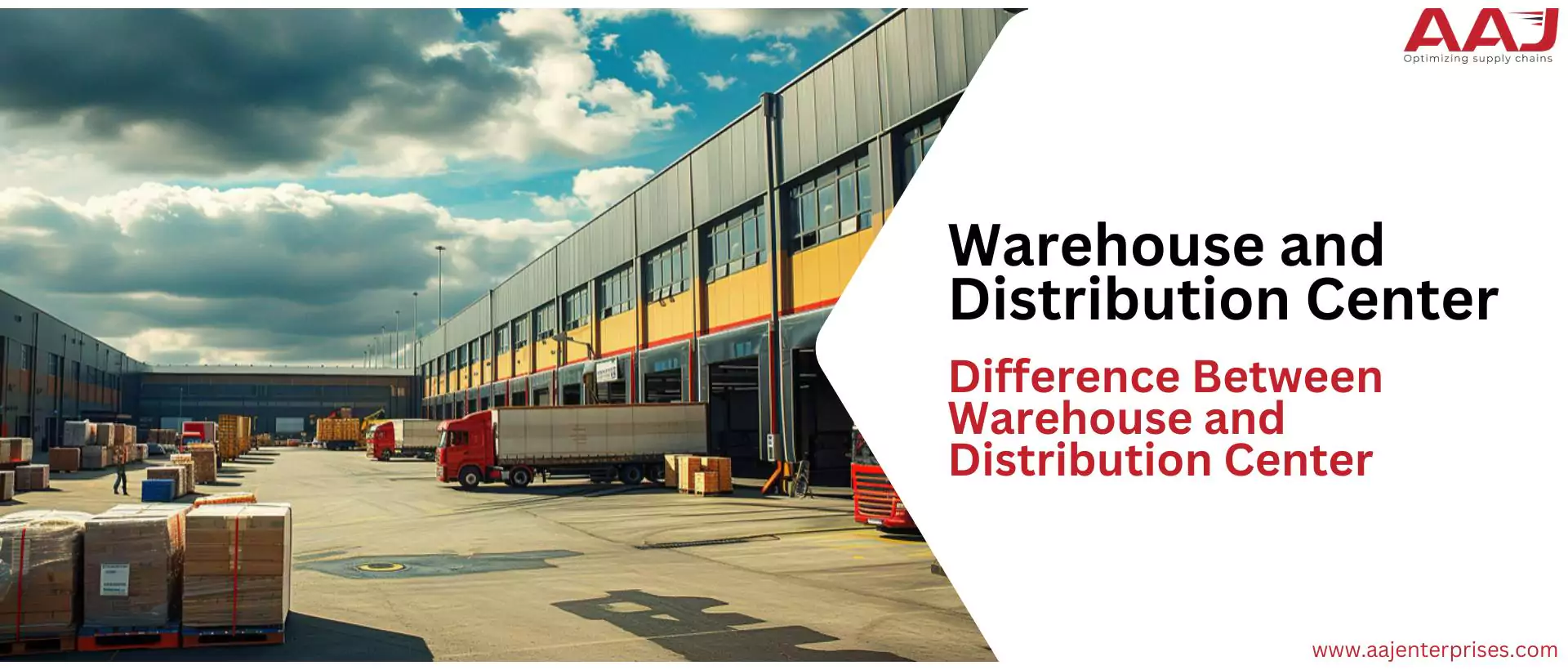
A warehouse and a distribution center can look similar because both receive, store and move inventory. The main difference is how each facility is designed to support the flow of goods. Warehouses are generally more storage-oriented, while distribution centers place greater emphasis on inventory movement, order processing and outbound throughput.
| Factor | Warehouse | Distribution Center |
|---|---|---|
Primary purpose | Storage and inventory holding | Faster movement and order/distribution processing |
Inventory dwell time | Often longer, depending on the operation | Usually shorter, as inventory is positioned for onward distribution |
Main activities | Receiving, put-away, storage and inventory control | Receiving, staging, picking, packing and dispatch |
Operational emphasis | Efficient storage and inventory control | Speed, throughput and coordinated movement |
Value-added work | May be limited or product-specific | Often more closely integrated with outbound operations |
Typical use | Holding inventory until it is needed | Positioning and moving inventory closer to demand |
The distinction is not absolute. A warehouse can support frequent outbound shipments, while a distribution center still holds inventory. The difference is primarily what the facility is designed to prioritize: storage and inventory holding in a warehouse versus faster processing and movement in a distribution center.
Do You Need a Warehouse, a Distribution Center, or Both?
The choice depends on how a business stores, positions and moves its inventory rather than simply whether it has high or low order volume.
Consider:
- Inventory dwell time: How long products typically remain in storage before being dispatched.
- Order volume and throughput: The number of orders or shipments handled and how quickly they need to move through the facility.
- Geographic customer spread: Whether customers are concentrated in one area or distributed across multiple regions.
- Required delivery speed: How quickly inventory needs to reach customers, stores or other facilities.
- Replenishment model: Whether inventory moves through scheduled replenishment, recurring business orders or more frequent individual shipments.
- SKU profile: The number, size, characteristics and movement frequency of products being stored and distributed.
- Centralized vs. distributed inventory: Whether inventory is best held in one central location or positioned across facilities closer to demand.
A storage-oriented warehouse fits operations where the primary requirement is holding and controlling inventory. A distribution center fits operations where rapid processing and movement are central to the network.
Many businesses use both. Inventory can remain in central warehouses for longer-term storage while distribution centers position selected products closer to regional demand.
Warehouse and Distribution Trends in India
India's warehousing market increasingly supports businesses operating across multiple regions and distribution channels. This has increased the importance of warehouse capacity, inventory positioning and logistics networks that can move products closer to demand.
The role of outsourced logistics is also significant. CBRE reported that 3PL companies accounted for 31% of India's warehousing absorption in H1 2026, making third-party logistics one of the largest sources of warehouse demand during the period. Delhi-NCR, Chennai and Bengaluru together accounted for about 60% of total absorption.
For businesses expanding into new regions, this makes the choice between a single warehouse, multiple distribution facilities and an outsourced network an important operating decision.
When Should You Outsource Warehouse and Distribution?
Outsourcing warehouse and distribution makes sense when operating these functions internally requires more infrastructure, expertise or flexibility than the business wants to build.
Common reasons include:
- Infrastructure requirements: Outsourcing reduces the need to invest in dedicated warehouse space, equipment and related infrastructure.
- Specialized capabilities: A logistics partner provides warehouse expertise, trained personnel, established processes and technology without requiring the business to develop every capability internally.
- Fluctuating volumes: External warehouse capacity provides flexibility when inventory or order volumes change significantly during seasonal or growth periods.
- Geographic expansion: Businesses entering new regions can use an existing warehouse and distribution network instead of immediately establishing their own facilities.
- Focus on core operations: Outsourcing routine warehouse and distribution activities allows internal teams to concentrate on functions closer to the company's core business.
Outsourcing is not automatically the better option. The decision needs to account for service scope, total operating cost, required control, expected volumes and the capabilities available internally.
For businesses considering outsourced logistics, our 3PL guide explains how third-party logistics providers handle warehousing, fulfillment, transportation and related operations.
How to Evaluate a Warehouse and Distribution Provider
A provider should be evaluated against the actual requirements of the operation rather than the size of its warehouse network or the number of services it advertises.
1. Define Your Requirements
Establish:
- Inventory volumes
- SKU profile
- Warehouse locations
- Order patterns
- Customer locations
- Required delivery timelines
- Activities to be outsourced
- Seasonal volume changes
A clear operating requirement makes provider comparisons more meaningful.
2. Evaluate Warehouse and Distribution Capability
Check whether the provider has the infrastructure and processes required for your products and order profile.
Evaluate storage capacity, receiving, inventory control, picking, packing, staging, dispatch, transportation coordination and any required value-added services.
If fulfillment is part of the requirement, review the provider's 3PL fulfillment capabilities separately rather than assuming warehouse capacity automatically means strong fulfillment execution.
3. Review Technology and Visibility
The provider should give your team access to accurate information about inventory, orders and shipments.
Evaluate:
- WMS capabilities
- Inventory visibility
- Order integration
- Shipment tracking
- Reporting
- ERP, ecommerce or marketplace integrations
- API or EDI support where required
The objective is to reduce manual information exchange and provide a consistent view of the operation.
4. Compare Commercial Terms
Review the complete cost structure rather than comparing only the storage rate.
Consider:
- Storage charges
- Inbound handling
- Outbound handling
- Picking and packing
- Transportation
- Value-added services
- Minimum commitments
- Additional or exceptional charges
The relevant comparison is the total operating cost for the required service scope and performance level.
5. Establish SLAs and KPIs
Define measurable service expectations before implementation.
Relevant warehouse and distribution KPIs include:
- Inventory accuracy
- Order accuracy
- Fill rate
- On-time dispatch
- On-time delivery
- Damage and shortage rates
- Inventory reconciliation accuracy
- Response and escalation time
Clear KPIs establish accountability and make it easier to identify operational problems after implementation.
Risks to Consider Before Outsourcing Warehouse and Distribution
Outsourcing changes how a business manages its warehouse and distribution operation. The main risks relate to control, performance, integration and transition.
- Reduced direct control: Day-to-day warehouse activities move to an external provider, so responsibilities, escalation procedures and reporting need to be clearly defined.
- Service-performance risk: Poor inventory accuracy, order handling or delivery performance can affect the business even when the operation is outsourced. SLAs and measurable KPIs establish expected performance.
- Data and integration risks: Warehouse and shipment information moves between the provider's systems and the business's systems, making secure access and reliable integration important.
- Transition risk: Moving inventory, systems and processes to a new provider can disrupt operations if implementation, data transfer and operational handover are poorly managed.
- Network dependency: Businesses relying heavily on one provider need to understand the provider's capacity, geographic coverage and contingency arrangements before committing to the model.
The right provider should therefore be evaluated on operational capability, technology, accountability, scalability and total cost, not price alone.
Warehouse and Distribution Support From AAJ SCM
AAJ Supply Chain Management provides warehousing, inventory management, B2B and B2C fulfillment, transportation and returns management as connected logistics capabilities.
Its current network includes 12+ locations and more than 1 million sq. ft. of warehouse capacity, supporting 200+ brands across India. AAJ also uses integrated WMS, TMS and RMS technology to provide visibility across warehouse, transportation and returns operations.
For warehouse and distribution requirements, relevant capabilities include:
- Warehousing: Storage, receiving, inventory handling and warehouse execution.
- Inventory management: WMS-enabled inventory tracking and visibility.
- Fulfillment: B2B and B2C order processing, picking, packing and dispatch.
- Transportation: Shipment movement, tracking and transportation coordination through AAJ's logistics services.
- Returns management: Verification, inventory updates and onward processing of returned products.
- Value-added services: Additional operational services supporting specific product and fulfillment requirements.
This combination allows businesses to connect warehouse operations with fulfillment and transportation instead of managing each logistics function through separate providers.
If you are evaluating outsourced warehouse and distribution operations, contact AAJ Supply Chain Management to discuss the warehouse capacity, fulfillment model and logistics coverage required for your business.
Conclusion
Warehouse and distribution work together to connect inventory storage with the preparation, movement and delivery of goods. The right facility structure depends on how long inventory stays in storage, how quickly it needs to move, where customers are located and how much throughput the operation requires.
Businesses can operate these functions internally or use an external logistics provider. Before choosing a model, evaluate infrastructure, inventory requirements, technology, fulfillment capabilities, transportation coverage, service levels and total operating cost.
For businesses that want to combine warehouse operations with fulfillment and transportation through an external partner, AAJ SCM provides integrated warehousing and logistics capabilities across India.
Frequently Asked Questions
Warehouse and distribution refers to the connected activities involved in receiving, storing, preparing and moving inventory to its next destination. Warehousing focuses primarily on inventory storage and control, while distribution focuses on preparing and moving goods.