
The customer journey for an ecommerce company isn't just about the product. Whole journey in length. Ordering and tracking the progress of an order, delivery and receiving the order on time and arranging for a return if necessary.
With ecommerce competition rising, the fulfillment, therefore, has become an integral component of the customer experience. Any delays, incorrect orders, communication issues, or returns procedures can impact customer satisfaction and impact future sales in no time.
Ecommerce fulfillment is a critical process for businesses that can impact their ability to fulfill orders correctly, maintain customer information and build a trustworthy customer journey after the sale.
What is the significance of Customer Experience in Ecommerce Fulfillment?
Today's customers are not just looking for the order placed to be delivered to them. They are seeking reliable delivery information, timely updates, reliable fulfillment and easy resolution in the event of failure.
For an ecommerce company, these expectations put fulfillment in the spotlight as an important customer facing role. While a lot of the fulfillment journey is out of sight, its impact is felt directly by customers during the experience.
Efficiency in fulfillment procedures and clear communication, along with well-trained personnel, dependable technology and data-based decision-making, can have a huge impact on this experience for businesses.
5 Ways to Improve Customer Experience Through Fulfillment
- Focus on Customer Retention
Acquiring customers is just the first step. It's equally crucial to ensure that the experience is consistent and create a sense of return.
Fulfillment is an important part of this experience. Orders should be accurately ordered, shipped promptly and accompanied with a clear shipment update.
Customers can be given real-time or near-real-time tracking, which can help them have a clearer picture of their orders and eliminate the element of surprise after purchase. Automated notifications can also keep customers up-to-date on key shipment milestones without any human work.
The fulfillment process can thus play a crucial role in fostering long-term customer relationships.
2. Train Your Fulfillment Team
While technology can help enhance ecommerce fulfillment, there is still a need for individuals to have the skills to ensure the quality of the operation.
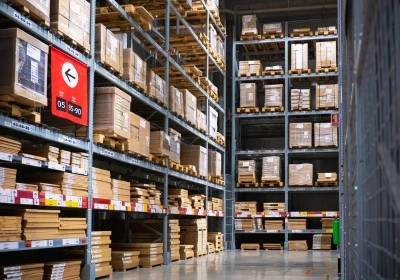
Warehouse & fulfillment staff should be familiar with inventories, picking and packing processes, quality control, safety and systems.
Frequent training can ensure teams are prepared to handle product, process, technology and order changes. It also helps to minimize unnecessary mistakes that could impact the customer.
It is therefore imperative to have a competent fulfillment team to ensure a consistent service quality as the business scales up.
3. Stay Transparent With Customers
Transparency is particularly key when an order is not as planned.
A shipment should not be delayed, the inventory should not be unavailable, or another problem should occur which prevents shipment and customers should be notified in an obvious and timely manner.
By offering customers up to date order statuses, reasonable delivery timelines and advance notification of any exceptions, businesses can foster increased trust.
The feedback from customers should also be considered an operational input. Customer reviews, complaints and customer support inquiries can show you that there are some problems that are common in your fulfillment and delivery process that need to be solved.
4. Use Data to Improve Customer Experience
Each fulfillment operation generates valuable operational data.
This can include:
- Order processing time
- Inventory accuracy
- Shipment status
- Delivery time
- Carrier performance
- Freight costs
- Order volume
- Returns and exceptions
This data can be used to pinpoint common delays, fulfillment blockages, stock problems and delivery-performance problems within the business.
For instance, if information indicates that certain areas have traditionally been slow to deliver, a company can assess their stock positioning, carrier network, or fulfillment process.
The goal isn't just to gather data, it's to use operational data to make decisions that enhance the customer experience.
5. Make Fulfillment Smooth, Accurate and Fast
In ecommerce, speed is important, but it's not about being fast and correct, it's about being fast or correct. A good fulfillment process should be about getting the right product to the right customer at the right time.
This needs to be coordinated throughout inventory, order, picking, packing, dispatch, transport and delivery. Implementing technology like warehouse management systems, barcode scanning, automated order processing and shipment tracking can help to increase visibility and minimize manual errors.
Meanwhile, businesses need to be continually assessing their fulfillment process to look for unnecessary steps, delays and reoccurring exceptions.
The idea should be to make a fulfillment process efficient for the company and reliable to the customer.
Building a Better Ecommerce Customer Experience
Ecommerce customer experience is tightly tied to the back story.
A customer's perception of a brand is created by accurate inventory, efficient order processing, timely dispatch, reliable transportation, pro-active communication and effective returns management.
To this end, businesses should not only consider each delivery metric, but the overall delivery experience.
To achieve this, a fulfillment approach for a customer-centric business needs to align people, process, technology and data to deliver a seamless experience from order to delivery and then some.
Conclusion
Ecommerce fulfillment efficiency and reliability have become a growing factor in customer experience.
To enhance this experience, businesses should prioritize customer retention, train their fulfillment staff, keep communication open, rely on operational information and continuously work to improve fulfillment time and accuracy.
It's not just about faster order shipping. To establish a customer satisfaction operation that customers can trust, monitor and depend on and to help the business gain better customer relation as the business grows.