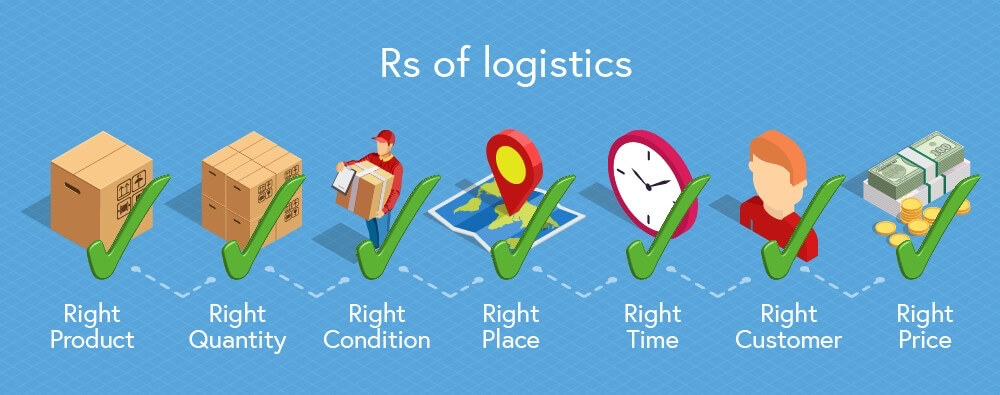

For businesses, there are various stages that a product has to pass through from the time of its creation till it reaches the final consumer. Products can be transported from suppliers or manufacturers to warehouses, stores, other companies, or customers. Control of time, cost, inventory, and product condition is required to manage these movements.
That's where logistics management comes into play. It organizes the movement, storage, stock management, order processing, etc. of products, ensuring they are delivered at the right time and place.
For example, a customer ordering a pair of sneakers expects the product to arrive on time and in good condition. A well-managed logistics process helps make that possible while keeping transportation and inventory costs under control.
What Is Logistics Management?
There are numerous processes in supply chain management. Logistics management is a part of such processes. It controls the flow of goods from its origin to its final destination.
Logistics management involves:
- transportation
- warehousing
- inventory management
- order fulfillment
- packaging
- material handling
- information/visibility
- returns where applicable
For example, you have a business that sells sneakers online. You have to source the materials required to produce sneakers. The factory will manufacture the sneakers.
The finished ones will move to the warehouse. The warehouse team will store the sneakers properly. The worker will pack the sneaker when a customer places an order. The shipping company will pick up and deliver the package to the customer.
How Does Logistics Management Work?
Logistics management coordinates the movement and storage of goods from their source to their final destination. The exact process differs by business, product and sales channel. But most logistics operations follow a similar flow:
Planning → Procurement → Transportation → Receiving → Warehousing → Inventory Management → Order Processing → Fulfillment & Distribution → Delivery → Returns
Why Is Logistics Management Important?
Good logistics management can work spectacularly for an e-commerce business. Below is a list of its importance.
Streamline Operations
Logistics management is the backbone of the supply chain. It streamlines different processes, from procurement to ecommerce fulfillment, by reducing the cost of any business and maximizing the utilization of resources.
Enhance Customer Satisfaction
Today, we live in a digital World. Customers expect much better service than before. If shippers can't deliver the products on time, it can adversely affect the customer. Good logistics management ensures that all orders are delivered to customers on time. It can be possible by coordinating various activities like warehousing and transportation.
Mitigating Risks
Logistics management is not just about moving goods from one point to another. It's about navigating all the challenges that may come along the way during the storage and transportation. 3PL Logistics companies identify threats like natural disasters and adopt proper strategies for safeguarding goods and products.
Drive Business Growth
Good logistics management can help in growing a business effectively. It allows a company to enter a new market or expand its product.
Improves Warehouse Management
The warehouse is the heart of any logistics operation in business. A well-organized warehouse can even track and manage goods properly, dramatically improving customer satisfaction.
Proper Route Planning
Proper logistics management can optimize transportation routes, ensuring orders are delivered to customers at the right time. It involves analyzing various tools and techniques and choosing the most efficient one. WMS (Warehouse Management System), GIS (Geographic Information System), TMS (Transportation Management System), and vehicle routing software are a few tools.
Functions of Logistics Management
Logistics management covers several activities that work together to move goods efficiently. Each function has a different role, from planning and sourcing products to storing, transporting and delivering them.
1. Logistics Planning
Planning sets the direction for logistics operations. Businesses forecast demand, estimate resource needs and plan how inventory should move between locations. Good planning helps avoid shortages and unnecessary logistics costs.
2. Procurement
Procurement involves sourcing raw materials or products from suppliers. Businesses evaluate suppliers based on factors such as quality, availability, lead times and cost. The goal is to have the required goods available when they are needed.
3. Inventory Management
Inventory management tracks stock levels and product movement across the supply chain. It helps businesses maintain enough inventory to meet demand without holding more stock than necessary. Accurate inventory records also reduce the risk of stockouts and excess inventory.
4. Warehousing
Warehousing service covers the receiving, storage and handling of goods. It includes activities such as putting products into storage, picking items, packing orders and preparing shipments. An organized warehouse helps goods move through the supply chain without unnecessary delays.
5. Transportation
Transportation moves goods between suppliers, manufacturers, warehouses, stores and customers. Businesses choose transportation methods based on factors such as shipment size, distance, product type, delivery time and cost.
6. Order Fulfillment and Distribution
Order fulfillment begins when a customer or business places an order. The required products are picked, packed and prepared for dispatch. Distribution then coordinates the movement of those shipments to their intended destinations.
Difference Between Logistics and Supply Chain Management
Logistics management and supply chain management are closely related, but they do not cover the same scope. Logistics is one part of supply chain management. Logistics focuses mainly on the movement and storage of goods. Supply chain management covers the wider network involved in getting products from suppliers to customers.
| Logistics Management | Supply Chain Management |
|---|---|
Focuses on the movement, storage and flow of goods. | Manages the broader end-to-end supply network. |
Includes transportation, warehousing, inventory and order fulfillment. | Includes sourcing, procurement, production, logistics, distribution and coordination. |
Focuses on product movement and related information. | Takes a broader view of suppliers, operations and customers. |
One component of supply chain management. | Encompasses logistics and other supply chain activities. |
For example, transporting finished products from a warehouse to customers is a logistics activity. Deciding where to source the products, how much to produce, where to store them and how to distribute them involves the wider supply chain.
Logistics Management Strategies for Better Efficiency
Effective logistics management depends on how well a business plans its warehouse, inventory, transportation and daily processes. The right approach also depends on the type of products, order volume and delivery requirements.
Warehouse Management
Good warehouse planning makes storage and movement more efficient. Divide the warehouse into zones based on product demand, size or picking requirements. Use vertical space where suitable to increase storage capacity without expanding the floor area.
A Warehouse Management System (WMS) can track goods from receiving to storage and dispatch. Businesses can also use suitable picking methods and material-handling equipment to reduce unnecessary movement and improve productivity.
Transportation Management
Transportation costs depend on factors such as distance, shipment size, delivery time and transport mode. Compare road, rail or air based on the needs of each shipment.
Route optimization can reduce unnecessary travel and improve delivery planning. Shipment consolidation can also lower transportation costs when multiple orders can move together. A Transportation Management System (TMS) can help businesses plan routes, compare carriers and manage shipments.
Inventory Management
Accurate inventory information helps businesses know what they have, where it is stored and when more stock is required. Monitor stock levels and use demand forecasts to plan replenishment.
Set reorder points based on demand, lead times and safety stock requirements. This helps reduce both stockouts and excess inventory.
Process and Data Visibility
Logistics decisions should be based on actual operational data. Track key metrics such as:
- Order processing time
- Inventory accuracy
- Transportation cost
- On-time delivery
- Order accuracy
- Warehouse productivity
Regularly reviewing these metrics helps identify delays, recurring errors and areas where logistics processes need improvement.
Efficient logistics management helps businesses control costs, maintain inventory and move goods on time. By improving planning, warehousing, transportation and ecommerce fulfillment, businesses can build a more reliable logistics operation that supports both customer needs and business growth.