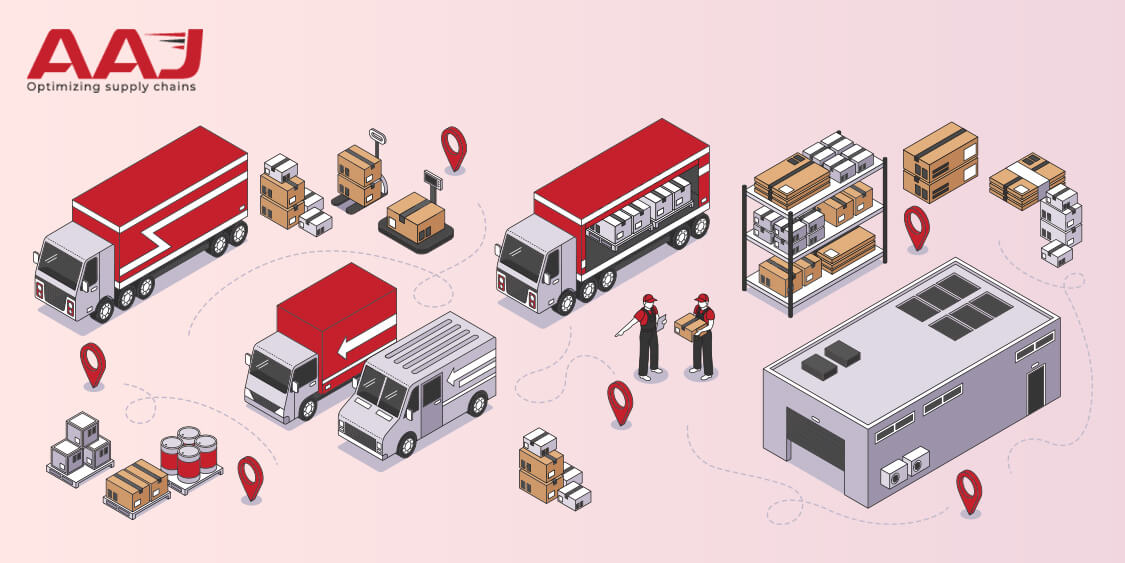

Reducing supply chain costs is an important priority for businesses looking to improve profitability without compromising service quality or customer experience. However, effective cost reduction is not simply about choosing cheaper materials, carriers, or service providers.
From procurement and warehousing to fulfillment, transportation, packaging and returns, each part of the supply chain can have inefficiencies that boost operating costs.
The goal should then be to understand unnecessary costs, process efficiencies and how to use resources well and select the appropriate technology and operating model.
Here are some practical strategies businesses can use to reduce supply chain costs while maintaining reliable operations.
1. Identify Inefficiencies Across the Workflow
Before reducing costs, understand where they are actually being generated. While transportation can be one of the highest cost items in a supply chain, there are also hidden costs that can occur from manual processes, unnecessary transport, inventory errors, inefficient order processing, poor space utilization and repeated handling.
In the first step, map the entire process and identify:
- Process bottlenecks
- Manual and repetitive activities
- Sources of errors
- Unnecessary movement or handling
- Delays between processes
- Activities that can be automated
Contacting personnel who are directly involved in these processes is also helpful. Often times, they bring in a practical understanding of inefficiencies that are not found in reports.
Once that sources of waste are identified, the business can then prioritise the work that needs to be done based on the potential impact and the cost of the work to implement.
2. Maximize Warehouse Space and Operations
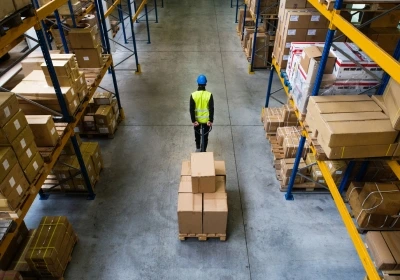
Warehousing can represent a significant operating cost, particularly when businesses pay for space that is poorly utilized.
It is important that companies first assess the utilisation of existing space rather than increasing warehouse capacity.
Improving the utilization of warehouse spaces may include:
- Optimizing storage layouts
- Using appropriate racks and shelving
- Reviewing inventory placement
- Positioning fast-moving products strategically
- Reducing unnecessary inventory
- Improving material flow
An efficient layout may also minimize employee and equipment travel, thereby increasing productivity and eliminating unnecessary employee and equipment use. It doesn't have to be the smallest warehouse. The right use of space to the best effect.
3. Improve Demand Forecasting and Inventory Planning
With low demand planning, there are costs at both ends of the inventory cycle. Excessive stocking of working capital and the use of warehouse space and insufficient stocking can lead to stock-outs, loss of sales and emergency stocking that causes customer dissatisfaction.
Businesses can enhance their inventory planning by combining:
- Historical sales data
- Seasonal trends
- Promotional plans
- Product lifecycle information
- Current inventory levels
- Market demand signals
Businesses can also use forecasting tools and inventory management systems to determine their expected demand and better plan their restocking.
Improved forecasting enables companies to keep inventory that can meet customer demand, but doesn't drive up storage or carrying expenses.
4. Consolidate Shipments Where Practical
A number of smaller consignments sent separately may result in higher transportation and handling expenses. Freight consolidation is the practice of merging compatible shipments into a larger shipment when there is an opportunity, based on specific criteria such as time, destination, product and service requirements.
Businesses can benefit from consolidation in the following ways:
- Improve vehicle utilization
- Reduce the number of individual shipments
- Lower transportation costs
- Reduce unnecessary handling
But consolidation doesn't have to be at the expense of delivery commitments. The goal is to find the combinations that can be done without harming the customer service and delivery time.
5. Diversify Transportation Options
Depending on one carrier or one mode of transport can restrict flexibility and increase the risk to the operations.
When considering different carriers and transportation methods, businesses can look at:
- Cost
- Delivery performance
- Geographic coverage
- Service levels
- Capacity
- Shipment characteristics
A diversified transportation program can give you more flexibility if your needs vary or in times of low capacity with one carrier.
The goal is NOT to send each shipment with the lowest-cost carrier. It is to choose the most suitable method of transportation for every need so as to ensure that the services are of good quality.
6. Optimize Packaging
Packaging has more to do than product protection. It may affect usage of materials, storage space, quantity in delivery and transport expenses.
Packaging should be considered to ensure it is the right size for the product and that there is no unnecessary material or space in the packaging.
The right sized packaging can help:
- Reduce packaging material
- Improve vehicle utilization
- Reduce dimensional shipping costs where applicable
- Improve warehouse space utilization
- Minimize product damage
But the reduction in cost should not come at the expense of the lack of protection. The replacement, return and customer-service costs for damaged products can more than offset the packaging savings.
7. Use Automation Where It Creates Measurable Value
Automation can streamline workflows, save time and resources on repetitive tasks and ensure consistency and accuracy.
There are many potential applications for automation:
- Inventory tracking
- Order processing
- Data entry
- Picking and sorting
- Shipment processing
- Reporting and analytics
Depending on the size and needs of the business, Warehouse Management Systems (WMS), barcode systems, RFID, automated material handling and integrated ecommerce systems can help facilitate more efficient operations.
But to automate, it should be done judiciously. The first step in automating a business process is to grasp the process you are seeking to improve and then to see if there is an operational gain in automating the process.
8. Evaluate 3PL Partnerships
Businesses can use the services of a third-party logistics (3PL) provider to get warehousing and transportation services, fulfillment capabilities, technology and operational knowledge without having to build all those services in-house.
A 3PL can potentially provide:
- Warehousing
- Inventory management
- Order fulfillment
- Transportation management
- Shipment tracking
- Returns management
- Technology and reporting
A 3PL can also offer more flexibility in warehouse space, personnel and transportation, which is useful for companies that have fluctuating needs or are looking to expand and open new locations.
But businesses should consider the overall cost and service of outsourcing, not the mere cost savings.
9. Improve Supply Chain visibility
Reduced visibility can result in late decisions, overstocking and failed delivery expectations and inefficient resource allocation.
The goal for businesses should be visibility of inventory, orders, shipments and other critical business operations.
WMS, order management systems, transportation management systems, barcode/RFID solutions and integrated dashboards are some of the technologies that can assist in bridging the information gap between various points in the supply chain.
With improved visibility, businesses can detect issues sooner and make decisions that are based on real operational data and not assumptions.
10. Streamline the Order Fulfillment Process
There are a lot of activities involved in order fulfillment and if there are any inefficiencies, it can raise processing order cost.
Businesses should go through the entire order to order to delivery process and see if there are any unnecessary steps, manual processes, repeated handling and avoidable delays.
Order processing improvements can lead to a decrease in:
- Cost per order
- Inventory carrying cost
- Warehouse utilization
- Order processing time
- Transportation cost
- Order accuracy
- On-time delivery
- Return and damage rates
Linking the ecommerce platform, inventory and fulfillment can eliminate additional manual tasks and optimize order flow.
Conclusion
Cutting back on costs in the supply chain doesn't need to be an expense on resources or quality of service. Sustainable cost reduction is achieved by eliminating waste, optimizing processes, optimizing resources and optimizing operational decisions.
They can accomplish this by increasing their warehouse utilization, boosting demand planning, streamlining their shipments, optimizing their transportation and packaging, implementing automation in the right places, implementing visibility and streamlining their fulfillment process and considering the best 3PL model for their business.
The goal should be a supply chain that is not simply cheaper, but more efficient, resilient, scalable and capable of delivering consistent service to customers.