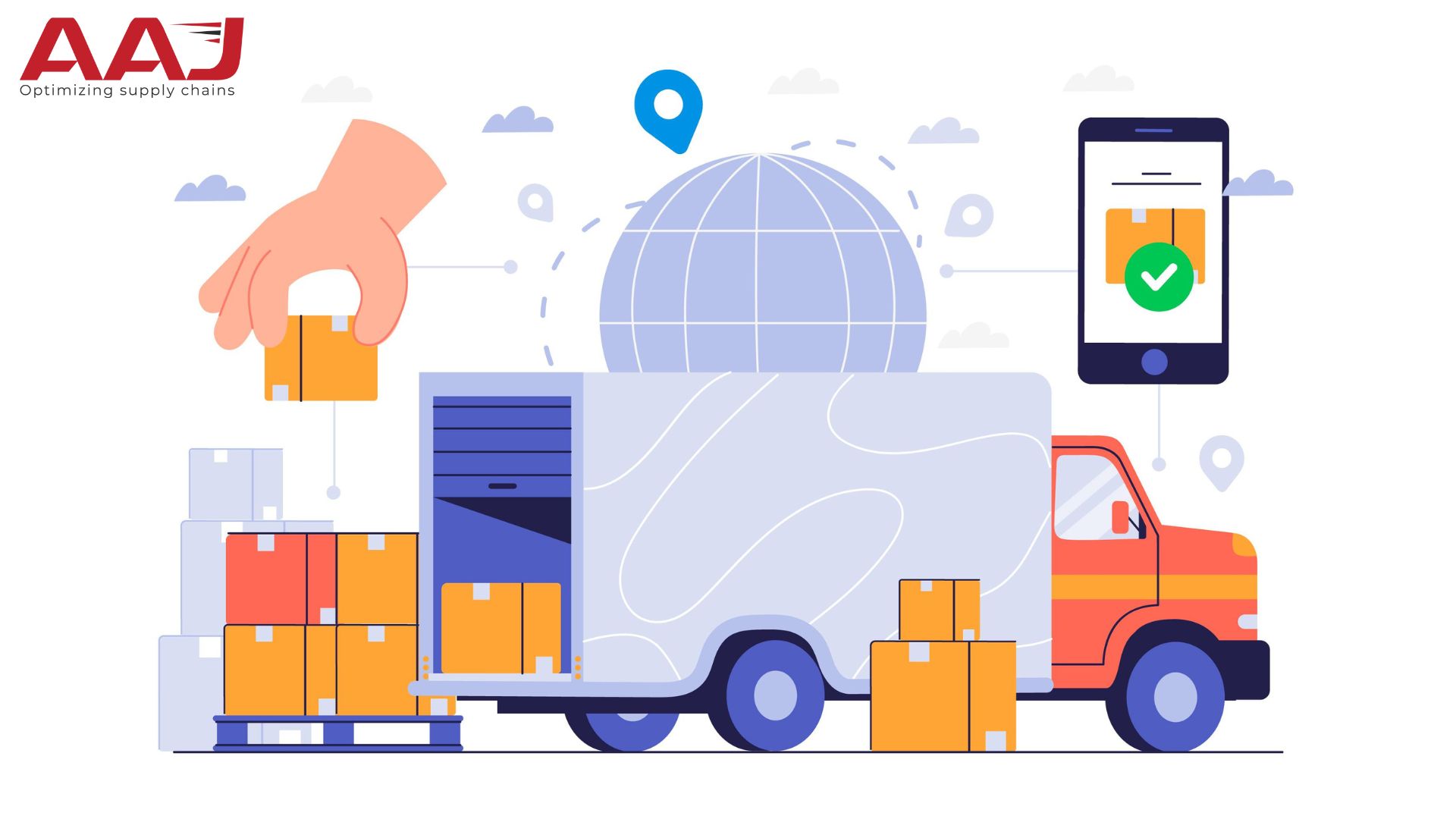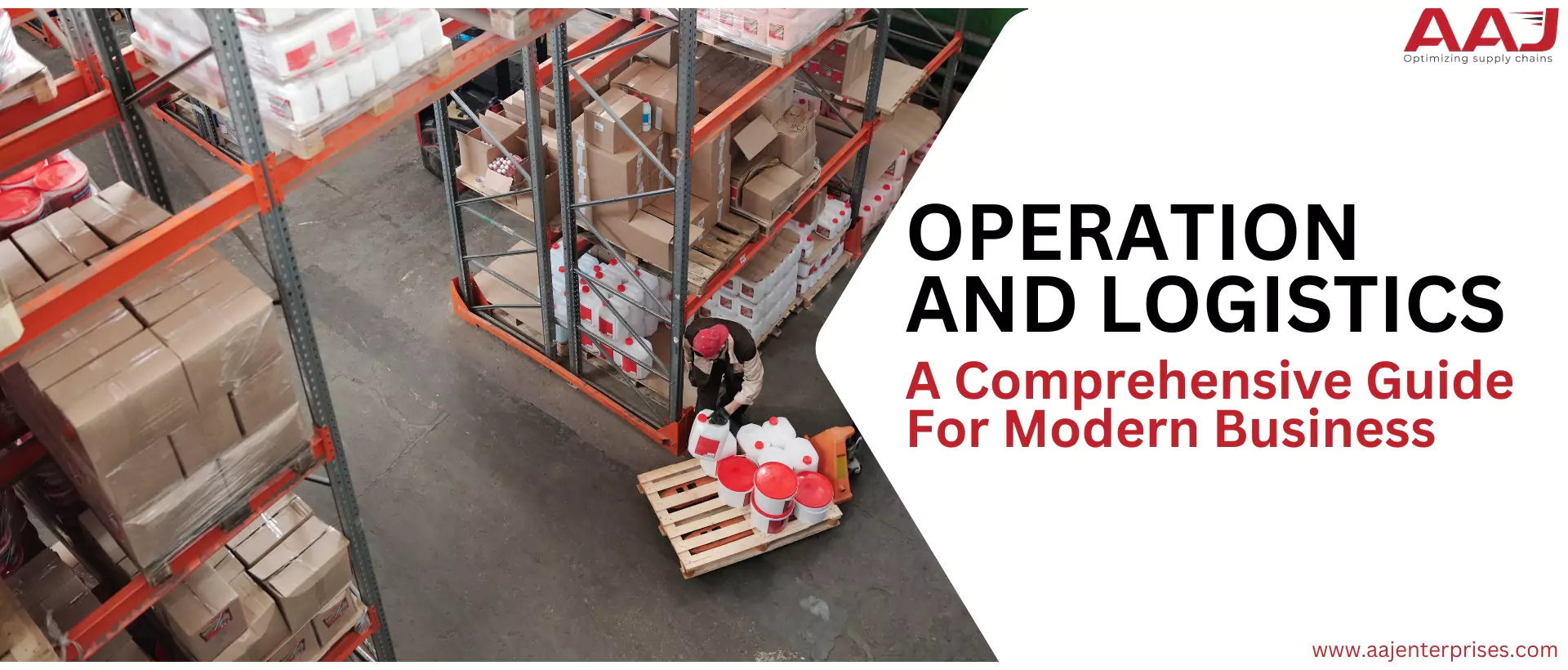
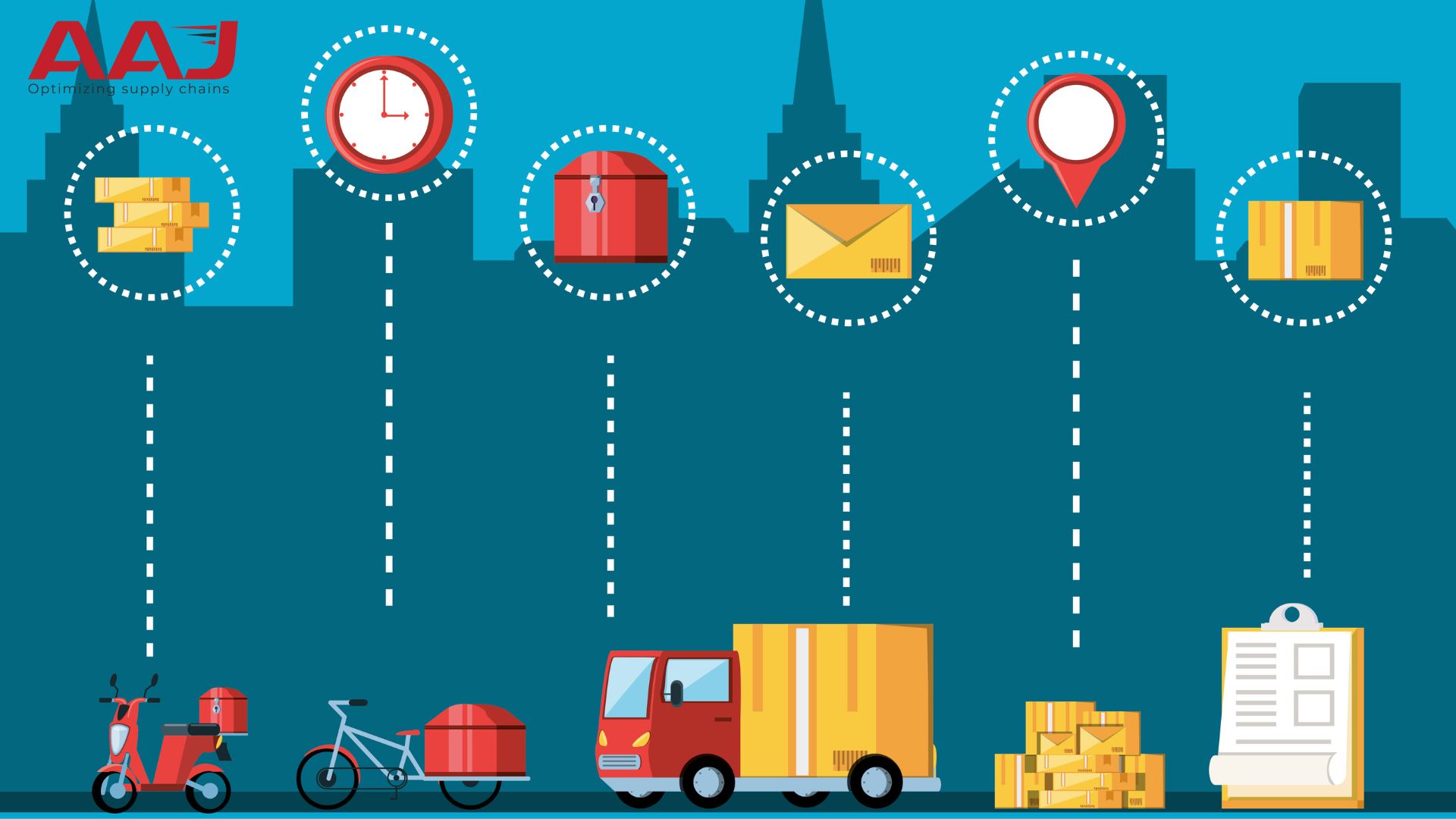

Logistics is the process of planning, managing and controlling the movement and storage of goods, materials and related information from the point of origin to the point of consumption. It brings together suppliers, manufacturers, warehouses, distributors, retailers and customers to ensure a smooth flow in the supply chain.
Logistics encompasses multiple activities that are related and connected from receiving raw materials at a manufacturing site to providing an ecommerce order to the door of the customer. Transportation, warehousing, inventory management, order fulfillment, packaging, tracking and distribution all contribute to the movement of goods.
Logistics is no longer a monodisciplinary activity, but rather a part of increasingly complex supply chains. The purpose of the different logistics varies according to the place of goods in motion, their management and the requirements of the products.
What are the various types of logistics?
There is no single way to classify logistics. It can be classified by the direction of the product movement, service being offered and need of products and supply chain.
The major types of logistics include:
1. Inbound Logistics
2. Outbound Logistics
3. Distribution Logistics
4. International Logistics
5. Reverse Logistics
6. Third-Party Logistics (3PL)
7. Fourth-Party Logistics (4PL)
8. Ecommerce Logistics
9. Cold Chain Logistics
10. Green Logistics
Understanding these various types can assist enterprises determine the logistics processes they require and decide if any special skills or technologies are necessary.
Logistics Based on the Flow of Goods
1. Inbound Logistics
Inbound logistics is the management of raw materials, components, supplies and other goods from suppliers to a manufacturing plant, warehouse, or business.
The process is usually carried out supplier coordination, transportation, receiving, inspection, inventory recording, storage and handling. Effective inbound logistics ensures the materials required at the right time and place are made available without having to build up unnecessary stock or delays.
A manufacturer can have several suppliers for raw materials, for instance. The in-bound logistics function takes care of their bringing in, receiving, quality control and transfer to storage or to production.
The efficient inbound logistics ensures a continuity of production, the visibility of inventory and prevents delays due to material shortages.
2. Outbound Logistics
Outbound logistics involves transporting the product from a warehouse, manufacturing plant, or distribution centre to the customer or the next distribution point.
Usually includes order processing, picking, packing, labeling, dispatch, transportation, tracking and delivery.
For instance, if a customer orders the product online, the warehouse extracts the product and packs it, the shipment is delivered to a logistics firm and the order is delivered to the consumer's address.
The efficiency of outbound logistics plays a pivotal role in delivery time, order accuracy, customer satisfaction and overall order fulfillment.
3. Distribution Logistics
Distribution logistics involves the movement of finished products from the manufacturer or central warehouse to various markets, distribution centres, retailers, wholesalers or customers.
Unlike outbound logistics, which generally focuses on the movement of finished orders, distribution logistics often involves managing the broader network through which products reach different markets.
Products can be consolidated, sorted, stored and re-distributed to multiple locations within the distribution center. As long as operationally suitable, cross-docking may also be employed to move product through a facility with little or no storage.
Effective distribution logistics helps businesses maintain product availability while balancing transportation costs, inventory levels and delivery requirements.
4. International Logistics
International logistics involves managing the movement of goods across national borders. It adds several layers of complexity to conventional logistics, including customs clearance, trade documentation, duties and taxes, international transportation and regulatory compliance.
Ocean freight is suitable for bulk shipments and those that are not time-sensitive, air freight is ideal for urgent or valuable cargo and multimodal shipping is used when a combination of shipping modes is more efficient.
In addition, international logistics demands synchronisation between freight forwarders, customs brokers, carriers, warehouses and other business partners in the logistics chain.
The importance of an effective logistics operation in international business is even more significant for companies that conduct business in several countries and want to ensure reliable cross-border supply chains.
Logistics based on service and business model
5. Reverse Logistics
Reverse logistics manages the movement of products or materials back through the supply chain after the initial sale or delivery.
This could be anything from customer returns, consumer product stock with defects, recalls, repairs, refurbishment, recycling and end-of-life product recovery.
A typical reverse logistics process can encompass the collection of returns, transport, receipt, inspection, sorting, disposition and reconciliation of inventory.
For instance, goods returned by a customer can be picked up by the ecommerce company and sent to the returns centre where they can undergo checks to determine if they can be returned, repaired, refurbished, resold or recycled.
Reverse logistics can minimize recovery cost, enhance customer satisfaction, value recovery and contribute to more sustainable supply chains.
6. Third-Party Logistics (3PL)
Third party logistics (3PL) is the provision of one or more of the logistics activities by a specialized logistics service provider.
A 3PL provider can provide the following services:
• Warehousing
• Transportation
• Inventory management
• Packaging
• Distribution
For instance, instead of developing a network of warehouses and fulfilment centres, an ecommerce company can partner with a 3PL and allocate its warehousing and order fulfilment tasks to them.
3PL providers can help businesses access logistics infrastructure, technology, operational expertise and transportation networks without having to develop all these capabilities internally.
7. Fourth-Party Logistics (4PL)
4PL or 4th party logistics extends outsourced logistics management. A 4PL provider is usually a facilitator who manages the logistics network by bringing together different logistics providers and oversees the entire supply chain system.
A company that runs across countries may deal with multiple 3PL, freight forwarders, carriers and warehousing partners, for instance. A 4PL can manage all of these partners, create processes, monitor performance and offer one place to see everything throughout the network.
The model may be beneficial for companies with long and complex supply chains where more coordination and a single point of accountability are required.
Specialized Types of Logistics
8. Ecommerce Logistics
Ecommerce logistics coordinates the movement of goods and data linked to online orders, from receiving and storing inventory to distributing to the last mile.
This could involve inventory, order entry, picking, packing, shipping, tracking of shipments and returns.
Ecommerce logistics is particularly challenging because businesses often need to process high order volumes, manage multiple SKUs, handle fluctuating demand and meet customer expectations for fast and reliable delivery.
An efficient ecommerce logistics system can help companies achieve greater order accuracy, delivery speed, visibility in inventory and customer satisfaction.
9. Cold Chain Logistics
The process of transporting, storing and distributing products that must be kept at a specific temperature is referred to as cold chain logistics.
Common examples include:
• Pharmaceuticals and vaccines
• Fresh produce
• Dairy products
• Frozen foods
• Certain chemicals
The cold chain needs to have the right facilities for storage, transportation and continuous temperature monitoring.
Pharmaceuticals, for instance, might be required to be kept at a specific temperature from the manufacturing to storage and delivery. Sensors and data-loggers can be used to monitor the conditions during the trip.
The importance of visibility and process control cannot be more emphasized because any disruption of the necessary temperature will have an impact on the quality, safety and efficacy of the product.
10. Green Logistics
Green logistics, also known as sustainable logistics, focuses on reducing the environmental impact of transportation, warehousing, packaging and distribution activities.
Green logistics can be implemented in companies by:
- Route and load optimization
- Fuel-efficient or alternative-fuel transportation
- Energy-efficient warehouses
- Sustainable packaging
- Waste reduction
- Recycling and product recovery
- Reverse logistics
For instance, optimizing delivery routes and optimizing vehicle utilization can lower the unnecessary mileage and fuel usage. An energy-efficient warehouse infrastructure and recyclable packaging can add to the reduction of the environmental impact.
Green logistics is increasingly becoming part of broader supply chain strategies as businesses focus on both operational efficiency and environmental sustainability.
How Do Different Types of Logistics Work Together?
The various kinds of logistics are not entirely distinct activities. They frequently work in tandem with each other as part of the same supply chain.
An ecommerce business can utilize inbound logistics to receive products, warehousing and inventory management to store products, outbound logistics to process customer orders and last-mile distribution to complete product deliveries.
Reverse logistics is used to manage the movement and processing of a product if it is returned by the customer. If a company delegates these tasks, a 3PL can handle several of these tasks for them.
Likewise, international logistics, cold chain logistics and 3PL services could be integrated in a global business, depending on the products and markets it operates.
Thus the effectiveness of the overall supply chain relies not only on overall logistics functions but also on their interconnections.
Why Is Logistics Important in Modern Supply Chains?
By streamlining logistics, businesses can ensure that their products are transported efficiently and effectively, without compromising on cost, speed and inventory management.
It has a number of important advantages such as:
Better Customer Service
Reliable logistics ensures that businesses can fulfill their delivery promises and offer customers proper information regarding their orders and deliveries.
Improved Cost Efficiency
Optimising the flow of goods and vehicles, warehouses, stocks and loads can lower unnecessary logistics costs.
Improved Supply Chain Resilience
Advanced tracking and logistics systems, powered by technology, offer supply chain visibility, shipments and operational performance.
Enhanced Supply Chain Resilience
Logistics networks can be effective to cope with disruptions, varying customer demands and supply constraints if they are well planned.
Better Resource Utilization
Logistics is an efficient system that enables businesses to manage their logistics assets, storage space, stock, labor and other resources effectively.
Conclusion
There are various types of logistics to facilitate the movement, storage, management and recovery of products in modern supply chains.
Inbound, outbound, distribution, international and reverse logistics manage different stages of product flow, while 3PL and 4PL represent different approaches to managing logistics operations. Ecommerce, cold chain and green logistics address specialized operational and product requirements.
It is ultimately dependent on the kind of business, the goods or services, the markets, customer demands and the complexity of the supply chain.
Businesses must maintain efficient, transparent, flexible and scalable logistics operations, especially as the supply chains have become more interconnected and customers' expectations are ever higher. The first step to designing such a supply chain is to know the various types of logistics.