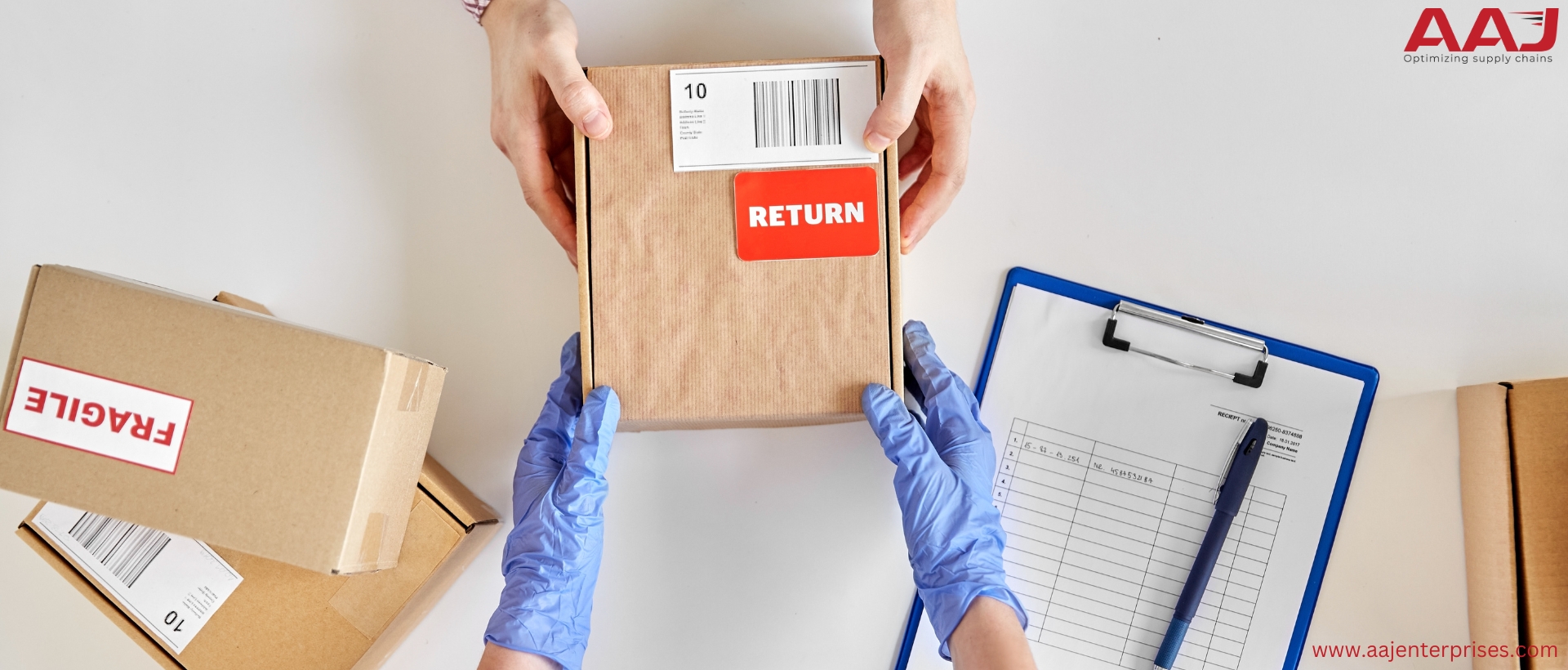

A product's journey does not always end when it reaches the customer. When an item is returned, the business must coordinate pickup, receiving, inspection, inventory updates, refund or replacement, and the final disposition of the product.
Indian ecommerce is experiencing rapid growth, especially after 2020. Most ecommerce businesses focus on same-day delivery service to improve customer satisfaction and brand popularity. Unfortunately, most of them don't give importance to return management services.
Research says 30% of online-purchased goods are returned to the business because of damage, incorrect items delivered, or poor quality. Customers get disappointed if a brand has complicated return management. 90% of customers will always purchase from a brand with a simple return management process.
What Is Returns Management?
Returns management covers the activities involved in handling products that customers or business buyers send back. It starts with return authorization and continues through collection, receiving, inspection, disposition, inventory updates, and the final customer resolution.
The return management process begins when a customer initiates the return process and requests a refund or exchange of the requested product. The company checks the return policy and schedules pick-up. The product is returned to the warehouse where the team assesses the condition of the product and what they need to do to it to either repair, refurbish, recycle, or restock the product.
If the product is suitable for resale, the team updates the inventory and returns it to saleable stock. The company then completes the applicable refund, exchange, or store credit for the customer.
Businesses also use return records to identify recurring product, packaging, fulfillment, or customer-related issues. This data can help reduce avoidable returns and improve the overall returns process.
How Does the Returns Management Process Work?
Returns management follows a structured process from the initial return request to the final inventory and data update.
1. Return Initiation
The customer or business buyer submits a return request and tells the reason for returning the product.
2. Return Authorization
The business checks the request against its return policy. It then approves the return or rejects it when the request does not meet the required conditions.
3. Return Pickup or Shipment
The customer either hands over the product to the pickup service provider or ships it back according to the approved return instructions.
4. Return Receiving
The warehouse or fulfillment center receives the returned product and records it against the original order or return request.
5. Inspection and Quality Check
The warehouse team checks the product's condition before deciding its next destination. The inspection covers:
- Product damage
- Missing parts or accessories
- Signs of use
- Packaging condition
- Product authenticity where relevant
6. Disposition
The inspection result determines what happens to the returned product. The business can:
- Restock it
- Repackage it
- Repair it
- Refurbish it
- Return it to the supplier
- Recycle it
- Dispose of it appropriately
7. Refund, Replacement or Credit
The business completes the approved customer resolution. This can include a refund, replacement product, or store credit according to its return policy.
8. Inventory and Data Update
The business updates inventory records based on the product's final disposition. It also records the return reason and other relevant data to identify recurring issues and improve products, packaging, fulfillment, or return policies.
B2C vs B2B Returns Management
Returns management differs between B2C and B2B warehouse operations because the order size, commercial terms, and return requirements can vary significantly.
B2C ReturnsB2B Returns
| B2C Returns | B2B Returns |
|---|---|
Usually involves individual customer orders. | Usually involves orders between businesses. |
Return quantities are generally smaller. | Returns can involve larger quantities or entire batches. |
Customer-facing return policies determine eligibility. | Contract terms, purchase agreements, or RMA procedures often determine eligibility. |
Pickup commonly uses parcel or courier services. | Scheduled pickup, freight, or other business transportation arrangements may be required. |
Refunds and replacements are common resolutions. | Credit, replacement, or return-to-supplier arrangements can also apply. |
Product condition and packaging are checked after receipt. | Quantity, product condition, batch or lot information, and quality specifications can require verification. |
B2C Returns Management
Generally, B2C returns start with a customer's return request. Once the product arrives at the warehouse, the business verifies eligibility, arranges the return and processes the product. Common solutions are a refund, replacement or restocking.
B2B Returns Management
B2B returns often require more coordination between the buyer and seller. A business buyer may submit an RMA (Return Merchandise Authorization) before sending goods back. The seller can use the RMA to identify the return, communicate shipping instructions, and verify the returned quantity and condition.
B2B returns can also involve quality disputes, batch or lot information, scheduled freight, or products that need to return to the original supplier.
Importance of Returns Management
Returns management affects customer experience, inventory value, operating costs, and the information a business uses to improve its operations.
1. Protects Customer Experience
A predictable return process gives customers clear expectations about eligibility, pickup, refunds, and replacements. It also reduces uncertainty when a product needs to be returned.
2. Recovers Inventory Value
Returned products can lose value while they wait for inspection or a disposition decision. Fast inspection and processing allow eligible products to return to saleable inventory sooner.
3. Controls Operational Costs
Poorly managed returns create additional transportation, handling, storage, and processing costs. An organized reverse logistics process helps businesses control these activities and avoid unnecessary movement of returned products.
4. Provides Product and Process Insights
Return data can reveal recurring problems that affect sales and fulfillment. For example, frequent returns for the same SKU can point to product defects, inaccurate sizing information, packaging issues, or picking errors. Businesses can use these findings to address the underlying problem and reduce avoidable returns.
Challenges in Returns Management
Managing the return process sounds simple and easy. But it brings a few challenges for the business. Here is a list of a few challenges enterprises face in the return management.
- Logistics Complexity: Moving returns back to the fulfillment center brings various challenges. It requires coordinating numerous activities like shipping, item inspection, refurbishment, and inventory management. Businesses need to find a robust solution to streamline the returns.
- Customer Expectation: Today, most customers expect hassle-free returns with quick refunds. If the returns management process becomes slow for some reason, then it dissatisfied customers.
- Data Management: Identifying the common reasons for returning products requires proper data management and analysis. A brand may miss improvement opportunities if it does not analyze data properly.
- Environmental Concerns: Improper return handling can cause a lot of wastage. Hence, most businesses are under pressure to manage returns that will not cause any harm to the environment.
- Quality Checking: Each returned item must be inspected thoroughly to decide whether it needs to be restocked, discarded, or recycled. Identifying all these things will require a lot of time, skilled staff, and extra resources.
Best Strategy for Effective Returns Management
Below, we list a few tips for effective return management.
1. Collect And Do Analysis Of Return Data
The business must invest time in finding out the reasons for product return. They can use automated return management solutions to track the product with the highest return rate. For example, if it's due to improper packaging, the business can improve packaging to reduce returns.
2. Proper Design Of Return Management Workflow
Proper return management design reduces a customer's time to initiate a return and get a refund or replacement.
There are various ways by which businesses can increase the efficiency of their return management. Here is a list below.
- The business needs to have a clear return policy.
- The customers can track the returned products every time.
- The business needs to issue a refund on time.
3. Write Return Policy Clearly
The business must have clear return policies and share them with its customers.
The return policies should clearly state the following things.
- Return timeline(7 days, 15 days, or one month)
- Condition for return
- Time is taken to process a refund
- Options for receiving a refund
4. Automate Return Management Process
Businesses can automate the return management process to reduce warehousing costs. For example, it can integrate a return merchandise authorization system to handle return requests. It will generate an RMA number, which customers use for tracking.
5. Outsource Return Management Process
Managing the return may be complicated and expensive for specific businesses. They can outsource the return process to 3PL logistics. The 3PL Company will pick up the ordered product, do inspections properly, and decide whether to restock, recycle, or repair. It allows sufficient time for businesses to focus on core activities like product development and market exploration.
Technology and Software for Returns Management
Technology helps businesses track returned products and coordinate the activities involved in returns management. The tools used depend on the size and complexity of the operation.
Businesses can use RMA software, WMS/OMS integration, barcode scanning, automated return notifications, and warehouse automation tools to improve return visibility and reduce manual processing.
For example, an RMA system can assign a return reference and track its status, while barcode scanning can link the returned product to the original order. WMS integration can update inventory after inspection and disposition, keeping stock records aligned with the physical inventory.
When Should Businesses Outsource Returns Management?
Outsourcing returns management is recommended when reverse logistics becomes a major consumer of internal resources and/or becomes a time consuming task for inventory recovery.
Outsourcing becomes useful when:
- Return volumes are increasing, and internal teams struggle to keep up.
- Warehouse capacity is limited, leaving little room for returned inventory.
- Returns come from multiple locations, making collection and consolidation difficult.
- Inspection or disposition takes too long, keeping saleable inventory out of stock.
- Returns technology is limited, making it difficult to track return status and inventory updates.
- Reverse logistics becomes operationally complex as order volume, locations, products, or return requirements increase.
A competent 3PL provider will be able to arrange for return transport, receiving, inspection, stocking and disposition of products in an agreed process. As a result, businesses can leverage external warehouse services without having to establish their own returns program.
Conclusion
Returns management is not simply the process of accepting returned products. It involves coordinating reverse transportation, receiving, inspection, disposition, inventory updates and customer resolution. A well-defined workflow helps businesses recover inventory value, control processing costs and identify the reasons behind recurring returns. As return volumes grow, businesses can use technology or outsource appropriate activities to a 3PL with reverse-logistics capabilities.