

Success During the Independence Day Sale Is Planned Weeks in Advance
At AAJ Supply Chain Management, preparations start almost 30 days prior to the sale's launch. We don't wait for order volumes to increase before taking action. Our team meets with the client to discuss sales forecasts. Following this, the warehouse capacity is assessed, inventory movements are planned, manpower is coordinated, system readiness is checked and all functions involved in order fulfillment are prepared.
A successful sale depends on more than discounts and marketing campaigns. Brands require a warehouse with enough capacity, reliable tech-stack, accurate inventory, and a fulfillment team that can accommodate increased order volume. Any of these areas that are not ready can impact customer experience and business performance due to delays, inventory mismatches and slower dispatches.
The sale may last only a few days, but preparing for it takes weeks. Every stage of that preparation plays a role in delivering a smooth fulfillment experience when order volumes reach their peak.
A lot of times peak sales performance is determined at a time other than the actual sale. The majority of successful operations are the result of preparation that takes place long before the first sale order is placed.
The planning process at AAJ Supply Chain Management begins about 30 days prior to the Independence Day Sale. This time frame gives our operations team enough time to coordinate with the client and prepare the warehouse for the sale. The team also prepares inventory and tests systems to identify and address potential bottlenecks before order volumes increase.
Each brand has its own aims of a sale. Some concentrate on clearing off stock, some are getting ready for new product introductions or a large surge in marketplace orders. Knowing these business goals up front enables us to create a plan of operation that will address sales productivity and customer expectations.
Understanding the Brand's Business Goals
Our preparation begins with conversations, not warehouse activities.
Prior to moving inventory, we consult closely with the client about what success would look like during the next sale. We talk about order volume to expect, projected business growth in comparison with past campaigns, new product launches, marketplaces involved and same day delivery expectations.
These discussions are more than just sales forecasts. They assist our operations team to forecast the warehouse capacity, manpower, packaging requirements, dispatch volumes, and service level commitments.
For instance, a brand with a strong expectation of orders in the marketplace triples needs a different fulfillment strategy than a brand with a limited promotion. The rationale behind planning these operational needs at the outset of the process is to minimise uncertainty and provide a better platform for implementation.
A collaborative effort also provides for both teams to set expectations earlier in the sale. We don't wait until we face problems to cope with peak demand, we plan ahead.
Preparing the Warehouse Before Inventory Arrives
Once the business plan is finalized, attention shifts to warehouse readiness.
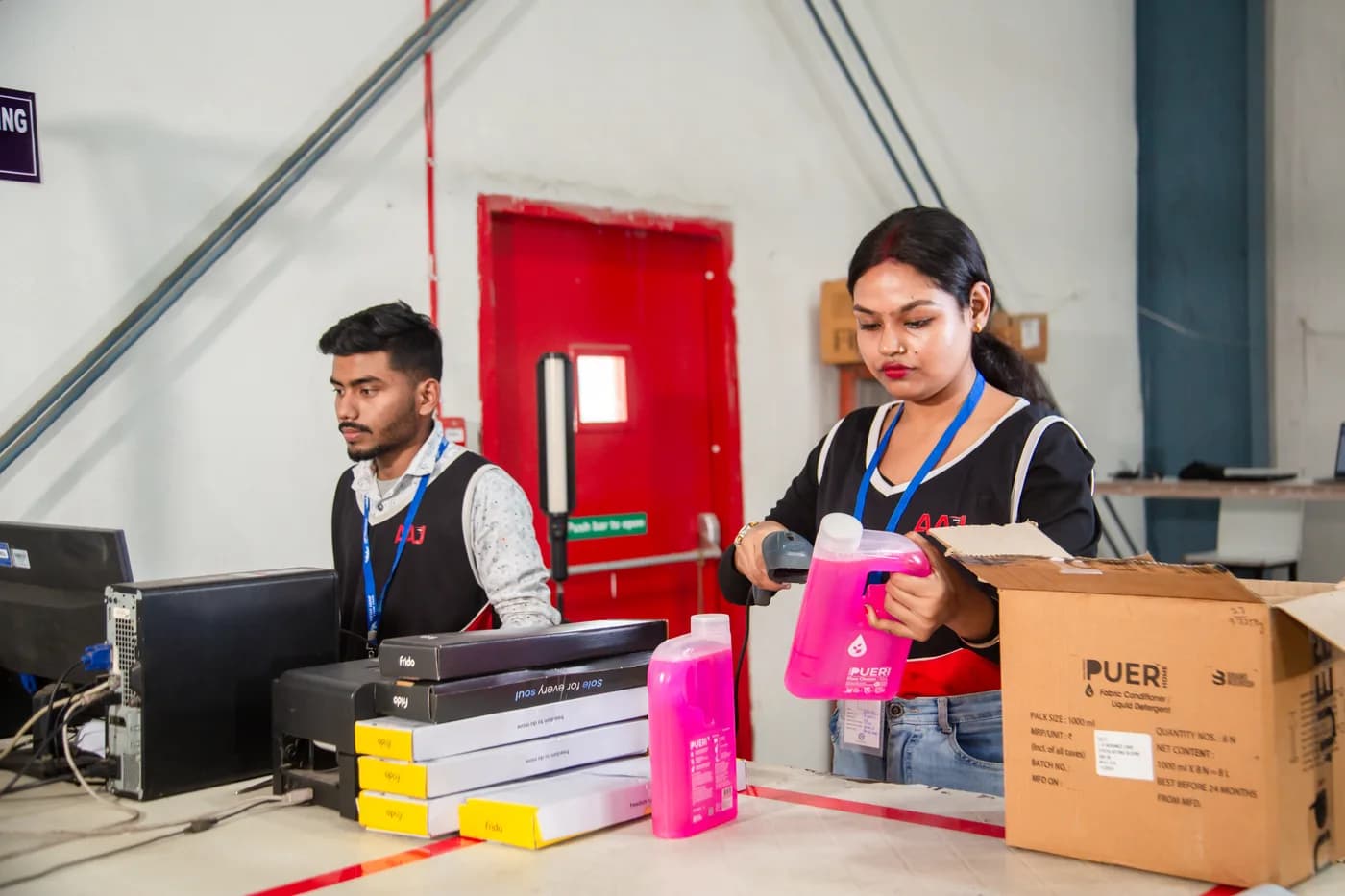
The first task is to assess the available warehouse space. Our warehouse team performs a current stock inventory and determines where further stock will be required and how it can be stored to maximise space.
Slow moving stock is monitored and rearranged to make it easier to store fast-moving stock which will be required during the sale. This inventory reallocation can help pick faster and minimize the amount of unproductive movement within the warehouse when order volumes grow.
This is also an opportunity for inbound planning to be utilized. We do not just give the brands inventory, we work with the brands to create an inventory arrival schedule that fits with the brands operational timelines. Staggered inventory arrivals allow for receiving teams to finish quality checks, barcode verification, putaway and system updates without internal congestion in the warehouse facility.
To keep warehouse operations on schedule, we usually recommend that brands complete inventory inward 7–10 days before the sale goes live. This gives our team enough time to complete receiving, quality checks, barcode verification, putaway, and inventory synchronization without putting unnecessary pressure on warehouse operations.
These preparations will allow the warehouse to be ready to process orders more quickly from the first day of the sale.
Building a Sale-Ready Fulfillment Operation
Warehouse readiness goes beyond organizing storage space. A successful sale depends on multiple operational functions working together without interruption.
Before AAJ Supply Chain Management considers a fulfillment operation ready for a peak sales event, every critical dependency is reviewed to ensure teams, technology, inventory, and logistics partners are aligned around the same execution plan. Preparation continues by validating the operational ecosystem that supports daily e-commerce order fulfillment.
Technology Is as Important as Warehouse Space
Modern ecommerce fulfillment services depend as much on technology as physical infrastructure.
Managing increased order volume with greater confidence requires operational visibility, and AAJ Supply Chain Management's Warehouse Management System delivers it. Inventory visibility enables teams to keep track of the inventory in real time, while forecasting helps in making better plans according to the expected sales demand.
Ensuring inventory accuracy through OMS and WMS synchronization ensures that there isn't any issue of stock mismatch during peak order periods across sales channels. Technology also enables faster order allocation and prioritization as orders begin to pour into the warehouse, enabling operations to process orders efficiently while keeping to their commitments.
Warehouse teams have access to real time operational data which enables quicker decision making across the campaign without having to make assumptions or manually update.
Technology can't take the place of operational discipline, but it reinforces each process in the warehouse. It, along with a well-planned structure and a seasoned execution, can help brands keep their speed of fulfillment, inventory accuracy, and customer satisfaction during one of the year's busiest sales periods.
What Changes Inside AAJ Supply Chain Management When the Sale Goes Live
The Independence Day Sale may begin at midnight, but warehouse operations are already running at full capacity well before the first wave of orders arrives.
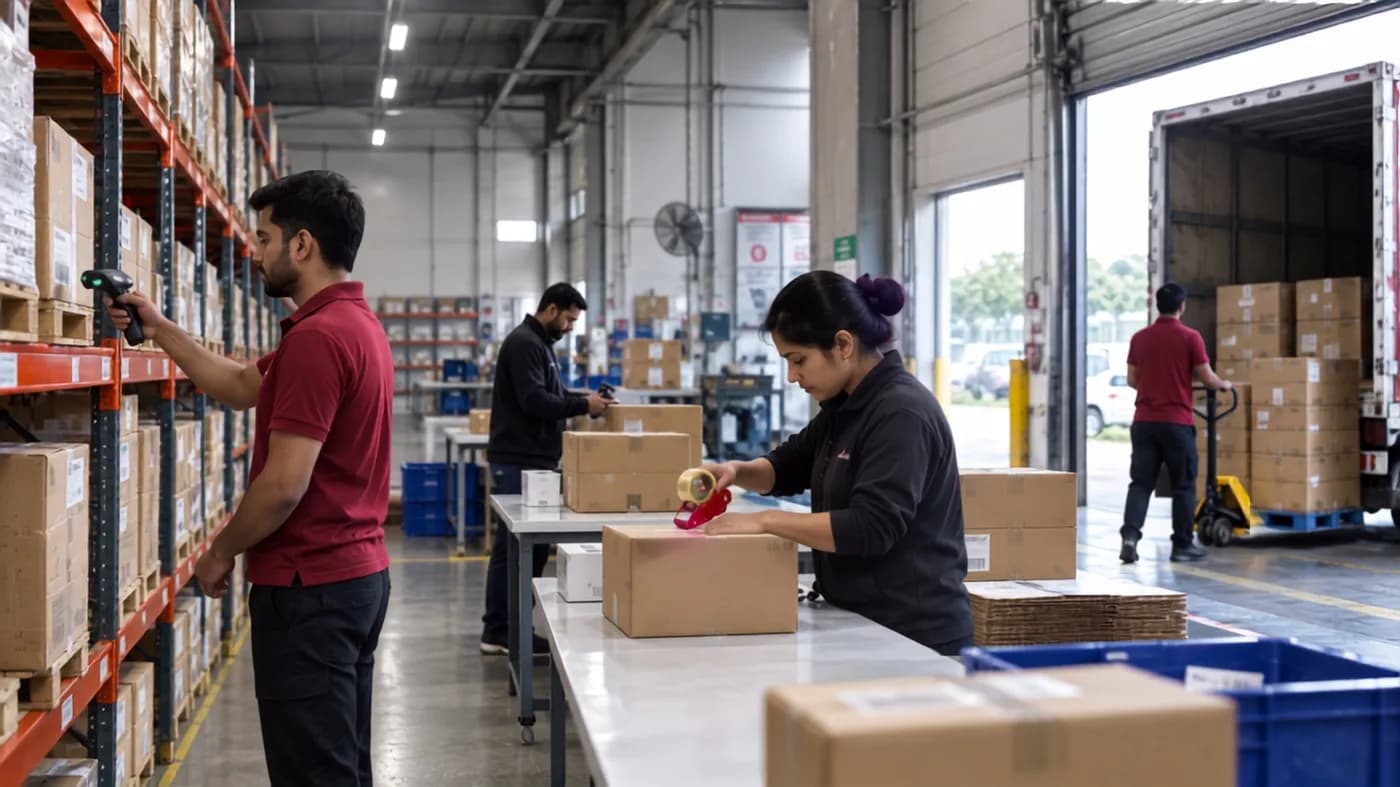
Now, it's time to go from planning to doing. Each team is aware of their responsibilities, warehouse layouts are already optimized and inventory is laid out to enable quicker picking and packing. No longer is the emphasis on preparation. It's about consistency, speed and accuracy during the sale.
Increased order volume expands warehouse operations to keep up with the demand. Depending on the projected order volume, we may introduce two or three operational shifts during peak days. This allows receiving, picking, packing, and dispatch activities to continue without creating avoidable bottlenecks across the warehouse. This enables working beyond the normal hours without unnecessary backlogs in fulfillment activities.
In peak times, packing operations change as well. For higher order volumes, dedicated packing areas are set up to ensure that orders are packed and dispatched efficiently, without causing congestion within the warehouse. Temporary dispatch staging areas are also established to allow for the packing of shipments to be organized by delivery partner and pickup time before they leave the facility.
Manpower planning plays an equally important role. Instead of reacting to rising order volumes after the sale begins, additional workforce requirements are planned in advance based on projected demand. This helps maintain operational continuity without compromising quality or fulfillment timelines.
Although warehouse activity becomes significantly faster during the sale, operational discipline remains unchanged. Every order still follows the same fulfillment workflow, from picking and quality checks to packing and dispatch. Scaling operations should never mean compromising execution standards.
The Metrics We Watch Every Day
Managing a peak sale requires more than additional resources. It requires continuous operational visibility.
Our operations team keeps a close eye on all key performance metrics throughout the sale, to gauge the performance of the warehouse and to be able to identify potential bottlenecks before they impact the customer.
Order backlog is a good indicator of whether orders are being processed at the pace the sale demands. A spike in the backlog can indicate the need for a rebalance of manpower or a focus on certain order queues.
Picking productivity serves as a measure of the efficiency with which inventory is being retrieved from inventory locations. The time-consuming warehouse activity of picking is directly related to order processing, so maintaining consistent productivity is directly helpful.
The Dispatch SLA is monitored in real-time during the day to ensure that customer orders are dispatched within the SLA. Inventory accuracy is also crucial, as any discrepancies in inventory can result in order cancellations, delayed deliveries, and reduced customer satisfaction during peak seasons.
We also track putaway inventory to make sure that new inventory is readily available for delivery when orders are placed. Putaway delays may cause inventory visibility to drop and affect order allocation, particularly in the case of fast-moving goods, which are restocked during sales.
Together, these operational indicators help us make timely decisions, resolve issues early, and keep fulfillment running smoothly throughout the campaign.
The Challenges We See Brands Face Every Sale Season
Every sale season brings new opportunities, but some operational challenges appear year after year. These observations come from working with growing ecommerce brands across multiple peak demand periods.
An inaccurate sales forecast is one of the most frequent problems. If the projected demand differs from the actual order volumes, it becomes difficult to plan the warehouse. Lower forecasts can leave warehouse service providers under prepared for a spike in orders, while higher forecasts can result in over allocation of warehouse space, labour and packaging materials. Having accurate predictions is a better base for all subsequent operational decisions.
Other problems are stock arriving too near to the launch date of the sale. Last minute inventory doesn't leave much room for inventory receipt, quality check, barcode scan, system updates or put-away. In a warehouse, teams are required to finish a number of essential tasks in a short time, without having a defined workflow. This makes it more difficult to be flexible and will bring additional pressure on the operation.
There are also some brands that make up their mind to make changes last minute after planning has already taken place. Conditions for the promotion, such as promotional bundles, packaging, SKUs or timelines for campaigns may be subject to change in the near days before the promotion. As the teams work to adjust to these changes, all changes impact inventory allocation, picking workflows, packaging processes and dispatch planning.
These situations are not unusual during large-scale sales. The difference lies in identifying them early and building enough operational flexibility to adapt without disrupting fulfillment performance.
What Happens After the Sale Ends
The end of a sale does not mark the end of warehouse operations. In many ways, it begins the next phase of the fulfillment cycle.
When order volumes are leveling off, focus turns to returns processing and inventory reconciliation. Products that are returned are inspected, verified and added back to the available inventory where applicable. This helps a brand to keep a proper record of their stocks and ready them for future sales.
Another important activity following the end of the campaign is inventory reconciliation. Physical inventory is compared to system records to ensure stock accuracy and to uncover discrepancies in stock that need to be investigated. Keeping inventory accurate is as critical as it is during the sales event, it is after the event as well.
When all operations are restored, our team analyzes the performance of the campaigns with the client. We review fulfillment schedules, operational performance, inventory flow and dispatch accuracy and any difficulties during fulfillment.
These discussions are beneficial, as each one of the peaks offers new learning opportunities. Improvements in the process that result from one campaign are used to reinforce the planning process for the next. The enhancements that come with these changes over time make fulfillment operations more resilient and ready for future demand surges.
Conclusion
A successful Independence Day Sale is remembered by the customers for timely delivery, accurate orders and a smooth shopping experience. These results are the product of a month of execution, coordination and operational planning.
Whether it's grasping business objectives and planning for warehouse capacity, testing the technology, monitoring live operations, or auditing post-sale performance, each step plays a crucial role in ensuring fulfillment success. The result is not dependent on any single activity. Doing things consistently in all operational aspects does.
Peak season preparation at AAJ Supply Chain Management isn't a one-time thing. It is a planned approach that has been honed over the years to manage the high-traffic sales season for a number of businesses that are on the path to becoming ecommerce. This same strategy isn't just reserved for the Independence Day Sale, but can be applied to other events like festive sales, flash campaigns, marketplace promotions and year-end demand surges.