
Today the Indian e-commerce market is booming. The growth is fueled by an increase in smartphone usage, internet users, and a rise in online shoppers. This is the right time and a good opportunity for e-commerce businesses to acquire this growth. Sellers and e-commerce businesses might be confused about selecting the right ecommerce marketplaces in India for their products.
You will find various ecommerce marketplaces in India, such as Flipkart, Amazon, and Meesho, where you can complete seller registration and start selling your products online. Let's explore the right marketplace for your product and industry and how it works.
How E-commerce Marketplaces Work?
Earlier, business owners were selling products in physical stores. Customers from the nearby locality can purchase products from the store. However, we are now in the digital era. You will find various e-commerce marketplaces in India where you can purchase a wide range of products.
It is a digital platform or app where numerous sellers list and showcase their products to millions of customers.
A Step By Step Guide On The Working Of the E-commerce Marketplace
- A seller needs to visit the seller registration page of the ecommerce platforms and first create a seller account.
- The seller then needs to sign up using basic details, such as an email ID and password.
- After the sign up seller has to do product listing and upload product details, including size, colour, weight, and more.
- The customer visits the e-commerce marketplace, compares products and their prices, and finally orders a product.
- The seller gets the notifications and packages the product. Sometimes, the e-commerce marketplace in India is responsible for packaging and dispatching the order.
- The marketplace processes or facilitates the transaction and settles the seller's proceeds after applicable fees, commissions or other charges.
Top 10 Ecommerce Marketplaces in India
1. Amazon
Amazon is one of the top ecommerce marketplaces in India. It started in 2013, and today it has a vast customer base and an excellent logistics network. You can sell a wide range of products on Amazon, like home, fashion, electronics, and many more.
You can create an Amazon seller account if you have a valid business. Provide your bank account number, PAN number, mobile number, and a few additional basic details to create an Amazon seller account and start selling various products.
The Amazon company offers various features for sellers, which are outlined below.
- You can manage business activities like tracking products or fulfilling orders through the Amazon seller app.
- You can list down the products and manage them through the Amazon seller dashboard.
- FBA (Fulfilment by Amazon) allows you to store products in Amazon fulfillment centers. Here, Amazon will do the picking, packaging, and shipping of the rendered product to the customer.
2. Flipkart
Flipkart is one of the biggest competitors of Amazon and is considered the next best ecommerce marketplace in India. They began their journey by selling books and have now expanded to offer a wide range of products, including electronics, apparel, and more.
You can create a Flipkart seller account within minutes and showcase your products to millions of customers across India.
Flipkart offers excellent features for sellers, which are listed below.
- You can track orders and manage inventories through the seller dashboard.
- You can promote products through deals and sponsored ads.
- Flipkart provides training modules or webinars to grow your ecommerce business effectively.
3. Myntra
Myntra is the next e-commerce portal in India, which primarily focuses on clothing, footwear, and fashion accessories.
You can sell fashion products, such as clothing, jewelry, and beauty products, on Myntra and gain access to a wide range of customers.
Myntra offers various features to Myntra sellers such as:
- You will have complete control over the products, like cataloguing.
- Myntra provides advanced analytic tools to track sales performance.
- Myntra charges a fee of 4-5% on each product sale.
- Myntra includes warehousing services, packaging, and shipping operations.
4. Meesho
Meesho is India's leading e-commerce platform, which allows you to sell fashion accessories, kitchen items, jewellery, home products, and many more. It was founded in 2015 and is now popular throughout India. It allows Meesho sellers to list the product and showcase it to millions of customers in India.
Most small and medium-sized enterprises, as well as homemakers, are today interested in selling products on Meesho for the following reasons.
- Here, you can retain 100% of the profits generated from selling products on Meesho.
- Meesho does not penalise sellers for order cancellations.
- You can sell products on Meesho even without a GST number. You can start selling products on Meesho through an enrollment ID.
- You can use paid ads or catalogue promotion tools to increase the visibility of the products.
- A dedicated team is always available to assist you with onboarding and address any queries related to product listings or inventory management.
5. AJIO
AJIO is a fashion and lifestyle e-commerce platform which was launched by Reliance Retail. You will find clothing for both men and women, along with footwear, beauty products, home decor, tech gadgets, and many more.
Excellent Features Of AJIO For Sellers:
- AJIO provides sellers with exposure to millions of customers across India.
- AJIO provides a seller dashboard where you can track and manage inventories.
- It offers 24/7 support to answer your queries.
6. JIO MART
JIOMART is the next top ecommerce marketplaces in India. It was launched in 2019 and offers a wide range of products, including groceries, fashion, electronics, home and kitchen items, and more.
Excellent Features Of JIO MART For Sellers:
- The Jiomart sellers can access millions of customers all over India. You can showcase your products even in rural areas.
- You don't have to arrange a separate courier service for selling products on JIO MART. The e-commerce marketplace offers end-to-end logistics support, like pickup and delivery, through Reliance logistics partners.
- JIOMART runs promotional campaigns to increase the seller's product visibility.
- You can receive onboarding training and seller support through Reliance's local teams.
- JIOMART charges 0% commission from sellers.
7. NYKAA
NYKAA is the leading cosmetics selling platform in India, specializing in fashion, beauty, wellness, and personal care products. It was founded in 2012 and offers a wide range of products from both domestic and International brands. NYKAA offers a hybrid model, which means it has an online presence as well as 100 physical stores in the top cities in India.
Top Benefits Of Selling Products On NYKAA:
- Sellers can sign up for NYKAA with zero registration cost. However, you are charged a commission only after the sale is completed.
- Your products get a chance to reach a wide number of customers.
- NYKAA offers boarding assistance and account management so that sellers can grow their online store.
8. Tata CLIQ
Tata CLiQ is a premium ecommerce marketplace in India that offers fashion, electronics, home essentials, luxury products, and many more.
Sellers can benefit from the Tata CLIQ in the following ways.
- Tata CLIQ charges commission only on sales.
- The Company manages pickup and return, reducing the workload of the seller.
- The seller can participate in app promotions and seasonal sales to increase visibility.
- You will get 24/7 support for onboarding and cataloguing.
9. FirstCry
FirstCry is an ecommerce and retail platform focused on baby, kids, and maternity products. Its product range includes categories such as clothing, footwear, toys, baby care, nursery products, school supplies, and maternity products. FirstCry operates through its online platform as well as physical stores.
Businesses interested in working with FirstCry can use its Business/Supplier Tie-Up option to contact the company about supplying products. FirstCry also operates warehouses across India to support its order fulfillment network.
FirstCry offers several opportunities for brands and suppliers, including:
- Businesses can approach FirstCry through its Business/Supplier Tie-Up channel for commercial or supplier enquiries.
- FirstCry provides access to a specialized customer base looking for baby, kids, and maternity products.
- The platform supports a wide range of product categories, from baby care and clothing to toys, footwear, nursery products, and school supplies.
- FirstCry operates an online platform alongside company-owned and franchisee-operated stores, giving the business a multi-channel retail presence.
10. BigBasket
BigBasket is an ecommerce platform focused primarily on grocery, household, personal care, and related consumer products. It also operates a B2B business that serves retailers, pharmacies, hotels, restaurants, caterers, and other institutions.
Businesses can register through BigBasket's Register & Sell partner portal to explore selling their products on the platform. BigBasket also works with seller-stocked products, where some products remain with sellers and are procured after a customer places an order.
BigBasket offers several features for sellers and business partners, including:
- Businesses can register through the BigBasket partner portal to sell their products.
- Sellers can supply products across grocery, household, personal care, and other relevant categories.
- BigBasket supports seller-stocked products, allowing certain inventory to remain with the seller until an order is placed.
- BigBasket also operates a B2B platform for retailers, pharmacies, hotels, restaurants, caterers, and institutions.
- Its delivery network supports order fulfillment through delivery partners, with service availability varying by location.
Benefits of Selling on E-commerce Platforms in India
There are various benefits to selling products on India's top e-commerce marketplace. Here is a list of them below.
- Sellers can display their product to a wide number of customers, which is not possible in a brick-and-mortar store.
- Marketplaces can reduce the upfront infrastructure required to reach customers compared with opening physical retail locations. For example, setting up a physical store, paying rent, and managing staff salaries are quite expensive. However, when you sell products on an e-commerce marketplace, you require a mobile device or laptop along with a good internet connection to manage products and track inventories.
- Physical stores are open only for certain hours a day, and where you can sell products to customers. But when you sell products on e-commerce marketplaces, then the store is open 24/7 and 365 days a year.
- You can read reviews and ratings of customers and improve the quality of the product.
Challenges Companies & Sellers Face on the E-commerce Marketplace
There are a few challenges that sellers face on the e-commerce marketplace. Here is a list of them below.
- Thousands of sellers sell the same products on the top marketplaces in India. So there is high competition for a business owner to achieve profits.
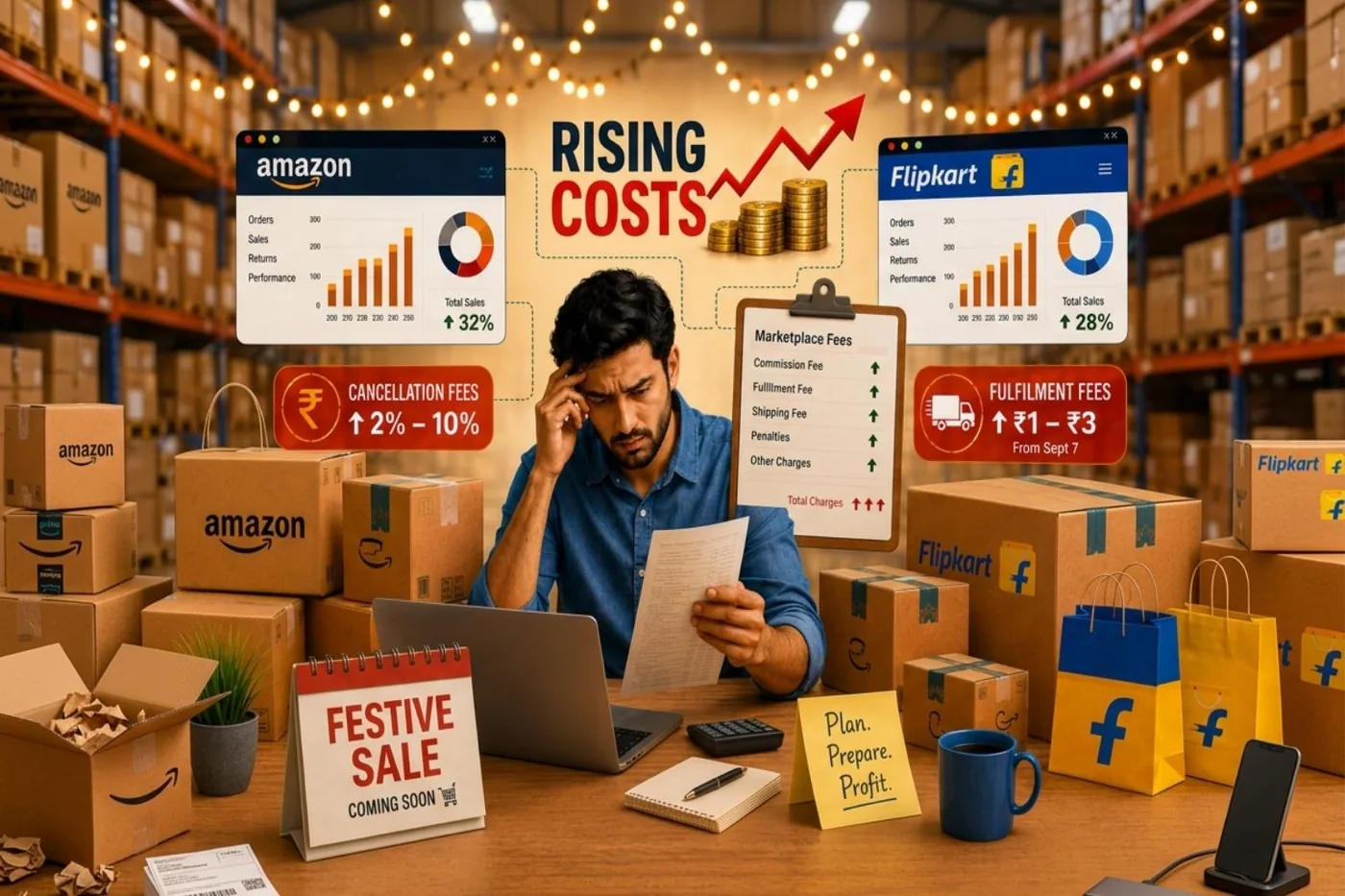
- Some e-commerce platforms charge high commission fees from sellers, which can significantly reduce profits.
- One bad review about the product can decrease the brand's reputation in the market.
- An e-commerce marketplace does the picking, packaging, and shipping. Any delay in order delivery can decrease customer satisfaction.
- Sellers often have limited control over customer data, branding, customer experience, and platform policies.
How to Choose the Right and Best Platform to Sell Your Product?
Choosing an ecommerce marketplace should depend on more than its size or commission rate. Compare the platform with your product, target customers, order fulfillment requirements, and overall selling costs.
1. Product Category and Target Audience
Choose a marketplace that attracts customers who actively shop for your product category. For example, Myntra and AJIO focus strongly on fashion and lifestyle, while FirstCry specializes in baby, kids, and maternity products.
A strong category fit can put your products in front of more relevant shoppers.
2. Compare the Total Selling Cost
Don't compare marketplaces only by commission. Calculate the overall cost of selling through each platform.
Consider:
- Commission and platform fees
- Shipping charges
- Fulfillment fees
- Advertising costs
- Return-related charges
- Packaging or other seller fees
Compare these costs against your product margins before choosing a marketplace.
3. Evaluate Fulfillment and Logistics
Check how each marketplace handles the physical movement of your products. Important questions include:
- Who stores the inventory?
- Who picks and packs orders?
- Who arranges shipping?
- Where are fulfillment facilities located?
- What regions does the delivery network cover?
- How does the marketplace handle returns?
The answers can significantly affect your delivery performance and operational workload.
4. Check Seller Tools and Integrations
A good seller platform should make daily operations easier. Check the available tools for:
- Inventory management
- Order management
- Product cataloguing
- Sales reporting and analytics
- Advertising and promotions
- Seller support
- Ecommerce or inventory integrations, where available
Choose tools that match your current order volume and operational setup.
5. Assess Customer Reach and Competition
A marketplace can have a large customer base without being the right fit for your product. Check whether its shoppers match your target audience and examine the level of competition within your category.
Look at competing products, pricing, reviews, product visibility, and the number of established sellers before committing significant inventory to a platform.
The best marketplace is not necessarily the one with the lowest fees or the largest audience. It is the one that gives your products access to relevant customers while supporting healthy margins and manageable fulfillment operations.
Conclusion
Selling products on top e-commerce marketplaces in India has various benefits. You can display products to millions of customers across India and earn a higher profit. But choose the e-commerce platform wisely. You should choose it based on your product category and the charges that have low commission fees. Ensure that it provides logistics support, including picking, packaging, and shipping operations, to reduce hassle in delivering products to customers.